
Trust & Paranoia in Affluent Circles: Building Secure Therapeutic Relationships

Wealth can make therapy complicated. Ultra-high-net-worth (UHNW) individuals face unique challenges when seeking mental health support: privacy risks, fear of exploitation, and strained relationships often rooted in financial dynamics. These factors create a difficult environment for building trust, a critical element for effective therapy.
Key takeaways:
- Privacy is non-negotiable. Over 80% of high-profile individuals avoid therapy due to fear of public disclosure.
- Wealth breeds isolation. Many wealthy clients struggle with mistrust in both personal and professional relationships.
- Tailored approaches work. Programs with strict confidentiality protocols and personalized care see higher success rates, such as 70–85% sobriety rates in executive-focused treatments.
The solution lies in creating a secure, discreet environment where trust can grow. Therapists must address the emotional toll of wealth while implementing robust privacy measures like NDAs, alias protocols, and private-pay options. Specialized techniques, such as Cognitive Behavioral Therapy (CBT) and Mentalization-Based Treatment (MBT), help reduce paranoia and build trust. For UHNW clients, therapy must balance clinical care with their unique lifestyle pressures.

Wealth, Privacy & Therapy: Key Stats for UHNW Individuals
What Drives Paranoia Among Affluent Individuals
How Wealth Creates Isolation and Mistrust
Having wealth might seem like a guarantee of happiness and connection, but it can actually make people feel more isolated. The more wealth someone accumulates, the harder it becomes to tell who values them for their personality versus their bank account. As Paracelsus Recovery explains:
"Wealth 'others' us, distorting our relationships and fostering distrust. Studies show that increased wealth can reduce empathy... because wealth fosters detachment."
This sense of detachment often develops over time. When every relationship has the potential to be influenced by money, wealthy individuals tend to grow suspicious of others' motives. This isn’t just anecdotal - 70% of ultra-high-net-worth (UHNW) individuals report mental health challenges within their immediate family.
This isolation creates fertile ground for a heightened sensitivity to both real and imagined dangers.
Paranoia as a Response to Real and Perceived Threats
While hyper-vigilance may sometimes appear irrational, for many UHNW individuals, the risks they face are very real. A single breach of confidentiality can lead to massive financial losses or public embarrassment. Constant scrutiny from the public and media keeps their nervous systems on edge, making it difficult to separate genuine threats from imagined ones.
Dr. Lami, a psychologist specializing in wealth-related issues, explains this dilemma well:
"This is the trust paradox of affluence: the more you have, the more you fear losing, and the harder it becomes to trust."
Many affluent individuals develop hyper-vigilance - a heightened state of awareness that may look like paranoia but is often a survival mechanism in high-pressure situations. This constant alertness highlights the importance of specialized therapeutic approaches that address the unique pressures of wealth.
Unfortunately, this hyper-awareness doesn’t just affect external relationships - it often trickles into family dynamics.
Family and Organizational Dynamics in Affluent Households
The mistrust that wealthy individuals develop in the outside world frequently seeps into their family lives, creating tension. Wealth has a way of reshaping family relationships, sometimes in dramatic ways. Ekaterina J. Yarley, a PhD Candidate in Health Psychology, notes:
"Wealth amplifies comparison and sharpens hierarchy. It can convert sibling rivalry into legal warfare and turn extended relatives into strategic actors."
Disputes over inheritance and the pressure of succession planning can lead to suspicion, even among close family members. Parents may wonder if their children’s affection is genuine or motivated by the promise of future wealth. At the same time, heirs often struggle to define themselves outside of the family’s financial legacy. This struggle is sometimes called "Succession Syndrome" - a situation where family dynamics begin to mimic the structure of a corporate boardroom rather than a supportive home environment.
Adding to the complexity, affluent households often rely on a network of paid advisors, including lawyers, financial planners, and estate managers. While these professionals provide expertise, their involvement can undermine self-confidence. When external experts are always seen as the ones with the answers, individuals may start to second-guess their own instincts and decisions.
sbb-itb-4b13a7c
Unstoppable Wealth Therapist and Business Coach with Djuradj Caranovic
How to Build Secure Therapeutic Relationships with UHNW Clients
Working with ultra-high-net-worth (UHNW) clients presents unique challenges that require specialized strategies to address their distinct needs.
Building Trust Through Consistency and Clear Communication
Establishing trust with UHNW clients begins with demonstrating a deep understanding of the pressures they face. A therapist who can discuss topics like activist investors, hostile takeovers, or board-level scrutiny with confidence will resonate more than one who relies on generic stress-management techniques.
Creating psychological safety is essential. Dr. Paul Hokemeyer, a family therapist and author, explains:
"Psychological safety is a shared belief held by members of a team that the team is safe for interpersonal risk taking. I've extended this definition from the boardroom to the family room by substituting the word 'family' for the word 'team'."
Trust develops over time. Start by validating the client’s perspective, then gradually introduce alternative viewpoints. This approach respects their expertise and reinforces their sense of control, which is critical for building a strong therapeutic relationship. These efforts also lay the groundwork for implementing robust confidentiality measures.
Setting Up Confidentiality Frameworks in Luxury Settings
For UHNW clients, standard HIPAA compliance is insufficient. A single privacy breach could lead to significant consequences, such as stock price fluctuations, professional repercussions, or public scandals. Effective confidentiality frameworks require multiple layers of protection.
These frameworks often include 42 CFR Part 2 protections alongside comprehensive NDAs that cover everyone who might interact with the client, from personal staff to external vendors. As Carrara Treatment emphasizes:
"Luxury rehab centers protect privacy by building systems that would survive a subpoena, not just throwing money at public relations."
Discretion is key during the intake process. Elite programs use multi-layered NDAs, alias protocols, and staggered arrival schedules to safeguard client identities. Private entrances that bypass communal areas further enhance privacy.
Financially, UHNW clients often opt for private-pay arrangements to avoid leaving an insurance trail that could later surface in employer underwriting or background checks. Some programs even coordinate billing through family offices or legal counsel to maintain confidentiality.
Managing Third-Party and Family Involvement in Therapy
Navigating the influence of a UHNW client’s inner circle - family members, wealth managers, attorneys, and executive assistants - requires careful boundary-setting. Without clear guidelines, these relationships can easily spill into the therapeutic space.
To maintain autonomy, therapists should secure formal, client-signed releases for every update shared with third parties. This step is more than a legal necessity; it reassures clients that their independence is respected.
At the same time, completely isolating clients from their professional networks can backfire. Allowing structured, supervised communication windows, such as a designated two-hour period in the morning for essential business matters, can prevent the stress of disconnection from derailing treatment. However, boundaries must be clear to ensure work doesn’t dominate the recovery process. As Rock View Recovery notes:
"For someone managing a public company or sitting on multiple boards, this level of security isn't paranoia. It's necessary for the recovery process."
Clinical Methods for Addressing Paranoia and Building Trust
Assessing and Identifying Paranoia Accurately
Getting the diagnosis right is critical, especially when working with affluent clients. Missteps, like prematurely labeling someone with terms such as "disorder" or "schizophrenia", can provoke fears of losing control or facing forced treatment - concerns that are often heightened in high-net-worth individuals.
An effective approach to assessment, as described by researchers Kingdon & Turkington, involves embarking on a "journey of exploration" with the client:
"The style of engagement is based on... 'a journey of exploration into patients' beliefs,' which should be undertaken with an open mind and a willingness to understand the individual."
To assess paranoia, clinicians should examine four key dimensions: conviction (how strongly the belief is held), preoccupation (how often the thoughts arise), distress levels, and interference with daily life. Tools like the Paranoid Thoughts Scale (PTS), Personality Inventory for DSM-5 (PID-5), and the MMPI offer objective data to guide clinical decisions.
A crucial step in working with wealthy clients is distinguishing between clinical paranoia and adaptive vigilance. As psychologist Brendan Maher observed, some paranoid beliefs stem from genuinely compelling evidence. For individuals managing significant wealth, a degree of skepticism about others' intentions can be rational. Failing to make this distinction risks undermining trust before a therapeutic relationship even begins. This careful assessment process sets the stage for interventions aimed at rebuilding trust.
Therapy Techniques That Reduce Paranoia
After identifying paranoia, the most effective treatment is Cognitive-Behavioral Therapy (CBT) - particularly approaches that focus on the factors sustaining paranoia, rather than directly challenging the beliefs themselves. Common drivers include chronic worry, sleep disturbances, and low self-esteem.
Professor Daniel Freeman of the University of Oxford developed the "Feeling Safe" program, a CBT-based method that targets these sustaining factors:
"Safety must be relearned after having systematically weakened the influence of the maintenance factors."
The "Feeling Safe" program has shown impressive results, with a large reduction in delusion severity (Cohen's d ranging from 2.8 to 3.0). In luxury residential settings, therapists often combine multiple modalities. For instance:
- Dialectical Behavioral Therapy (DBT) helps manage reactive paranoia and emotional dysregulation.
- Mentalization-Based Treatment (MBT) enhances the client's ability to consider different perspectives, addressing the interpersonal mistrust often tied to paranoia.
A 2026 study published in Frontiers in Psychiatry by D. Bradford Reich and Lois Choi-Kain demonstrated the effectiveness of this multimodal approach. In a residential program for self-pay clients, 87 women saw their Zanarini Rating Scale scores drop from 11 to 7 (p<0.001) over five months.
Once paranoia is reduced through CBT and related methods, therapy must adapt to the specific needs and expectations of affluent clients.
Tailoring Therapy to the Needs of Affluent Clients
Affluent clients often display what clinicians refer to as "hyper-agency" - a tendency to switch therapists or alter routines at the first sign of discomfort. Instead of interpreting this as resistance, therapists can approach it with curiosity, recognizing it as part of the client's broader life script.
Open conversations about the impact of wealth on therapy are essential. These discussions allow therapists to validate the client's experiences without judgment. Privacy concerns are another significant factor; adjusting the pace of therapy to align with the client's comfort level is key.
Incorporating attachment-informed care can further strengthen the therapeutic process. Understanding whether a client has an anxious, avoidant, or disorganized attachment style helps clinicians determine how quickly they can delve into deeper emotional work. For many affluent clients, insecure attachment can be a major barrier to seeking help. Moving too quickly risks jeopardizing the therapeutic alliance altogether.
How Leading Rehabs Supports Confidential, Trust-Centered Care
Evaluating Centers by Privacy and Trust Standards
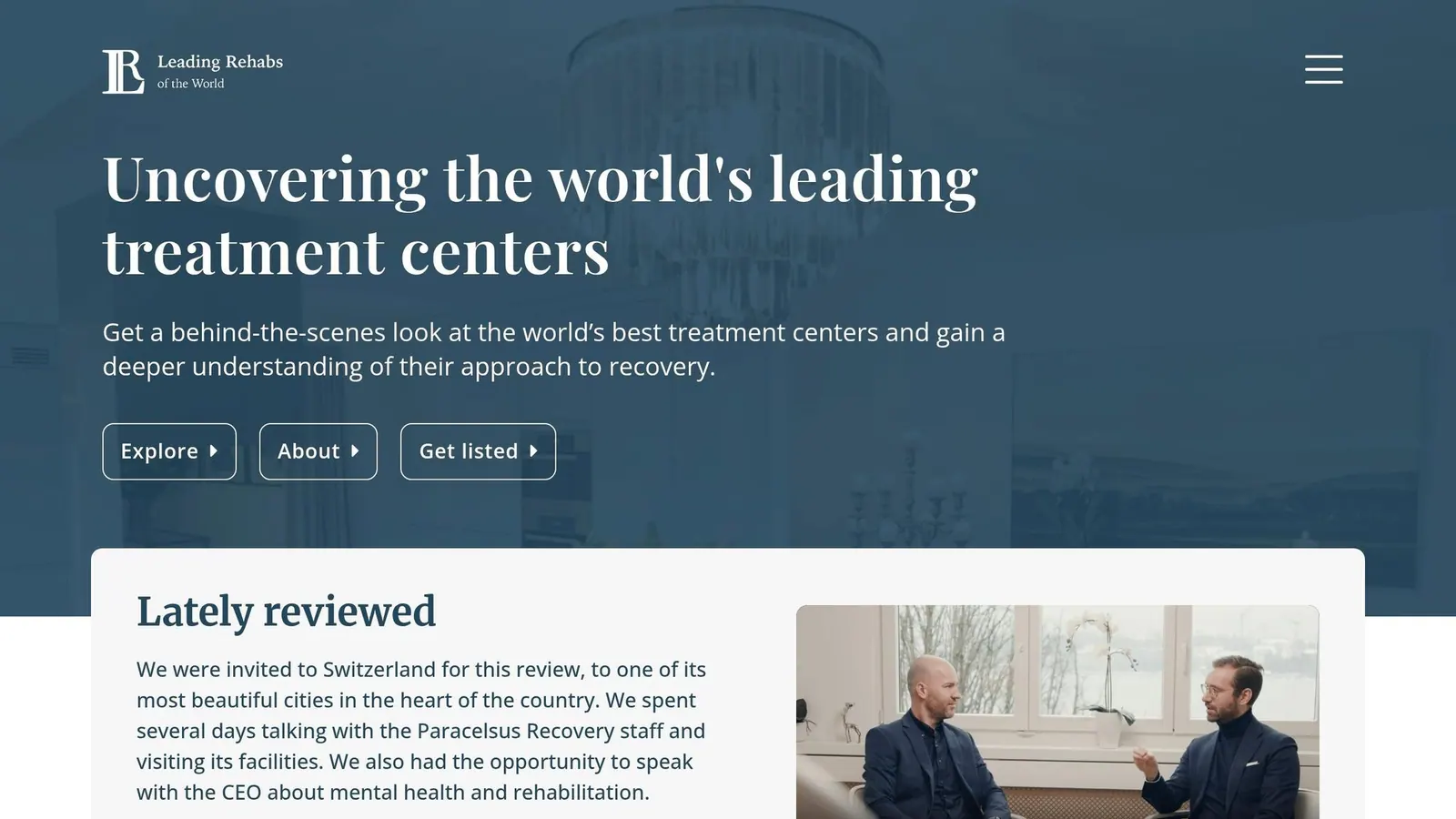
Leading Rehabs takes a meticulous approach to evaluating treatment centers, prioritizing real-world privacy protocols over superficial reputations. This means ensuring that privacy systems not only exist but also comply with legal standards. The platform highlights centers that implement robust legal protections, such as client NDAs, staff confidentiality agreements, and clauses that extend to third-party vendors like drivers or suppliers. Even financial transactions are scrutinized, with preference given to centers that use discreet methods like family offices, trust accounts, or corporate entities to safeguard client identities.
Additionally, centers are assessed for advanced security measures to protect sensitive client data. Leading Rehabs identifies facilities that embrace "privacy by default" - offering features like one-client-at-a-time programs, gated estates with no visible branding, and private entrances that eliminate shared spaces.
This level of detail is critical because the stakes are high. Over 80% of high-profile individuals cite fear of public disclosure as their top reason for delaying addiction treatment, often waiting four times longer than the general population to seek help. By applying such rigorous evaluations, Leading Rehabs ensures that listed facilities meet the highest standards of confidentiality and trust.
How Treatment Centers Can Demonstrate Their Commitment to Confidential Care
To reassure prospective clients, treatment centers must go beyond basic confidentiality policies and showcase tangible practices. A verified profile on Leading Rehabs allows centers to highlight these efforts and provide transparency to individuals seeking privacy-focused care.
Facilities can use their profiles to detail specific measures, such as structural privacy features, staff-to-client ratios, and specialized treatment capabilities. For example, Safe Haven Behavioral Health employs VIP protocols and decoy billing to ensure client anonymity. Similarly, Rushton Recovery in Michigan operates on a 30-acre private campus with a maximum of 10 clients, maintaining a 1:3 staff-to-client ratio and offering two individual therapy sessions weekly - double the industry norm. These documented practices help build trust with ultra-high-net-worth (UHNW) clients before any direct contact is made.
"Discretion is not a luxury add-on for high-profile rehabilitation. It is a clinical prerequisite - the condition under which honest disclosure, genuine therapeutic engagement, and lasting recovery become possible." - AddictionInfo.org
Premium profiles on Leading Rehabs further enhance visibility through features like on-site reviews, video content, and prominent placement - all while maintaining discretion. These tools not only help centers connect with the right clients but also reinforce trust as clients move closer to making life-changing decisions.
Helping Clients Find and Enroll in the Right Program
For UHNW individuals, choosing a treatment program is a deeply personal and trust-sensitive process. Leading Rehabs streamlines this journey, offering a seamless way to research and compare programs without requiring premature disclosure of personal information.
The platform provides detailed insights into privacy frameworks, clinical credentials, staff ratios, and executive-level accommodations. This allows clients to make informed decisions privately. Luxury programs, which charge between $30,000 and $150,000+ per month and often maintain low patient-to-staff ratios (frequently 1:3), report completion rates of 85–90%, compared to the 60–70% seen in standard facilities. For individuals seeking effective, first-time treatment, these differences are crucial.
When it’s time to enroll, Leading Rehabs helps clients identify programs offering private intake lines, staggered arrival schedules, and unbranded transportation - services that include private airport coordination to ensure anonymity during this vulnerable transition. The ultimate goal is clear: by the time a client steps into the facility, the environment should feel secure enough for them to begin their recovery journey.
Conclusion: Building Lasting Trust in Therapy for Affluent Clients
Trust doesn’t happen by chance - it requires careful effort, especially in therapeutic settings designed for affluent clients. As mentioned earlier, concerns about confidentiality often delay treatment significantly, creating real barriers that can prevent individuals from accessing the support they need.
To address these challenges, therapists must establish a secure and private structure of care. This means implementing strong privacy measures, such as working with one client at a time, using private-pay models to keep records out of insurance databases, and implementing comprehensive non-disclosure agreements for all vendors and staff involved in the process.
Discretion isn’t just a nice-to-have - it’s a clinical necessity. Without it, clients may hold back, hindering their progress and recovery. As Martha Fernandez, LCSW, Co-Founder of CEREVITY, aptly puts it:
"The clinical reality is that wealth changes which problems you have, not whether you have them."
To build trust, clinicians must avoid dismissing the unique stressors tied to wealth or becoming overly focused on a client’s lifestyle. Instead, therapy should remain grounded and client-centered, incorporating strategies like scheduled check-ins and customized telehealth options to meet their specific needs.
Even after treatment ends, trust must be nurtured. Therapists can maintain this bond by offering quarterly check-ins, providing HIPAA-compliant telehealth for clients who travel, and creating phased re-entry plans that ease clients back into their routines. These aftercare approaches help sustain the secure relationships formed during therapy, reinforcing the key message: lasting recovery is built on trust that extends well beyond the final session.
FAQs
How can I tell if my mistrust is paranoia or just smart vigilance?
Vigilance involves a deliberate and measured approach to managing the risks that often accompany wealth, enabling you to make informed decisions in high-pressure situations. Paranoia, by contrast, tends to stem from feelings of insecurity or isolation, leading to persistent fear and mistrust. If your sense of caution feels balanced and serves to protect your interests, it’s likely vigilance. However, if it feels overpowering or irrational, it may be worth consulting a professional to better understand and address these feelings.
What privacy protections should a discreet rehab or therapist offer?
Rehabs and therapists catering to clients who value privacy must prioritize more than just meeting standard regulations like HIPAA or 42 CFR Part 2. They need to implement additional measures to ensure discretion at every step.
Key practices include:
- Strict Non-Disclosure Agreements (NDAs): These agreements help protect sensitive information by legally binding all parties involved to confidentiality.
- Private Accommodations: Offering secluded living arrangements ensures clients can maintain anonymity during their stay.
- Discreet Intake Processes: For example, staggered arrival times prevent overlap between clients and minimize exposure.
On the digital front, robust security measures are a must. These include encrypted communication channels and multi-factor authentication to safeguard client data from unauthorized access.
Billing privacy is another critical area. Facilities should provide options like confidential billing through family offices or trust accounts, which help protect financial privacy and reduce paper trails. Together, these steps create a secure and discreet environment for clients seeking help.
How can I involve my family office or attorneys without losing control of therapy?
Setting clear boundaries and communication protocols with your clinical team before starting treatment helps you stay in control. Many luxury programs work directly with your family office or attorneys to manage billing and insurance, simplifying the process for you. Decide in advance who will receive updates, what details will be shared, and use supervised communication to balance responsibilities while safeguarding your therapeutic progress.