
Public Scrutiny & Reputation Risk: Private Mental Health Support for UHNWIs

Mental health struggles among ultra-high-net-worth individuals (UHNWIs) often go unnoticed due to societal expectations, public scrutiny, and the fear of reputational damage. Despite their wealth, UHNWIs face unique pressures, including isolation, intense stress, and the need to maintain a flawless public image. These challenges make seeking mental health support both necessary and risky.
Key insights from the article:
- Reputation is critical for UHNWIs. Public acknowledgment of mental health issues can lead to financial consequences, such as declining stock values or strained relationships.
- Privacy is non-negotiable. Single-client rehabs, luxury residential facilities, and discreet outpatient programs cater to UHNWIs' need for confidentiality while providing tailored care.
- Legal and security measures matter. Non-disclosure agreements (NDAs), strict medical secrecy laws, and advanced digital and physical security protocols ensure discretion.
For UHNWIs, finding the right mental health support means balancing privacy, high-quality care, and reputational protection. Services like Leading Rehabs streamline this process by vetting facilities with rigorous privacy and clinical standards.
How Does a Lead Psychiatrist Treat the Ultra-Wealthy?
sbb-itb-4b13a7c
Public Scrutiny and Reputation Risk for UHNWIs
For ultra-high-net-worth individuals (UHNWIs), reputation isn't just about public perception - it’s an asset with tangible consequences. Even a small revelation, such as a CEO seeking mental health support, can ripple through their professional and personal lives. Investor confidence may waver, business connections might fray, and the fallout can extend far beyond the individual. As Paracelsus Recovery aptly states:
"The stakes are heightened as your reputation is currency. Every step you take in your personal or professional life can just as easily break you as it can make you."
Because of this, seeking help often feels like a calculated risk rather than a personal decision. The potential financial and reputational repercussions explain why many UHNWIs hesitate to seek the support they need.
Why Reputation Risk Stops UHNWIs from Seeking Help
For leaders of publicly traded companies, the fear of accidental disclosure is very real. A single leak about their mental health struggles could set off a chain reaction. Paracelsus Recovery paints a vivid picture of the stakes:
"If anyone in such a setting leaked it to the press, the company's share price would plummet, and people would lose their jobs."
But the issue runs deeper than just financial concerns. Society often perpetuates the idea that immense wealth should equate to constant happiness. When that expectation isn’t met, it can feel like a personal failing. As Paracelsus Recovery explains, "Celebrities are implicitly told that if they are not happy 24/7, then they are ungrateful, and there is something wrong with them."
This societal pressure can cause UHNWIs to question the validity of their own struggles, making it harder for them to seek help. Traditional treatment environments can also exacerbate these fears. Many rehab programs rely heavily on group therapy, where sharing personal experiences becomes unavoidable. For someone in the public eye, this setup carries immense risk. In such settings, personal pain can quickly become "worth money" to tabloids, further discouraging UHNWIs from opening up.
The challenges don’t stop at internal corporate risks. The ever-present scrutiny from media outlets adds another layer of complexity.
How Media Exposure Increases the Need for Discretion
In an era of constant connectivity, there’s rarely a moment when public figures can step out of the spotlight. Every decision, no matter how personal, has the potential to become a headline. Research from Harvard Business School and the Family Firm Institute highlights that UHNWIs face unique challenges, including isolation, heightened anxiety, and a pervasive lack of trust - all worsened by unrelenting public scrutiny.
This constant pressure to maintain a flawless public image can lead to emotional exhaustion, or burnout. The effort to uphold a carefully curated persona leaves little room for private reflection or personal healing. Over time, this mental strain can escalate into a crisis. For UHNWIs, discretion isn’t just a preference - it’s a necessity. The risks tied to public exposure emphasize the importance of the discreet treatment options discussed later.
Private Mental Health Treatment Options for UHNWIs
Standard mental health options often fall short when it comes to meeting the unique needs of ultra-high-net-worth individuals (UHNWIs). Privacy and personalized care are paramount for this group, and conventional settings - like group therapy or traditional clinics - may feel too exposed or impersonal. To address these concerns, specialized treatment models have emerged, offering everything from exclusive single-client facilities to luxurious residential care, all designed with discretion and tailored attention in mind.
Single-Client Rehabs for Full Privacy
For those who prioritize absolute confidentiality, single-client rehabs are the ultimate choice. These facilities cater to one client at a time, ensuring complete privacy. Unlike group settings, which inherently carry risks of information leaks, this model provides a secure and dedicated environment. Dr. Jeremy Alford, PhD, highlights the importance of confidentiality in mental health care:
"If a client is assured that their confidentiality is assured a huge burden of concern is lifted from their shoulders."
Istana is a prime example of this approach, offering private island sanctuaries in locations such as Bali, Barbados, and Ibiza. Each destination is carefully chosen to meet the needs of high-profile clients seeking discretion. Barbados, in particular, is noted for its suitability for maintaining privacy. Istana underscores its commitment to individualized care with this statement:
"This is a world created for the individual, not an institution built for a group."
For clients who want privacy but also a more home-like experience, luxury residential facilities offer an appealing alternative.
Luxury Residential Facilities with Private Amenities
Luxury residential facilities provide a blend of exclusivity and a comfortable, welcoming atmosphere. These centers offer high-end care within a private, villa-style setting, often located in prestigious and discreet areas. Privacy is a top priority, alongside access to cutting-edge clinical care.
The Kusnacht Practice in Switzerland is a standout example. Situated in a serene residential area overlooking Lake Zurich, the facility offers private villas and an exceptional level of care. Their staffing model is particularly noteworthy, as they explain:
"At Kusnacht Practice we have more doctors than clients."
This allows for an integrated approach to care, combining psychiatry, internal medicine, and wellness programs, all tailored to the individual’s specific needs.
Discreet Outpatient Programs for Flexible Care
For those who need treatment without committing to a residential stay, discreet outpatient programs offer a flexible solution. These intensive outpatient programs (IOPs) typically involve 9–15 hours of treatment per week, allowing clients to maintain their schedules while receiving structured care. Sessions are often one-on-one, with virtual options available for added privacy. This flexibility makes it possible to receive treatment from locations like London, Zurich, or Midtown Atlanta.
Virtual outpatient programs take flexibility a step further, eliminating the need for in-person visits altogether. Facilities such as THE BALANCE Rehab Clinic also use outpatient care as a transitional phase - lasting 2–4 weeks after residential treatment - to help clients reintegrate into their professional and personal lives smoothly.
How UHNWIs Can Protect Their Privacy During Treatment
Choosing the right treatment model and carefully handling the legal and logistical details can be the difference between maintaining confidentiality and facing a public ordeal.
Using NDAs and Legal Agreements to Safeguard Privacy
One of the most effective ways to ensure privacy is by utilizing Non-Disclosure Agreements (NDAs). Top-tier facilities require all staff and associated personnel to sign NDAs before interacting with clients. Jan Gerber, CEO of Paracelsus Recovery, highlights this approach:
"Obviously we've signed an NDA with every single person who has face time with a client. And Switzerland has some of the strictest medical secrecy laws in the world. Prison terms are quite heavy. There have been no leaks."
In addition to NDAs, UHNWIs might consider using Master Service Agreements (MSAs). These are retainer-based contracts that are updated yearly to define the scope of services while clearly outlining privacy expectations. This level of legal precision mirrors the high-security standards often expected by UHNWIs.
Federal regulations also play a role in protecting privacy. The HIPAA Privacy Rule, bolstered by a Final Rule issued on April 22, 2024, strengthens protections for medical records. Penalties for violations range from $100 to $50,000 per incident, with an annual maximum of $1.5 million.
While legal agreements form a strong foundation, additional physical and digital security measures are crucial for comprehensive privacy protection.
Security Protocols at Leading Treatment Centers
In addition to legal safeguards, top facilities implement advanced physical and digital security measures to protect their clients from the moment they arrive. For instance, some clinics arrange for clients to use private immigration desks and secure exits, helping them avoid public terminals and media attention.
On the digital side, UHNWIs should ensure that any facility they consider offers encrypted Wi‑Fi, secure communication channels, and private phone lines. It's also essential to confirm that the facility employs methods to detect unauthorized surveillance devices. Furthermore, the property should lack external signage identifying it as a treatment center and provide private entrances and exits.
These combined measures help create an environment where privacy is not just a promise but a reality.
How Leading Rehabs Helps UHNWIs Find the Right Care
Once security and legal protections are in place, the next step for UHNWIs is finding a facility that aligns with their high expectations. Leading Rehabs was created to bridge this exact gap.
Tailored Treatment Center Listings for UHNWIs
Launched in 2023, Leading Rehabs provides in-depth profiles of top-tier treatment centers designed specifically for UHNWIs. These profiles detail critical aspects like clinical governance, privacy measures, staff qualifications, and treatment approaches - including exclusive "One Client at a Time" options. The platform also highlights facilities offering business-friendly environments and executive programs, typically lasting 30 to 45 days. This allows clients to receive care without significantly disrupting their professional responsibilities. By offering such comprehensive listings, Leading Rehabs empowers UHNWIs to make discreet and well-informed decisions, helping to protect their privacy and reputation.
"Privacy is not a feature we offer. It is the foundation on which everything else is built." - Sam Witkin, Head of Admissions, Oasis Premium Recovery
Premium Features for Confident Choices
Beyond these detailed profiles, Leading Rehabs provides a Premium tier designed to enhance transparency and simplify decision-making. This tier includes on-site reviews, professional video tours, and podcasts, offering prospective clients deeper insights into each facility.
A Verified badge indicates that a listing has met stringent credibility standards, helping UHNWIs quickly identify trusted, high-quality options. With features like prominent profile placement and premium customer support, the platform minimizes the uncertainty and guesswork often associated with selecting private mental health care. For this audience, the process must be as thorough as it is discreet.
What to Look for When Choosing Private Mental Health Support
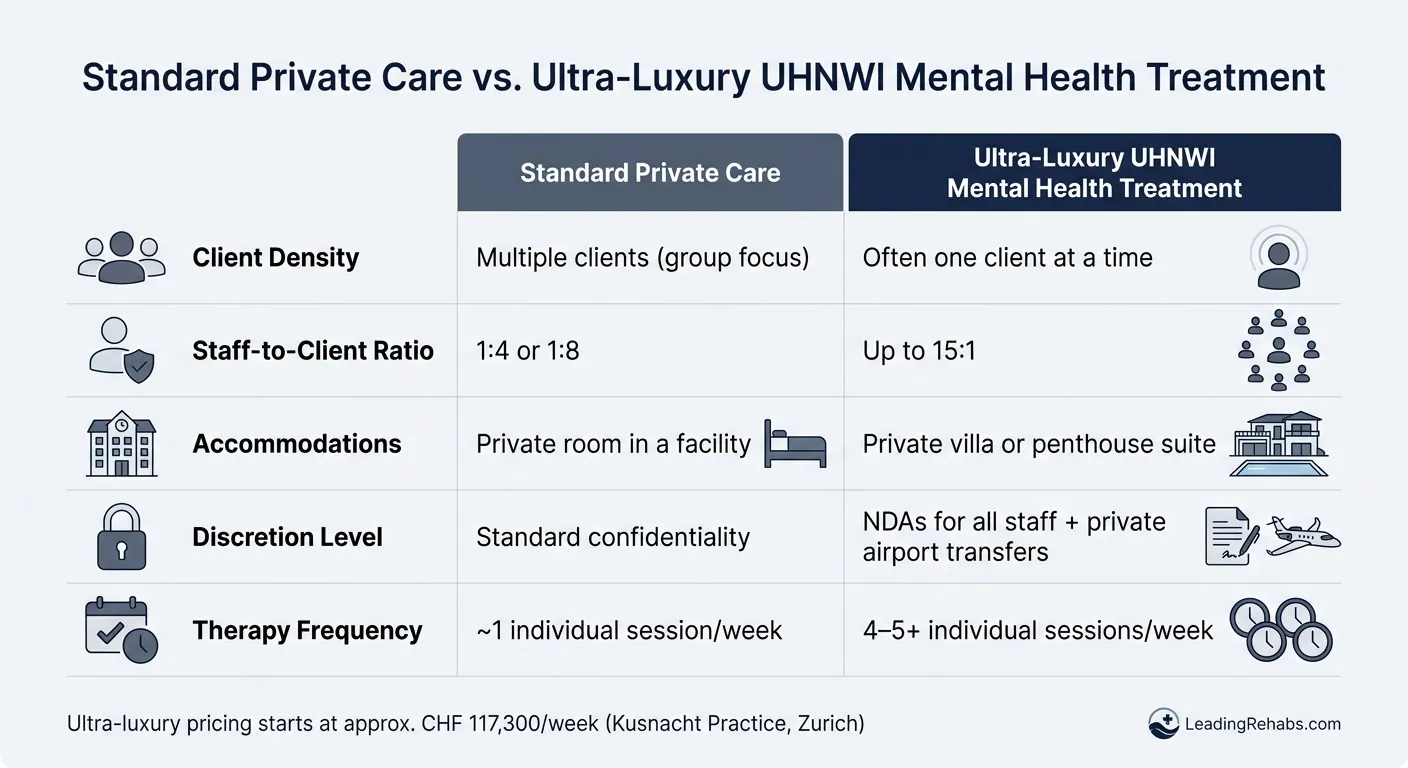
Standard Private Care vs. Ultra-Luxury UHNWI Mental Health Treatment
Finding the right mental health facility can feel like a daunting task. Knowing the right questions to ask - and what should raise concerns - can make all the difference.
Assessing a Facility's Privacy and Confidentiality Policies
Privacy is non-negotiable when it comes to mental health care. A facility’s policies should be airtight, covering everyone you interact with - not just therapists, but also chefs, drivers, and housekeeping staff. Ideally, all staff members should be bound by enforceable non-disclosure agreements.
Location plays a big role, too. Take Switzerland, for instance, where medical secrecy laws are among the strictest in the world. Breaching these laws can result in severe penalties, including prison time. Beyond legal safeguards, look at the facility’s logistical measures for discretion. For example, does it offer private airport transfers? Are there secure entry and exit points to ensure anonymity?
Once privacy measures are confirmed, it’s time to dig into the quality of the clinical care.
Checking Staff Credentials and Treatment Programs
The caliber of the clinical team and the structure of their programs are critical. Look for facilities that employ doctorate-level therapists (PhD or PsyD) rather than relying solely on counselors with master’s degrees. For example, centers like J. Flowers Health Institute in Houston and Amend Treatment in Malibu offer multiple individual therapy sessions each week - far surpassing the single-session-per-week model common in many standard facilities.
Another important factor is the staff-to-client ratio. Some ultra-luxury programs boast ratios as high as 15:1, meaning a team of 15 specialists may be dedicated to just one client. It’s worth asking who will be directly involved in your care and reviewing their credentials. Accreditation from organizations like The Joint Commission or CARF can also provide reassurance about the facility’s commitment to excellence.
Finding the Right Balance Between Luxury and Clinical Care
Luxury amenities can enhance recovery, but only if they serve a therapeutic purpose. Private suites, personal chefs, and concierge services can help eliminate daily stressors that might otherwise hinder progress. However, these features should complement - not overshadow - the treatment itself.
Jan Gerber, CEO of Paracelsus Recovery, highlights the importance of comfort-informed care, especially for ultra-high-net-worth individuals (UHNWIs), who may find rigid protocols unsettling. The most effective programs blend holistic options like acupuncture, breathwork, and tailored nutrition with proven methods such as CBT, EMDR, or biomolecular restoration (bio-R). For instance, The Kusnacht Practice in Zurich uses bio-R to address biochemical imbalances with personalized supplementation. Pricing for this level of care starts at approximately CHF 117,300 per week. Always confirm that a facility is a licensed medical clinic, especially if detox or complex psychiatric care is part of the plan.
This thoughtful mix of privacy, luxury, and rigorous therapy ensures UHNWIs receive the comprehensive support they need for meaningful recovery.
Here’s a quick comparison to help distinguish between standard private care and ultra-luxury options:
| Feature | Standard Private Care | Ultra-Luxury (UHNWI) Care |
|---|---|---|
| Client Density | Multiple clients (group focus) | Often "one client at a time" |
| Staff Ratio | 1:4 or 1:8 | Up to 15:1 |
| Accommodations | Private room in a facility | Private villa or penthouse suite |
| Discretion | Standard confidentiality | NDAs for all staff, private airport transfers |
| Therapy Frequency | ~1 individual session/week | 4–5+ individual sessions/week |
Conclusion: Getting Mental Health Support Without Compromising Privacy
When a CEO’s private treatment becomes public, the fallout can be immense - share prices can drop, and careers may be jeopardized. That’s why exclusive, single-client facilities with strict confidentiality measures and dedicated clinicians are essential. These elements create a secure path from risk to recovery.
As Paracelsus Recovery explains:
"The ultra-wealthy require treatment centres that can provide absolute and 100% confidentiality and discretion. That usually means they need a private treatment centre that only caters to one client at any time."
At this level, what truly defines appropriate care goes beyond luxury. It’s about enforceable NDAs, individualized therapy, secure transportation, and a dedicated clinical team. The environment should support the treatment process, not distract from it. By adhering to these principles, Leading Rehabs ensures that only the most qualified options make the cut.
Leading Rehabs simplifies the search for UHNWIs by thoroughly vetting privacy measures, staff qualifications, and treatment frameworks. Protecting your privacy while achieving meaningful clinical outcomes isn’t just possible - it’s the standard you deserve. This careful balance of discretion and high-quality care forms the foundation of mental health support tailored to UHNWIs.
FAQs
How can I get treatment without it becoming public?
Ultra-high-net-worth individuals (UHNWIs) often turn to private, luxury rehabilitation centers that prioritize both privacy and security. These exclusive facilities cater to their unique needs by offering amenities like private suites, dedicated staff, and highly secure, restricted-access locations. To safeguard clients’ identities and reputations, strict confidentiality protocols are typically in place. This ensures that treatment is not only effective but also discreet, with care customized to meet the demands of high-profile lifestyles while keeping public exposure to a minimum.
What’s the safest way to travel to and from a private facility?
The best way for ultra-high-net-worth individuals (UHNWIs) to travel to and from a private facility is by opting for discreet and secure transportation. Options like private chauffeured vehicles, private jets, or helicopter services cater specifically to high-profile clients. These choices help maintain privacy, limit exposure, and avoid public attention, all while ensuring top-tier security measures are in place.
How do I verify a center’s privacy and security claims?
To assess a center's privacy and security claims, start by examining their confidentiality policies and security protocols. A solid track record of discretion is a good indicator of their reliability. Key features to look for include limited client numbers, strict data handling practices, and robust physical security measures.
Client testimonials or references can offer insight into how well they uphold these standards. Before committing, ensure the center is transparent about their privacy and security measures, providing clear and detailed information to back their claims.