
Private Mental Health Treatment: Complete Guide

Private mental health treatment offers fast access, personalized care, and privacy, making it a preferred choice for many. These facilities cater to individuals seeking high-quality mental health services in serene, exclusive environments. Key benefits include shorter wait times, smaller therapy groups, and tailored treatment plans. However, costs are significantly higher, ranging from $30,000 to $100,000+ per month for luxury options.
Key Points:
- Wait Times: Same-week admissions vs. months-long waits in public care.
- Privacy: Enhanced confidentiality through NDAs, secluded locations, and self-pay options.
- Personalized Care: Longer consultations (60–90 minutes), frequent therapy sessions, and consistent care teams.
- Costs: $800–$2,000 per day for residential care; $30,000–$100,000+ per month for luxury programs.
- Luxury Features: Private suites, gourmet meals, wellness activities like yoga, equine therapy, and neurofeedback.
Private mental health facilities provide intensive, individualized care in tranquil settings, ensuring privacy and flexibility for professionals and high-net-worth individuals.
THE BALANCE Rehab Clinic - Private Care for Complex Mental Health and Addiction

sbb-itb-4b13a7c
Benefits of Private Mental Health Treatment
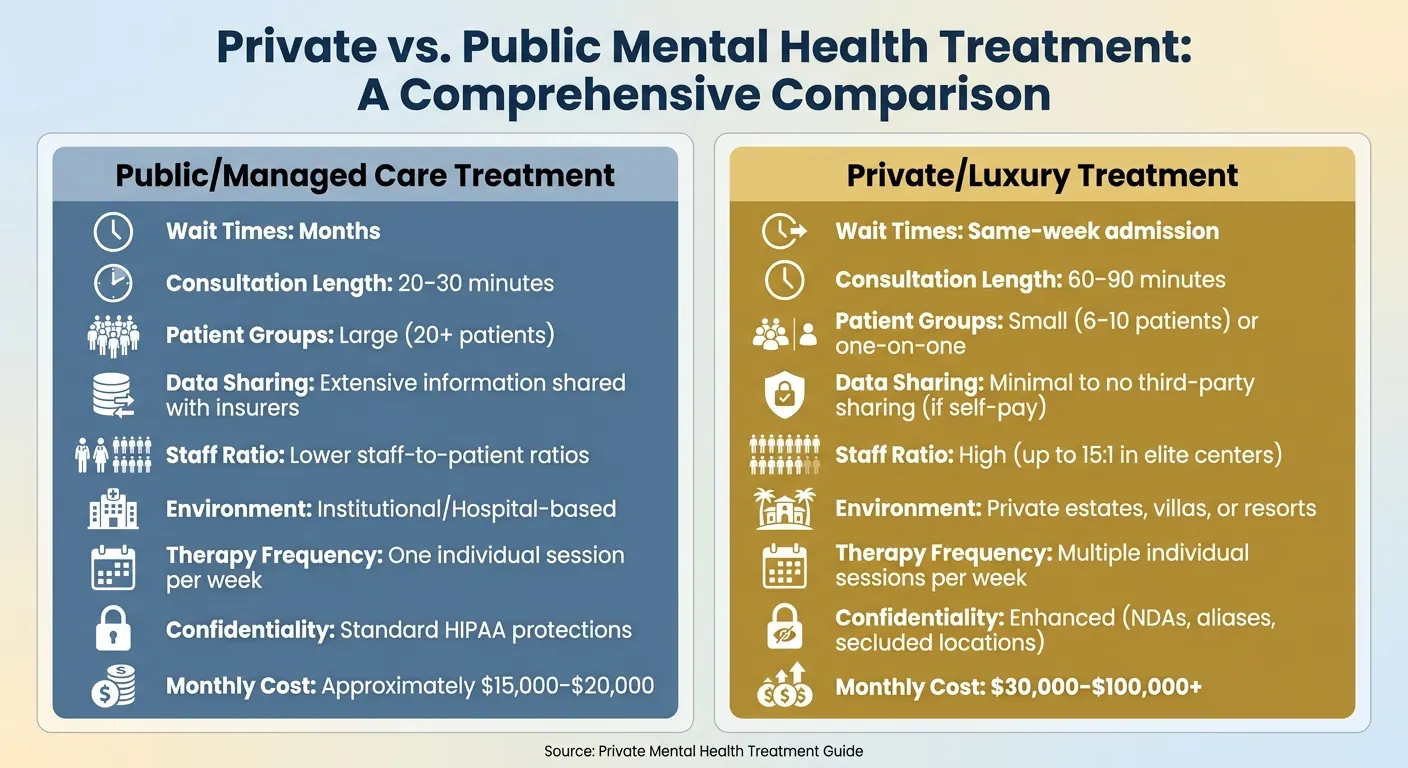
Private vs Public Mental Health Treatment: Key Differences in Wait Times, Cost, and Care Quality
Privacy and Confidentiality
Private mental health facilities go the extra mile to protect client privacy. Beyond meeting HIPAA standards, many require all staff members, including non-clinical workers like drivers and chefs, to sign strict Non-Disclosure Agreements (NDAs). Some even allow clients to use aliases or restrict information sharing within their clinical teams.
The physical location of these facilities also plays a big role in maintaining discretion. Most are tucked away in secluded areas like private estates, mountainsides, or beachfront properties. This creates what experts call a "highly contained space", shielding clients from public exposure while promoting a tranquil healing environment. Some ultra-exclusive centers take privacy a step further, treating only one client at a time.
A major advantage of private care is the self-pay option, which eliminates the need to share sensitive clinical details - such as diagnoses and treatment progress - with insurance companies or Managed Care Organizations. This keeps mental health records off insurance files, offering an added layer of confidentiality. The importance of trust in therapy was highlighted in the U.S. Supreme Court case Jaffe v. Redmond, which stated: "Effective psychotherapy depends upon an atmosphere of confidence and trust in which the patient is willing to make a frank and complete disclosure of facts, emotions, memories, and fears".
"For many executives and public figures, privacy is not a preference. It is a requirement." - Reflections Treatment Center
"Luxury rehab is not about spoiling someone... It's also about pragmatism. You cannot judge someone because they've been successful in business... their reality is also that they're a vulnerable human being... absolute discretion [is required]" - Jan Gerber, CEO of Paracelsus Recovery
This unwavering commitment to privacy lays the foundation for highly individualized care.
Personalized Care Plans
Private mental health treatment is known for its in-depth, personalized approach. For example, initial consultations with private psychiatrists typically last 60–90 minutes, compared to the 20–30 minutes common in public systems. This extended time allows for a thorough review of medical history, lifestyle, and past trauma, leading to more accurate diagnoses and tailored treatment plans.
Another key difference is continuity of care. In private settings, clients work with the same psychiatrist and therapist throughout their treatment, building trust and fostering deeper therapeutic relationships. Public systems, on the other hand, often involve rotating staff, making it harder for patients to establish consistent connections.
Private facilities also excel at addressing dual diagnoses, such as co-occurring mental health conditions and substance use disorders. Treating these issues simultaneously has been shown to significantly reduce relapse rates. Bliss Recovery, for example, has earned a 4.8-star rating on Google for its tailored dual-diagnosis treatment.
"Bliss Recovery delivers truly personalized addiction treatment by designing each recovery plan around the individual, not a standardized program." - Bliss Recovery
Private facilities often offer more frequent therapy sessions. While public programs might provide one session per week, luxury centers generally include four or more individual sessions weekly, allowing clients to delve deeper into advanced therapies like EMDR or psychodynamic therapy. The flexibility to adjust session frequency and therapy types ensures that treatment aligns with each person's unique recovery journey.
Beyond clinical care, the environment itself plays a pivotal role in the healing process.
Luxury Amenities and Services
Private mental health facilities are designed to provide a sanctuary-like experience, creating an atmosphere that promotes recovery. Accommodations often include private suites, gourmet meals, and tranquil outdoor spaces.
Wellness services are a cornerstone of these facilities. Clients can enjoy amenities such as massage therapy, acupuncture, yoga classes, and fully equipped fitness centers. Many also incorporate holistic therapies like equine therapy, art therapy, and adventure-based activities such as ropes courses and guided hikes. Advanced treatments like neurofeedback and biofeedback are also commonly available.
For professionals who need to stay connected, executive support services are invaluable. Many centers offer private workspaces, high-speed internet, and flexible schedules, allowing clients to balance work responsibilities with treatment. Some facilities are even pet-friendly, recognizing the emotional comfort animals provide during recovery.
"Healing happens when you feel safe, supported, and genuinely cared for. That's why luxury treatment centers are designed to feel like a sanctuary." - Resident Magazine
These amenities aren’t just about luxury - they serve a therapeutic purpose. By reducing stress and creating a supportive environment, clients are more likely to engage in the challenging work of recovery.
Private vs. Public Treatment Comparison
Here's a quick breakdown of how private and public mental health treatments differ:
| Factor | Public/Managed Care Treatment | Private/Luxury Treatment |
|---|---|---|
| Wait Times | Months | Same-week admission |
| Consultation Length | 20–30 minutes | 60–90 minutes |
| Patient Groups | Large (20+) | Small (6–10) or one-on-one |
| Data Sharing | Extensive info shared with insurers | Minimal to no third-party sharing (if self-pay) |
| Staff Ratio | Lower staff-to-patient ratios | High (up to 15:1 in elite centers) |
| Environment | Institutional/Hospital-based | Private estates, villas, or resorts |
| Therapy Frequency | One individual session per week | Multiple individual sessions per week |
| Confidentiality | Standard HIPAA protections | Enhanced (NDAs, aliases, secluded locations) |
| Monthly Cost | Approx. $15,000–$20,000 | $30,000–$100,000+ |
When considering a facility, ask about confidentiality measures like NDAs and record storage practices. Opting for self-pay can further enhance privacy by keeping mental health diagnoses off insurance records. Additionally, confirm whether the same clinical team will provide consistent care throughout your treatment journey.
Levels of Private Mental Health Care
Private mental health treatment is designed to meet each individual where they are, offering different levels of care to match varying needs. People begin at the level of care that suits their current situation and transition as their coping abilities strengthen. This approach ensures that each phase of recovery aligns with the person’s progress.
"In mental health, the term 'level of care' refers to the range of available psychiatric services varying in frequency, intensity, and duration." – Molly Schiffer, LCPC, Associate Director of The Center for OCD and Anxiety at Sheppard Pratt
Understanding these levels can help you make an informed decision about where to start and how to navigate the recovery process.
Inpatient Residential Treatment
Residential treatment offers 24/7 clinical and medical care in a fully immersive environment. This level is tailored for individuals in crisis or those dealing with acute psychiatric conditions requiring constant supervision. Stays typically range from 30 to 90 days or more, focusing on long-term recovery.
The residential setting removes individuals from daily stressors, providing a calm and secluded space that allows the nervous system to reset. Daily schedules often include individual therapy, group sessions, and activities like yoga, equine therapy, or neurofeedback to support emotional and physical well-being. Some private facilities enhance this experience with luxurious amenities, such as private rooms and gourmet meals, to create a supportive healing environment.
"Residential care is about creating space for deeper healing, not just surviving a crisis." – Amend Treatment
High staff-to-client ratios are a hallmark of private residential programs. For example, Sage Recovery Villa limits its capacity to 15 clients to ensure personalized care. Many programs also cater to professionals by offering private workspaces and flexible schedules, allowing them to manage responsibilities while receiving treatment.
Partial Hospitalization Programs (PHP)
PHP provides a step-down option from residential care, offering intensive treatment during the day while allowing clients to return home or to a sober living environment in the evenings. Typically requiring 20 or more hours of therapy per week, PHP involves 6–8 hours of daily programming.
This level focuses on helping individuals transition back into daily life while continuing to build coping skills. It includes individual therapy, group sessions, and wellness activities, giving clients the chance to practice these skills in real-world settings.
"By offering the full continuum of care, clients can enter at different levels of care based on the amount of support they need for their unique situation." – Sage Recovery & Wellness Center
PHP is ideal for individuals who are stable enough to manage evenings on their own but still need daily clinical oversight. Many private facilities, such as Sage Recovery Villa, integrate PHP into their care continuum to ensure smooth transitions without losing therapeutic progress. For those re-entering work or school, this level of care provides the necessary structure without being overwhelming.
Intensive Outpatient Programs (IOP)
IOP is the most flexible option within the continuum, designed for individuals balancing treatment with work, school, or other responsibilities. It typically involves 3 hours of therapy per day, 3 to 5 days per week, totaling 9 to 20 hours weekly. Most programs last 8 to 12 weeks, but the duration can be adjusted based on individual progress.
This level is suited for those who can manage daily tasks but still need structured support to avoid relapse. Sessions are often scheduled in the mornings or evenings to accommodate other commitments.
When deciding on the right level of care, consider your current situation and safety needs. For those experiencing severe psychiatric episodes or suicidal thoughts, inpatient residential care is crucial. If you can handle part-time responsibilities but need a structured routine, PHP might be a better fit. For individuals managing daily life but requiring ongoing guidance, IOP offers a balanced option. Always confirm that your chosen facility provides a full continuum of care to ensure seamless transitions as your needs change.
Components of Personalized Treatment Plans
A personalized treatment plan acts as a flexible guide that adapts as you progress. Private facilities craft these plans based on your individual history, symptoms, and goals, ensuring that every step targets your specific needs instead of relying on a one-size-fits-all approach.
"A treatment plan is like a map: If your diagnosis is a reflection of where the client is today, the treatment plan outlines the route to their destination (or goal)." – Headway
Client Assessment Process
The assessment phase is the cornerstone of a personalized treatment plan. Private facilities go beyond basic questionnaires, conducting in-depth evaluations that consider your medical history, trauma, family dynamics, and even genetic predispositions. Many also include cognitive and personality tests to identify co-occurring conditions, such as anxiety and depression, which often need to be treated together.
For depression, assessments may explore mood changes, sleep patterns, appetite, and recurring negative thoughts. Anxiety evaluations often focus on physical symptoms and environmental triggers. A typical psychiatric evaluation lasts about 45 minutes, though more complex cases may take longer. Private facilities often take this further, involving multidisciplinary teams to develop care strategies tailored to your nervous system and unique challenges.
Professionals in high-pressure industries receive assessments that account for stressors like constant travel, reputational concerns, and financial responsibilities. This ensures that treatment addresses not just the symptoms but the root causes as well.
These thorough assessments provide the blueprint for creating truly individualized care plans.
Evidence-Based Therapies
Once assessments are complete, evidence-based therapies become the foundation of the treatment plan. Cognitive Behavioral Therapy (CBT) and Dialectical Behavior Therapy (DBT) are commonly used, but private facilities often supplement these with wellness practices like equine therapy, yoga, acupuncture, or neurofeedback. This comprehensive approach tackles both mental and physical health.
Private care typically offers intensive individual therapy, with sessions often occurring multiple times a week or even daily. In luxury treatment settings, 85.4% of clients prefer individual therapy over group (14.2%) or online (0.4%) options, highlighting the demand for personalized, high-frequency support. When appropriate, Medication-Assisted Treatment (MAT) is integrated, contributing to recovery rates between 40% and 60%.
Regular progress reviews ensure that therapies remain aligned with your evolving needs and goals.
Progress Monitoring and Plan Adjustments
Treatment plans are not static; they evolve based on your progress. Private facilities typically review and adjust plans every 3 to 6 months, or sooner if your symptoms or circumstances change. Multidisciplinary teams meet regularly to reassess your care and make necessary adjustments.
Advanced tools like QEEG brain mapping, neuropsychological tests, and AI-driven screenings (e.g., Aiberry) provide data to complement therapist observations. For those on psychiatric medications, daily monitoring ensures that dosages and protocols are adjusted in real time based on effectiveness and side effects. This level of responsiveness sets private care apart from public programs, which often rely on standardized approaches and less frequent check-ins due to resource limitations.
Goal setting is a collaborative process. You and your care team establish SMART goals (Specific, Measurable, Achievable, Relevant, Time-bound) and revisit them as new insights or challenges emerge. Studies show that when clients actively participate in goal setting, they experience better outcomes and greater satisfaction.
Treatment Plan Structure
In private care, treatment plans are structured to clearly define diagnoses, goals, interventions, and review schedules, all tailored to your specific needs:
| Component | Description | Example |
|---|---|---|
| Diagnosis | ICD-10-CM code and detailed description of primary and co-occurring issues. | F41.1 - Generalized anxiety disorder |
| Goal | Broad, long-term outcomes (usually 2–4 per plan). | Reduce GAD-7 score to ≤10 within 90 days |
| Objective | Specific, measurable steps toward achieving a goal. | Practice diaphragmatic breathing 10 minutes daily |
| Intervention | Detailed clinical techniques, including frequency and modality. | CBT individual therapy, 50 minutes, 3 times weekly |
| Review Cadence | Scheduled intervals for evaluating and updating the plan. | Every 30 days in IOP; every 3–6 months in outpatient |
For insurance purposes, plans should include session details, service locations, provider credentials, and your signed consent. Many private providers use platforms like Carepatron, Quenza, or SimplePractice to track progress and deliver personalized updates directly to your devices. When evaluating a facility, ensure the treatment plan includes clear discharge criteria to avoid indefinite care without measurable progress.
Therapies Offered at Private Mental Health Facilities
Private mental health facilities take a personalized approach to care, combining proven therapies with holistic methods to create a well-rounded treatment plan. These approaches work together to support mental well-being while addressing individual needs and life circumstances.
Cognitive Behavioral Therapy (CBT)
CBT is a widely used method that helps individuals recognize and shift negative thought patterns contributing to conditions like anxiety and depression. In private settings, therapists customize CBT to fit your personal thinking style and professional challenges. For example, they might address stressors such as frequent travel, public scrutiny, or high-pressure work environments. Sessions are often one-on-one, allowing for highly focused and individualized care, which is a hallmark of private treatment facilities.
Dialectical Behavior Therapy (DBT)
DBT is designed to help individuals manage intense emotions and improve interpersonal relationships. It's particularly effective for those dealing with emotional instability or self-harming behaviors. This therapy equips you with practical tools like mindfulness, distress tolerance, and communication strategies to navigate emotional challenges.
"Integrated treatment is generally considered superior to treatment that addresses each disorder separately." – SAMHSA
In private facilities, DBT is often paired with wellness therapies to enhance its effectiveness. Given that roughly 20.4 million adults in the U.S. face both mental health and substance use disorders, many private centers incorporate DBT into dual-diagnosis treatments, addressing multiple conditions simultaneously.
Alternative and Wellness Therapies
Private facilities go beyond traditional methods, offering advanced and experiential therapies to support recovery. Some luxury centers provide options like Ketamine-Assisted Psychotherapy (KAP), somatic therapy (which focuses on releasing trauma stored in the body), and Alpha-Stim, a cranial electrotherapy stimulation device that helps balance emotions [36,37]. Experiential therapies such as equine therapy, art therapy, music therapy, and adventure-based activities like surfing or rock climbing encourage emotional growth and self-confidence. Nature-focused options, including horticultural therapy and wilderness hikes, foster healing by reconnecting individuals with the outdoors.
"Somatic therapy is a holistic approach to healing that focuses on the mind-body connection, helping clients release physical tension and trauma stored in the body through awareness, movement, and breathing." – Arbor Wellness
Additional services like nutritional counseling and gourmet meal preparation support overall health by improving brain function and gut health - key components of emotional well-being. With low staff-to-client ratios, often as low as 6:1, these facilities ensure that every therapy is tailored to meet your unique needs [32,34].
How to Choose a Private Treatment Facility
Selecting a private mental health facility requires careful consideration of factors like clinical expertise, privacy, and how well the program fits your personal and professional needs. While amenities might catch your eye, the real focus should be on finding a center that achieves meaningful results while respecting your lifestyle. Below are key criteria to guide your decision-making, along with examples of top-tier U.S. facilities.
Key Considerations When Choosing a Facility
Accreditation and Expertise
Start by ensuring the facility is accredited by The Joint Commission (JCAHO), a leading authority in healthcare certification. State licensing, such as through the Department of Health Care Services, is another must. For individuals dealing with complex issues like treatment-resistant depression or co-occurring mental health and substance use disorders, look for centers that specialize in dual diagnosis care. This expertise can be crucial for high-functioning professionals whose mental health challenges may be masked by demanding careers.
Privacy and Discretion
Privacy is often a top priority. Leading facilities offer services like discreet transportation, the option to use aliases, and secure, gated properties to ensure confidentiality.
Staff-to-Client Ratios
A low staff-to-client ratio, such as 6:1, allows for personalized care and more one-on-one support. It's also worth asking how many individual therapy sessions are provided each week to ensure the level of attention meets your needs.
Professional-Friendly Features
For those balancing work and treatment, look for programs that offer private workspaces, flexible schedules, and concierge-level case management. These features allow professionals to maintain some connection to their careers during treatment. Additionally, the best programs start planning for aftercare from day one, including connecting clients with career coaches to ease the transition back to work.
Cost
Private mental health treatment can range from $30,000 to over $100,000 per month, with some luxury programs charging tens of thousands per week. Standard inpatient programs, by comparison, typically cost $10,000 to $20,000 per month. Since treatment often lasts 30 to 90 days, it's essential to calculate the total cost when planning your investment.
Examples of Leading U.S. Treatment Centers
Here are some standout facilities that combine clinical expertise with luxurious settings:
Avalon Malibu
Located in Malibu, California, Avalon Malibu is both JCAHO-accredited and state-licensed (DHCS License 190057CP). This oceanfront center offers a 6:1 staff-to-client ratio and 24/7 medical support, along with private suites and specialized programs for dual diagnosis and treatment-resistant depression. Discreet transportation services are also available for clients arriving from nearby areas like Beverly Hills.
Borden Cottage
Nestled in Camden, Maine, Borden Cottage provides a secluded, coastal retreat with a personalized, non-institutional approach. Its tranquil New England setting ensures privacy and an intimate care experience.
Oro House Recovery
Also based in Malibu, Oro House Recovery integrates evidence-based treatments with experiential therapies like adventure therapy. Their Compassionate Care Model® emphasizes holistic healing in a luxurious environment.
Reflections
Designed for high-functioning professionals, Reflections in California offers private offices, mandatory NDAs for staff, and concierge-style support. The program is tailored for those needing to balance intensive treatment with career responsibilities.
Comparing Facilities
To help narrow down your options, here’s a side-by-side comparison of key features and costs:
| Facility Name | Location | Key Features | Monthly Cost Range |
|---|---|---|---|
| Avalon Malibu | Malibu, CA | Oceanfront, 6:1 staff ratio, dual diagnosis focus | $30,000 - $60,000+ |
| Borden Cottage | Camden, ME | Coastal estate, intimate care | $40,000 - $80,000+ |
| Oro House Recovery | Malibu, CA | Adventure therapy, holistic care | $25,000 - $50,000+ |
| Reflections | California | Executive offices, concierge care | $30,000 - $100,000+ |
When evaluating facilities, don't hesitate to ask detailed questions, such as:
- "What experience does the team have working with professionals or high-net-worth clients?"
- "Can the program adapt if my clinical needs change during treatment?"
Finding Elite Private Care with Leading Rehabs
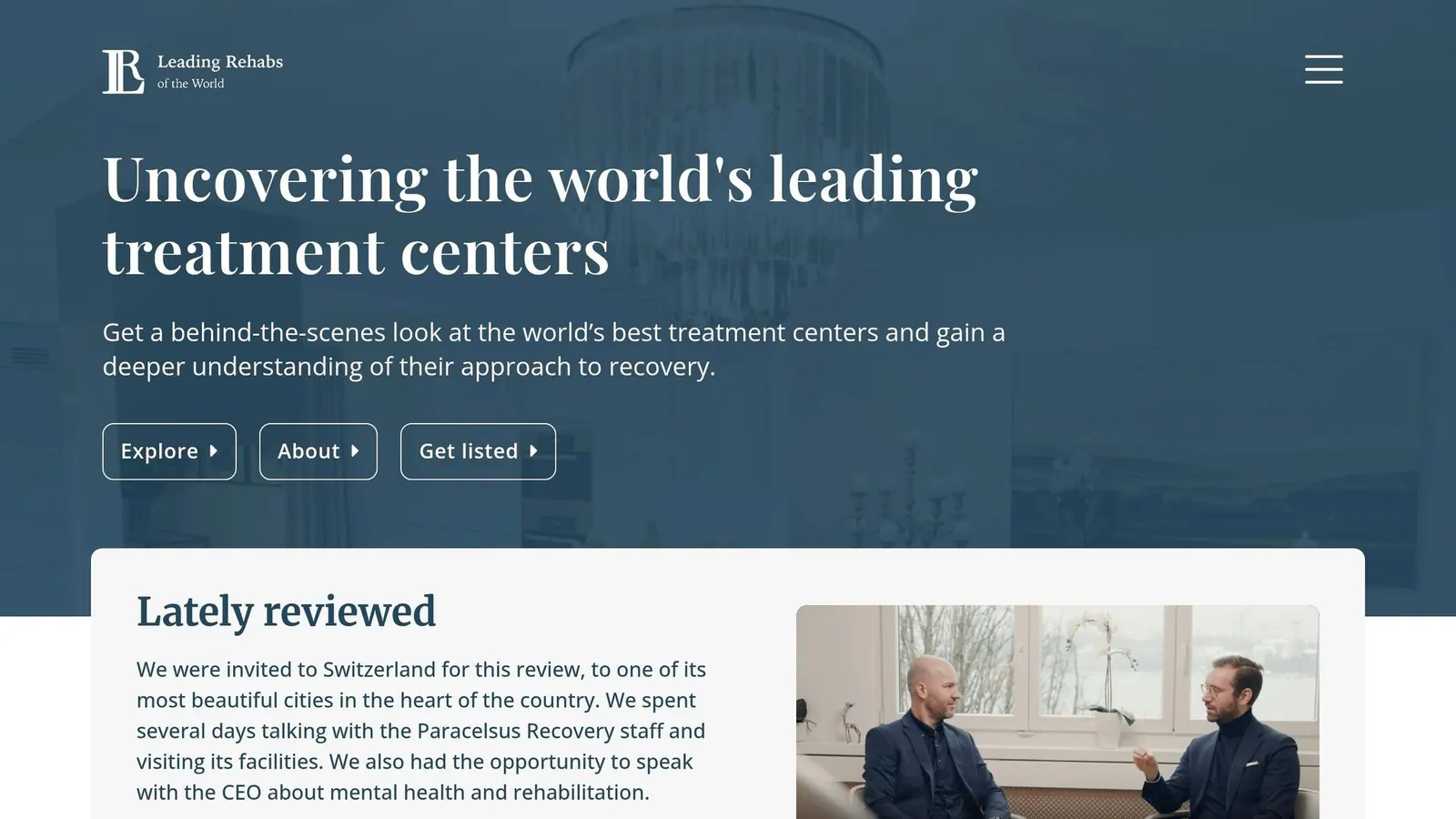
Navigating the search for top-tier private mental health care can feel overwhelming, especially when you're seeking both luxury and clinical expertise. Leading Rehabs makes this process easier by connecting high-net-worth individuals and busy professionals to some of the world's best treatment centers. This curated platform offers a streamlined approach to finding exclusive, personalized care.
Leading Rehabs Platform Features
Leading Rehabs evaluates more than 570 luxury rehab centers worldwide, ensuring each meets rigorous standards for privacy, comfort, and clinical quality. Each facility profile includes detailed information about treatment philosophies, staff credentials, specialized programs, and amenities such as private villas or gourmet dining.
To help users make informed decisions, the platform uses verified status badges to highlight centers that meet criteria for relevance, popularity, and quality. Facilities with third-party accreditations from organizations like The Joint Commission or CARF, as well as those with "Measures Outcomes" badges, stand out for tracking and demonstrating treatment effectiveness. This emphasis on transparency ensures you're selecting a center that delivers results, not just luxury.
The platform also includes tools for direct communication, like "Message" and "Call" buttons, allowing for immediate and confidential consultations with admissions teams. For professionals juggling treatment with work, filters for executive-friendly features - such as private workspaces, flexible scheduling, and concierge-level case management - are available. Together, these features simplify the process of finding a facility that aligns with your specific needs.
How to Use Leading Rehabs
To get started, filter your search by location, insurance acceptance, and desired amenities, such as private rooms, chef-prepared meals, or pet-friendly options. Unlike public directories that focus on accessibility and state-funded programs, Leading Rehabs caters to private-pay and PPO insurance facilities designed for high-functioning individuals.
The platform offers three listing tiers for treatment centers: Basic Light (free), Basic ($275/year), and Premium (starting at $5,000/year). Premium listings provide added value with on-site reviews, video content, and prominent placement, showcasing centers that prioritize transparency and quality. When comparing facilities, pay attention to profiles that include details like staff-to-client ratios, specialized clinical approaches like neurofeedback, and strong privacy measures.
Conclusion
Private mental health care offers several clear benefits compared to public programs. For instance, private facilities often provide quicker admission, sometimes within days rather than months. Therapy sessions in these settings are more comprehensive, lasting 60–90 minutes instead of the shorter 20–30-minute consultations common in public care. Additionally, private programs typically feature smaller, more intimate groups (6–10 patients), creating a setting that fosters stronger therapeutic connections and access to specialized treatments like neurofeedback or equine therapy.
Whether you need 24/7 residential care, flexible outpatient options, or support tailored for executives, private care offers a range of choices to fit your lifestyle. Of course, costs can vary significantly depending on the program's intensity and structure. Planning for seamless aftercare, including follow-up appointments and ongoing support, is crucial to long-term success.
"Seeking treatment within weeks of symptom escalation - not years - prevents hospitalization and prolonged suffering." - Matthew Howe, PMHNP-BC, Cedar Hill Behavioral Health
When choosing a facility, make sure it holds recognized accreditation, such as from The Joint Commission or CARF. Also, ensure that board-certified psychiatrists are leading the treatment teams. Confirm that your insurance complies with mental health parity laws, which require coverage for mental health services to be on par with physical health care. Early planning for aftercare is essential to schedule follow-ups and develop a crisis safety plan.
To simplify the process of finding the right care, you can use platforms like Leading Rehabs. This resource evaluates over 7,690 treatment centers worldwide, offering verified status badges to highlight quality options. It also provides tools for confidential consultations and filters for specialized needs, such as executive-friendly features, privacy protocols, and tailored clinical approaches. These tools can help you find a facility that aligns with both your therapeutic goals and lifestyle preferences.
FAQs
How do I know which level of care I need (residential, PHP, or IOP)?
The type of care you need depends on how serious your condition is and the kind of support required. Residential care works well for severe conditions that need round-the-clock supervision. PHP (Partial Hospitalization Program) offers intensive treatment during the day, but you can go home in the evening. IOP (Intensive Outpatient Program) provides part-time therapy for individuals who are stable enough to stay at home. A mental health professional can help determine the best option based on your symptoms and safety requirements.
Will private treatment keep my mental health records off my insurance file?
Private treatment allows you to keep your mental health records separate from your insurance file. These records are maintained by the provider or facility and aren’t shared with insurance companies unless you give explicit consent. This approach offers you more privacy and control over your personal information.
What should I ask a facility to confirm it’s truly high-quality - not just luxurious?
When evaluating a facility, it’s important to look beyond appearances. A luxurious setting might be appealing, but the real question is: does it meet high care standards?
Start by asking about their commitment to recognized benchmarks like safety, effectiveness, and patient satisfaction. Find out if they follow evidence-based protocols and whether their clinicians are fully qualified. Personalized treatment plans should also be part of their approach.
Additionally, dig into how they track their success. Do they focus on measurable outcomes rather than just offering amenities? Ask about their quality monitoring processes to ensure the care provided is genuinely effective. This way, you can ensure the facility prioritizes meaningful results over superficial features.