
Perfectionism & the Pressure of Success: Tailored Treatment for Elite Performers

For high achievers like athletes, executives, and artists, perfectionism can drive success but also lead to hidden mental health struggles. This article explores how perfectionism impacts elite performers, the mental and physical toll it takes, and the specialized treatments available to help them thrive without compromising their well-being. Key insights include:
- Types of Perfectionism: Self-imposed goals, external expectations, and fear of failure.
- Mental Health Risks: Anxiety, depression, burnout, and overtraining syndrome.
- Effective Treatments: Mindfulness, self-compassion, and personalized wellness plans.
- Luxury Rehabilitation: Private, tailored care for those with high-pressure lifestyles.
Elite performers often face unique challenges that require specialized care. This guide outlines evidence-based strategies and tailored solutions to help them maintain success while protecting their mental health.
Perfectionism and Its Effects on Elite Performers
How Perfectionism Shows Up in High Achievers
Perfectionism takes on different forms for elite performers, often fitting into three main categories identified by researchers:
| Dimension | Description | Who Experiences It |
|---|---|---|
| Self-Oriented (SOP) | Setting extremely high standards for oneself | The performer |
| Other-Oriented (OOP) | Expecting perfection from teammates or colleagues | Those around the performer |
| Socially Prescribed (SPP) | Feeling that others (coaches, fans, sponsors) demand perfection | The performer (externally driven) |
Each of these dimensions brings unique pressures, shaping behaviors and increasing vulnerabilities. Socially prescribed perfectionism, in particular, can create relentless external expectations where even minor mistakes feel catastrophic. For example, after her 2018 U.S. Open victory, Naomi Osaka faced immense pressure, eventually stepping back from the 2021 French Open to focus on her mental well-being. She explained:
"For so long I tied winning to my worth as a person. anyone who'd know me would know me for being a tennis player, so what am I if I'm not a good tennis player?" - Naomi Osaka, Professional Tennis Player
This drive for flawlessness often leads to behaviors like overtraining, excessive work habits, and obsessive preparation. Unfortunately, many elite performers conceal their struggles, delaying the help they need.
Mental and Physical Health Consequences
Chronic perfectionism is closely tied to a range of mental health challenges, including anxiety, depression, obsessive-compulsive disorder, eating disorders, social phobia, and even suicidal thoughts. As Heidi Marian Haraldsen from the Norwegian School of Sport Sciences explains:
"Perfectionistic concerns appear to be a vulnerability factor that exposes elite junior performers to higher risks of entering a self-defeating motivational cycle."
On the physical side, perfectionism often leads to overtraining syndrome, which stems from insufficient recovery. This condition can cause issues like overuse injuries (e.g., ACL tears, stress fractures), sleep disturbances, and disordered eating. These physical problems can worsen mental health struggles, creating a vicious cycle that becomes harder to break without professional intervention.
Understanding these interconnected challenges is crucial for developing effective, personalized treatment strategies, which will be explored in the next section.
sbb-itb-4b13a7c
Treatment Approaches for Perfectionism and Performance Pressure
Evidence-Based Psychological Therapies
Perfectionism often drives issues like anxiety, depression, and eating disorders. Addressing it can lead to broader mental health improvements since it tackles multiple challenges at once.
Two psychological approaches that have shown promise for high achievers are Mindfulness-Based Stress Reduction (MBSR) and Mindful Self-Compassion (MSC). These methods not only help reduce unhealthy perfectionism - characterized by fear of mistakes and constant self-doubt - but also allow individuals to maintain their motivation for success. A randomized controlled trial conducted at the University of Bergen involved 89 students between Spring 2018 and Spring 2019. Participants attended a brief program combining MBSR and MSC, which included four weekly 3-hour seminars and a 4-hour silent retreat. The results? Significant reductions in evaluative concerns, anxiety, and depression, paired with noticeable increases in self-compassion.
"The more self-compassionate an individual is the less likely they are to score high on perfectionism." - Frontiers in Psychology
One practical takeaway from this research is the "How Would You Treat a Friend" exercise. This activity encourages individuals to compare their harsh self-criticism with the supportive advice they’d offer a friend. By doing so, they disrupt the cycle of self-criticism that fuels perfectionism. This mindfulness-based tool naturally leads to personalized strategies, which can then be incorporated into tailored wellness plans to address the unique needs of each performer.
Personalized Wellness Plans
Elite performers face a variety of challenges, and no single approach works for everyone. Crafting an effective plan starts with a comprehensive assessment that considers mental health, medical history, sleep patterns, nutrition, and overall lifestyle.
A helpful framework for these plans is drawn from Self-Determination Theory, which emphasizes meeting three core psychological needs:
- Autonomy: Having real choices and control over decisions.
- Competence: Feeling capable and mastering skills.
- Relatedness: Building meaningful connections with others.
When these needs are met, performers are more likely to stick with their wellness routines, even in high-stress situations.
| Component | Focus Area | Objective |
|---|---|---|
| Identity Building | Non-performance hobbies | Prevent burnout by broadening sources of self-worth. |
| Sleep Hygiene | Environmental control | Improve sleep quality and reduce injury risks. |
| Values Alignment | Meaning-making | Build resilience by finding purpose in challenges. |
| Medical Review | Physical-Mental link | Identify physical signals that may indicate future mental health issues. |
Sleep, in particular, is often overlooked. Studies show that nearly 50% of student-athletes struggle with sleep-related problems. Poor sleep not only impacts mental health but also accelerates physical decline. Treating sleep as a critical part of training - not just a luxury - can lead to significant performance and health improvements. When lifestyle changes and therapy aren't enough, adding psychiatric support can help round out the treatment plan.
Psychiatric and Medical Support
In some cases, lifestyle adjustments and therapy may not fully address the challenges of perfectionism. When perfectionism contributes to clinical conditions such as anxiety, depression, or overtraining syndrome, specialized psychiatric and medical care becomes essential. For example, a thorough psychiatric evaluation might uncover sleep disorders, hormonal imbalances, or other co-occurring conditions that need targeted medical attention. The goal here is to address these physiological barriers without dampening the individual’s drive to succeed.
The Psychology of Perfectionism in Athletes (Fix This Mindset)
Luxury Rehabilitation for Elite Performers
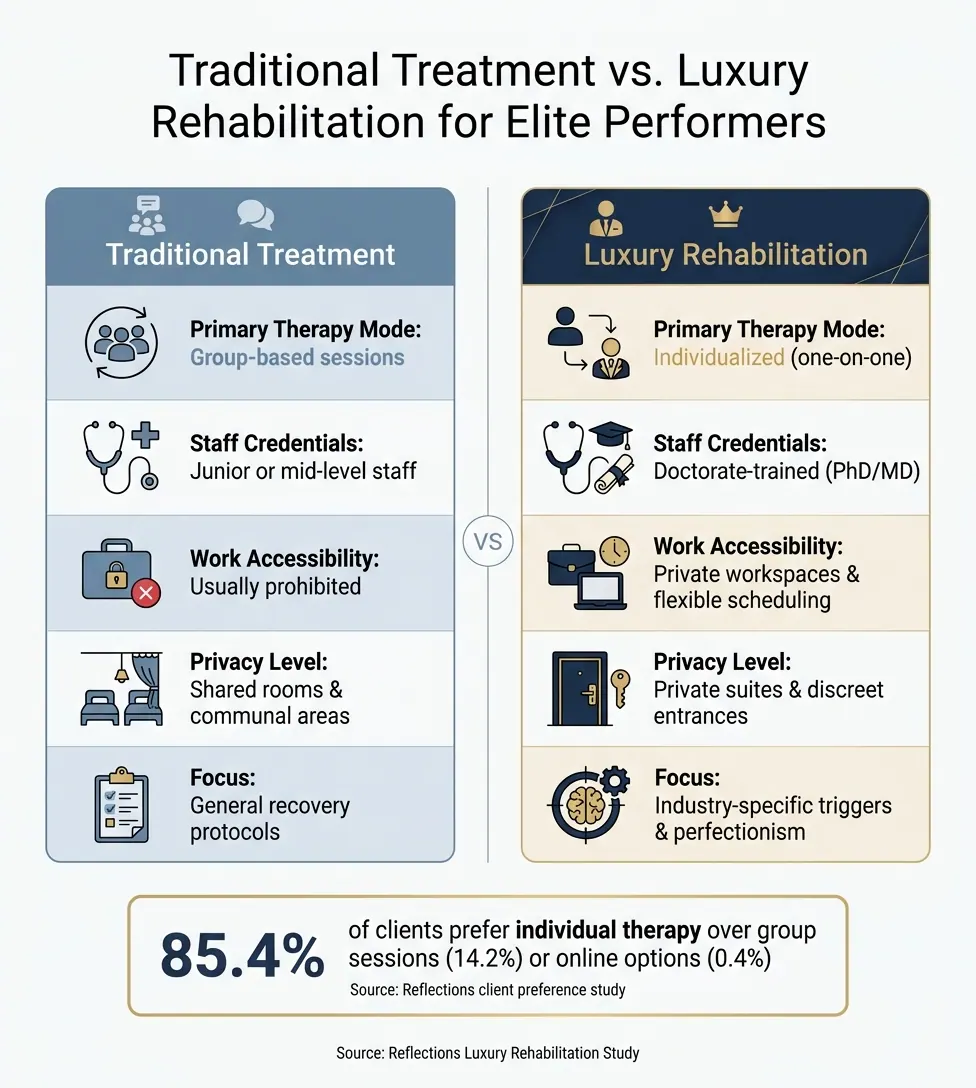
Traditional Treatment vs. Luxury Rehabilitation for Elite Performers
When psychiatric care and personalized wellness plans fall short, the treatment setting itself becomes a critical factor. For elite performers, the environment must align with their complex lifestyles while addressing their unique challenges.
What Sets Luxury Rehabilitation Apart
Luxury rehabilitation stands out not because of lavish amenities, but due to its clinical depth and personalized approach. Unlike traditional programs that emphasize group therapy and rigid schedules, luxury centers focus on one-on-one therapy with highly qualified clinicians, such as those holding PhDs or MDs. In one study, 85.4% of clients preferred individual therapy over group sessions (14.2%) or online options (0.4%).
These centers also prioritize privacy and discretion. With limited bed counts, private suites with separate entrances, and staff bound by strict NDAs, clients can maintain their public profiles without fear of exposure.
"For you, the decision to seek help is often less about willingness and more about risk. Public exposure, gossip in your industry, or perceived instability can affect deals, board relationships, and even market confidence." - Reflections
Here’s a quick comparison of traditional treatment versus luxury rehabilitation for elite performers:
| Feature | Traditional Treatment | Luxury Rehabilitation |
|---|---|---|
| Primary Therapy Mode | Group-based sessions | Individualized (one-on-one) |
| Staff Credentials | Often junior or mid-level staff | Doctorate-trained (PhD/MD) |
| Work Accessibility | Usually prohibited | Private workspaces & flexible scheduling |
| Privacy Level | Shared rooms/communal areas | Private suites & discreet entrances |
| Focus | General recovery protocols | Industry-specific triggers & perfectionism |
Program Features Designed for Elite Performers
Luxury rehabilitation programs address the unique pressures faced by high achievers, such as public scrutiny, wealth-related stress, and the relentless demands of their careers. These programs often incorporate unconventional methods tailored to these challenges.
For instance, some centers use activities like golf as therapeutic tools. At Reflections, golf is described as a "therapeutic mirror", offering insights into a client’s responses to pressure, mistakes, and control issues. Other programs integrate cutting-edge approaches like biohacking and regenerative medicine, including IV therapy, neurofeedback, and personalized "Bio-Op" plans designed to balance brain chemistry alongside psychological work.
"For high-performing leaders, golf becomes a therapeutic mirror - revealing patterns, tension, impulse, and areas of growth in a way talk therapy alone cannot reach." - Reflections
Privacy and exclusivity are also key. Centers like New Life adopt a "one client at a time" model, ensuring undivided clinical focus and complete confidentiality. Their Prestige Program, valued at over $1,000,000, offers an uncompromised recovery experience for clients requiring the highest level of discretion and care. Most luxury programs recommend a minimum 28-day stay to achieve meaningful outcomes.
For executives and professionals, maintaining work continuity is often non-negotiable. Luxury centers accommodate this need with private workspaces and secure internet access, enabling clients to manage essential responsibilities without compromising their treatment.
How Leading Rehabs Connects Clients to Care
Finding the right luxury rehabilitation program can be challenging due to the discretion these centers maintain. Leading Rehabs simplifies this process by offering detailed profiles of top-tier centers in locations like Marbella, Zurich, Mallorca, London, Dubai, Bali, and Northern California.
The platform allows ultra-high-net-worth individuals to evaluate programs based on factors like clinical expertise, staff qualifications, privacy measures, and their specialization in performance-related mental health. Pre-admission consultations are strongly encouraged to ensure the clinical team is equipped to handle the unique demands of elite performers.
Maintaining Mental Health and Performance After Treatment
Ongoing Mental Health Practices After Treatment
After completing treatment, sticking to personalized mental health strategies is key to staying resilient and performing well. Leaving a luxury rehabilitation program is just the start - it takes ongoing effort to use the tools from treatment while juggling the demands of everyday life.
The basics - consistent sleep, exercise, and nutrition - are non-negotiable. Without these, resilience weakens. For instance, about 25% of athletes face sleep problems that directly affect their focus and performance. That makes prioritizing sleep hygiene essential.
Once the basics are in place, refining mental strategies becomes the next step. Cognitive Behavioral Therapy (CBT) is a powerful tool for challenging unhelpful thought patterns, like "all-or-nothing" thinking, before they spiral. Elite long-distance runner Cali Werner demonstrated this beautifully. By using CBT to let go of perfectionist thoughts, she rediscovered the joy of running, hit a personal record, and called it her "best race ever".
"Confidence often leads to success, and so cognitive behavioral therapy at its core is the restructuring of negative thoughts into more positive ones." - Cali Werner, LCSW, Baylor University
Mindfulness and breathwork also play a big role in managing high-pressure situations. Techniques like the 4×4 breathing method - inhale, hold, and exhale for four seconds each - help regulate heart rate and calm the mind. Visualization routines, practiced daily, are another effective tool. Olympic swimmer Michael Phelps, for example, used guided meditation and event visualization every morning and night. His coach, Bob Bowman, credited these practices with helping Phelps maintain his mental edge, contributing to his 23 Olympic gold medals.
Relapse prevention requires a proactive approach. The HALT method - which stands for hunger, anger, loneliness, or fatigue - helps identify emotional vulnerabilities before they escalate. Building a "recovery circle" of trusted individuals, including a therapist, physician, and close confidants, creates a safe space for honesty. As Dr. Steven Melemis explains, this allows performers to be "uncomfortably honest" when they need it most.
Reframing Success and Personal Identity
Sustaining mental well-being also means rethinking what success looks like. For many high achievers, self-worth is tied to outcomes - winning titles, hitting revenue goals, or achieving rankings. But this mindset can turn every setback into a personal failure, which isn't sustainable.
Constant high performance keeps the body in a state of heightened stress, with elevated cortisol and adrenaline levels. Over time, this wears down concentration, mood stability, and even the immune system. Unlike athletes, most professionals don’t have an off-season, so scheduling intentional recovery is critical.
"High performers do not burn out because they are weak. They burn out because they are wired for sustained intensity - without sustained recovery." - Sydney Jones, Therapist, Lifeologie Counseling Dallas
Another key to resilience is broadening your sense of identity. This doesn’t mean lowering ambition but investing in relationships, hobbies, and values beyond work. This approach helps create a self that can handle setbacks without falling apart. Kelli Moran-Miller, Stanford’s Associate Athletics Director for Mental Health & Performance Psychology, sums it up well:
"When they're at their best, athletes are focused on just being in the moment and executing their job. They're not worrying about outcomes, how important a particular moment is, or what could go wrong."
The goal isn’t to care less about performance - it’s to stop letting it define who you are. Shifting from performance as identity to performance as a form of expression allows for sustained excellence without the mental toll that often drives elite performers to seek treatment in the first place.
Conclusion: Tailored Care for Perfectionism in Elite Performers
Perfectionism isn’t a personality flaw - it’s a behavioral pattern that, if left unmanaged, can quietly take a toll on mental health, relationships, and long-term performance. For elite performers, the risks are even greater, and the signs often go unnoticed. Many face overlapping challenges like anxiety, depression, trauma, or substance use, yet outwardly seem to have everything under control. As discussed earlier, leaving perfectionism unchecked can lead to serious personal and professional consequences.
Standard treatment approaches often fall short for individuals in high-pressure roles. Luxury rehabilitation programs are designed to address these unique needs, offering doctorate-level clinicians, tailored therapy, and concierge-style care. These programs adapt to the realities of demanding careers, such as travel commitments, public visibility, and the need to maintain professional momentum, ensuring therapy is both effective and highly personalized.
By early 2026, industries like professional sports and other high-stakes fields are increasingly examining how perfectionism might be contributing to harmful workplace dynamics. This growing awareness highlights the hidden struggles elite performers face and reflects a rising demand for specialized care.
"In practice, you are investing not only in comfort but in the depth and intensity of individualized care that can support lasting recovery while you maintain your role and reputation." - Reflections
Leading Rehabs connects elite performers with top-tier treatment centers, providing detailed profiles of specialized facilities. This ensures clients can choose the right care while safeguarding their privacy and professional image.
FAQs
How can I tell if my perfectionism is healthy or harmful?
Healthy perfectionism focuses on striving for high standards and appreciating quality while finding fulfillment in your efforts, regardless of outside approval. It views mistakes as chances to learn and improve. On the other hand, harmful perfectionism stems from a fear of failure, relentless self-criticism, and linking your sense of self-worth to accomplishments. This mindset can contribute to anxiety, burnout, and emotional strain. Take a moment to consider whether your self-esteem is tied to outcomes - it’s a useful way to gauge how perfectionism might be affecting your mental well-being.
What are the warning signs of burnout or overtraining in high performers?
Persistent exhaustion, mental fatigue, and irritability - even when achieving goals - are common signs of burnout or overtraining in high performers. You might also notice difficulty unwinding, a constant sense of tension, and feeling "wired but tired." Emotional capacity often diminishes, leaving you with a limited range of feelings and an inability to experience true satisfaction or rest.
How do I choose a private luxury rehab that fits my career and confidentiality needs?
To find a private luxury rehab that aligns with your career and need for privacy, consider programs that offer customized therapy, exclusive settings, and adaptable schedules. Seek out facilities that emphasize confidentiality through measures like HIPAA compliance and private living arrangements. It's also important to choose programs designed to address the specific challenges faced by high-level professionals, ensuring discretion and compatibility with your work commitments.