
Medication Addiction (Adderall, Benzodiazepines) Among Executives

Executives face relentless pressure - long hours, high-stakes decisions, and constant stress. This environment has led to a concerning rise in the misuse of medications like Adderall and benzodiazepines. These drugs, initially used to manage focus or anxiety, often spiral into dependency, affecting health, decision-making, and leadership effectiveness.
Key Points:
- 11.4% of managers report substance use disorders annually, but stigma keeps many from seeking help.
- Adderall misuse often begins as a productivity booster but evolves into dependency.
- Benzodiazepines are frequently used alongside stimulants, creating dangerous cycles.
- Addiction impacts physical health, emotional stability, and professional relationships.
- Luxury rehab centers offer tailored treatments, privacy, and work accommodations to help executives recover without derailing their careers.
This article explores how addiction develops, its toll on leadership, and how specialized recovery programs support long-term success.
How Medication Misuse Develops Among Executives
How Work Stress Drives Medication Misuse
Life at the top isn’t just challenging - it’s relentless. Executives face long hours, constant pressure to perform, budget cuts, and fierce competition. This chronic stress doesn’t stop when the workday ends; it lingers, taking a toll on both the body and mind. Sleep deprivation and decision fatigue become everyday realities, not rare occurrences.
In this environment, prescription medications can start to look like a quick fix. The Substance Abuse and Mental Health Services Administration notes that management ranks as the third most at-risk industry for illicit drug use. This statistic highlights the intense and unremitting demands of leadership roles. What may begin as an occasional reliance on medication to maintain performance can slowly evolve into dependency.
Adderall Misuse: From Productivity Aid to Dependency
For many executives, Adderall misuse doesn’t start with reckless intent. It’s often seen as a tool to meet specific challenges - a major presentation, tax deadlines, or an all-night work session. Initially, it’s used sparingly, only during high-pressure moments. But over time, patterns change. What starts as occasional use for critical tasks morphs into daily reliance. The body builds a tolerance, requiring higher doses to achieve the same effect. At this stage, Adderall is no longer about boosting performance; it’s about maintaining a baseline just to get through the day.
"High earning professionals, such as executives and senior managers, usually have very stressful, anxiety-riddled, and sleep-deprived careers." - American Addiction Centers
This shift from occasional use to dependency doesn’t just harm physical health - it undermines leadership capabilities. The "high-functioning" myth makes this issue particularly insidious. As long as the company thrives and the numbers look good, many executives convince themselves they’re still in control. This illusion often delays acknowledgment of the problem, sometimes for years.
Benzodiazepine Dependency and Combined Drug Use
As dependency deepens, some executives turn to additional medications to manage the side effects of stimulants like Adderall. These stimulants speed up the body, leading to increased heart rates, heightened anxiety, and severe insomnia. To counteract these effects, many turn to benzodiazepines like Xanax or Ativan, creating a dangerous cycle of stimulants to push through the day and sedatives to wind down at night.
This combination is particularly hazardous. Each drug amplifies the neurological impact of the other, making it even harder to break free from the cycle.
"The chronically stressed executive becomes simultaneously less capable of rational decision-making and more reactive to emotional stimuli." - The Private Client
Financial resources often enable executives to maintain access to these medications, deepening their dependency. With personal wealth, they can secure larger supplies, and loyal assistants or colleagues may cover for them out of fear of jeopardizing their own positions. Unlike others who might face visible consequences like financial hardship or job loss, executives can keep their addiction hidden behind a façade of professional success. This allows the problem to escalate quietly, often unnoticed until it’s deeply entrenched.
sbb-itb-4b13a7c
How Medication Addiction Affects Executives
The effects of medication addiction ripple through every aspect of an executive's life, impacting their health, leadership abilities, and professional relationships in profound ways.
Physical and Mental Health Effects of Long-Term Misuse
Prolonged misuse of medications like Adderall and benzodiazepines takes a heavy toll on both physical and mental well-being. For executives already battling chronic exhaustion and disrupted sleep patterns, stimulants can exacerbate these issues, leading to a vicious cycle of dependence. On the other hand, benzodiazepine addiction introduces its own set of challenges, especially during recovery. Withdrawal symptoms from these medications can be severe, often requiring careful, medically supervised tapering to ensure safety.
How Addiction Affects Decision-Making and Leadership
Substance misuse doesn’t just affect the body - it disrupts critical brain functions, particularly in the prefrontal cortex. This part of the brain is responsible for strategic thinking, impulse control, and sound decision-making - all essential traits for effective leadership. Chronic misuse alters these functions, making it harder for executives to manage stress or regulate emotions. Instead of leading with calm and reason, they may become more reactive and emotionally volatile, which can have serious consequences for their teams and business outcomes.
"The family office that manages significant assets on behalf of a principal whose judgment is impaired by burnout, substance use, or untreated mental health conditions faces liability exposure, operational risk, and potential fiduciary breach." - The Private Client
These changes not only compromise decisions in the boardroom but also strain professional relationships and make it harder for executives to recognize when they need help.
Reputation, Relationships, and Delayed Help-Seeking
Addiction can deeply damage an executive's reputation and relationships. Behaviors like aggression, paranoia, and severe mood swings undermine the steady, dependable leadership that teams rely on. Compounding the issue is the culture of silence that often surrounds executive substance abuse. Fear of retaliation or job loss prevents colleagues from speaking up, while assistants and peers may even cover up the problem to protect the executive’s image. This dynamic delays intervention, allowing the addiction to worsen behind a façade of success.
"Associates do not confront them out of fear of losing their job, assistants and other executives cover up their substance use." - American Addiction Centers
These cascading effects underscore the importance of specialized rehabilitation programs tailored to the unique pressures and challenges executives face. Addressing these issues requires an approach that balances professional responsibilities with the need for recovery.
How Luxury Rehabilitation Centers Treat Executive Addiction
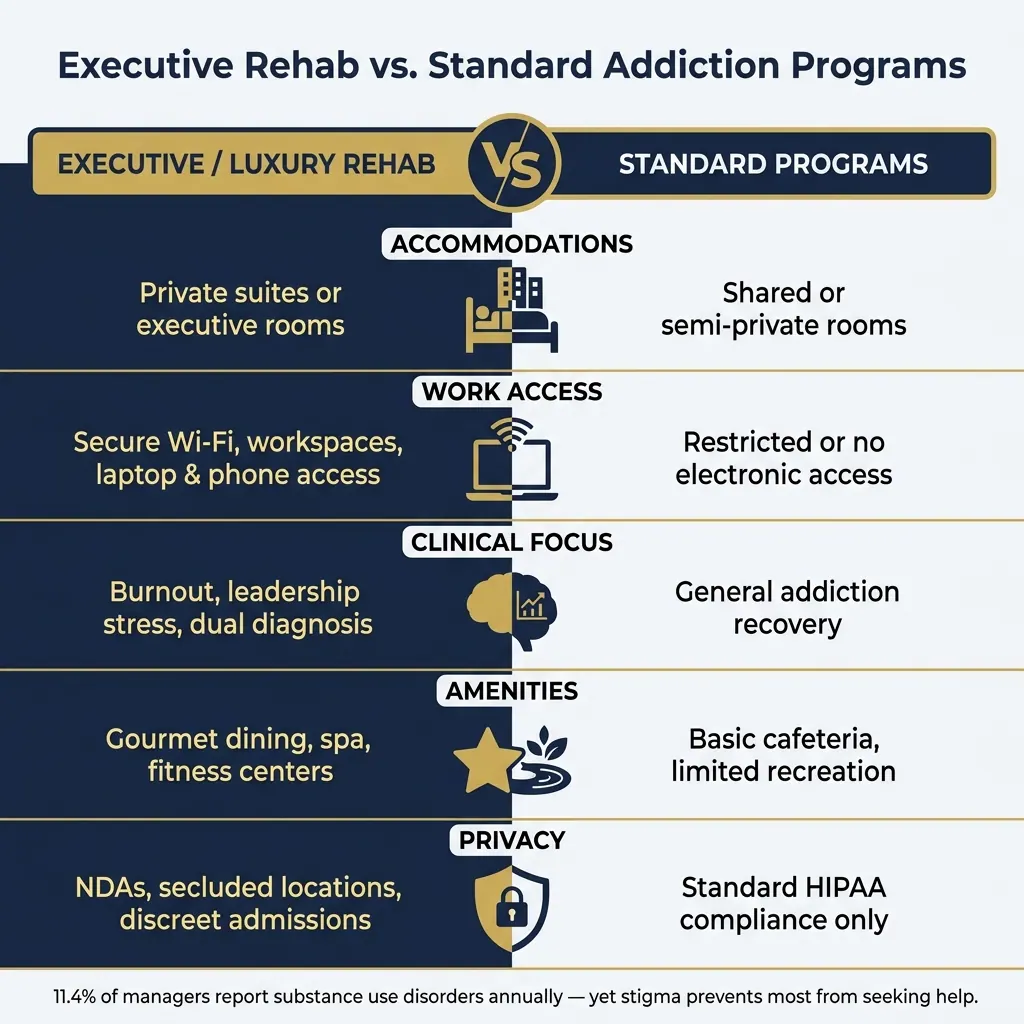
Executive Rehab vs. Standard Programs: Key Differences
Clinical Approaches to Stimulant and Benzodiazepine Addiction
The first step in treating addiction to stimulants or benzodiazepines is a medically supervised detox. Benzodiazepine withdrawal, in particular, can pose serious risks - even life-threatening complications - making gradual tapering under professional medical care absolutely necessary.
After detox, the focus shifts to proven therapeutic methods. Cognitive Behavioral Therapy (CBT) helps individuals recognize and change the thought patterns that fuel their substance use, while Dialectical Behavior Therapy (DBT) equips them with emotional regulation skills to manage stress without turning to medication. Since conditions like anxiety, depression, and burnout often go hand-in-hand with addiction, top-tier programs offer dual diagnosis treatment to address both the addiction and any underlying mental health challenges. This comprehensive approach lays the foundation for executive-specific recovery programs.
Program Features Designed for Executives
For executives, stepping away from their responsibilities can feel impossible. Luxury rehab programs are designed to meet this challenge head-on.
"Executive rehab programs are designed to enable executives or other high-level employees to continue with their work responsibilities while being treated for drug and/or alcohol abuse and mental health conditions." - American Addiction Centers
These programs often provide private workspaces, secure Wi-Fi, and controlled access to laptops and phones, allowing executives to handle critical communications while staying committed to recovery. Some centers even make accommodations for essential business travel. Therapy schedules are tailored to fit around professional commitments, ensuring minimal disruption to work obligations.
Beyond therapy, these facilities incorporate wellness practices - like yoga, meditation, acupuncture, and fitness routines - to help executives develop healthier ways to handle stress without relying on substances. Just as important, these centers prioritize discretion, with strict privacy measures in place.
| Feature | Executive Rehab | Standard Programs |
|---|---|---|
| Accommodations | Private suites or executive rooms | Shared or semi-private rooms |
| Work Access | Secure Wi-Fi, workspaces, laptop/phone access | Restricted or no electronic access |
| Clinical Focus | Burnout, leadership stress, dual diagnosis | General addiction recovery |
| Amenities | Gourmet dining, spa, fitness centers | Basic cafeteria, limited recreation |
| Privacy | NDAs, secluded locations, discreet admissions | Standard HIPAA compliance |
Privacy and Confidentiality Measures
Maintaining privacy is often as crucial as the treatment itself for executives. Luxury rehab centers address these concerns with measures that go well beyond standard HIPAA compliance. Many programs implement non-disclosure agreements (NDAs) for staff, limit access to client information, and ensure admissions are handled discreetly. Facilities are frequently located in remote, private areas; for instance, The Grove Estate spans 51 acres of woodland, providing a secluded environment shielded from public attention.
"Seeking help isn't just about recovery, it's about preserving privacy, maintaining responsibility, and finding a treatment path that respects both personal and professional needs." - Dr. Norman Chazin, MD, FASAM
For professionals in regulated fields - like physicians, attorneys, and pilots - some centers also offer compliance-related documentation. This includes fitness-for-duty evaluations and treatment summaries required by licensing boards, all managed with the utmost discretion.
Maintaining Recovery While Leading at a High Level
Aftercare Planning and Return-to-Work Support
Completing residential treatment is just the beginning of the recovery process. Studies show that between 40% and 70% of people with substance use disorders relapse within the first six months after treatment. For executives, this risk is even higher due to the intense demands of their work environments. To combat this, the most effective aftercare programs last at least 12 months and include regular check-ins. Many luxury treatment centers now offer telehealth options, making it easier for executives to continue therapy from their home or office. Additionally, some centers provide accelerated 10-day residential programs tailored for leaders with demanding schedules. These aftercare measures are critical for building a strong foundation to prevent relapse.
Preventing Relapse in High-Pressure Environments
Returning to a high-stakes role without a clear relapse prevention strategy can be risky. Chronic substance use can disrupt how the brain handles stress hormones, leading to heightened anxiety during early recovery. One simple but effective tool is the HALT check, which encourages individuals to pause and assess if they feel Hungry, Angry, Lonely, or Tired before acting on a craving. Recovery also emphasizes creating boundaries and learning to say "no" to excessive responsibilities - skills that are essential for regaining control and confidence.
"Recovery is hard. For the effort to be sustainable, positive experiences need to be attainable along the way." - Bettina B. Hoeppner, Associate Professor of Psychology, Harvard Medical School
Spending time in nature can also play a major role in recovery. Research shows that just 120 minutes outdoors each week can significantly improve health and well-being. Many recovery programs incorporate nature-based activities like hiking or skiing, which help calm the nervous system and establish a sense of balance.
Building a Healthier Approach to Leadership
Sustaining recovery often requires executives to rethink their approach to success. Recovery challenges the notion that constant availability and stimulant-driven performance define achievement. By prioritizing regular time off and pursuing personal interests, leaders can maintain long-term well-being. Interestingly, research highlights that both executives and their teams often see productivity improvements after taking planned breaks.
For those managing co-occurring depression - an issue that affects CEOs at nearly twice the national average - continuing dual diagnosis care after treatment is essential. Addressing addiction alongside burnout and depression helps alleviate the pressures that often lead to substance misuse.
Conclusion: Recovery as a Path to Better Leadership
Medication addiction among executives is a serious challenge, but it is also treatable. The intense pressures that drive misuse of substances like Adderall and benzodiazepines - constant performance demands, chronic stress, and the need to always be "on" - don’t simply disappear after treatment. However, recovery offers a way to build true resilience and regain control.
Through recovery, executives can restore clear decision-making and reduce harmful behaviors such as aggression and paranoia. Approaches like Cognitive Behavioral Therapy (CBT) teach practical tools for managing stress, setting boundaries, and making thoughtful decisions even in high-pressure situations.
The transformative impact of recovery is well-documented:
"Recovery is a process of change through which individuals improve their health and wellness, live a self-directed life, and strive to reach their full potential." - SAMHSA
Luxury rehabilitation programs cater to the unique needs of executives by offering tailored clinical care, strict privacy, flexible schedules, and long-term support. These programs make it possible for leaders to seek help without jeopardizing their careers. As Dr. Norman Chazin, MD, FASAM, highlights: "Recovery is possible and it begins with knowing that you don't have to sacrifice your career to save yourself." Beyond personal well-being, recovery can lead to stronger, more strategic leadership.
With over 11% of executives facing substance use issues, addressing addiction through specialized, executive-focused care is essential for maintaining effective leadership and fostering healthier organizations.
FAQs
What are the early signs an executive is becoming dependent on Adderall or benzos?
Executives may show subtle but telling signs of developing a dependence on medications like Adderall or benzodiazepines. These signs include:
- Increased tolerance: Needing higher doses to achieve the same effect.
- Difficulty reducing usage: Struggling to cut back even if they want to.
- Mood swings and poor judgment: Noticeable changes in behavior or decision-making.
- Withdrawal symptoms: Experiencing discomfort or irritability when not taking the medication.
- Seeking additional sources: Asking others for pills or visiting multiple doctors to obtain prescriptions.
These behaviors often point to a growing reliance on these medications and could indicate the need for professional intervention.
Why is mixing Adderall and benzodiazepines so risky?
Mixing Adderall and benzodiazepines poses serious risks because these medications work in opposite ways on the central nervous system. Adderall acts as a stimulant, boosting alertness and energy levels, while benzodiazepines are depressants that slow down brain activity. When taken together, this conflicting interaction can lead to severe issues like cardiovascular strain, respiratory complications, and unpredictable effects on mental health. It's crucial to consult a healthcare professional before using these medications together.
How can I get treatment without my job or reputation being affected?
When balancing recovery and maintaining your professional life, discreet programs designed for executives can be a game-changer. Luxury rehab centers often cater to this need by offering private, specialized care. These programs typically include executive-focused therapy, stress management strategies, and flexible scheduling to accommodate demanding work commitments.
Privacy is a top priority in these settings. Secure admission processes and strict confidentiality measures help ensure your journey to recovery stays private, safeguarding both your reputation and professional responsibilities.