
Leadership Isolation: Why Being at the Top Feels Lonely and How to Heal Privately

Leadership isolation is a common challenge for executives, stemming from the pressure to appear confident, maintain confidentiality, and manage power dynamics. This loneliness can negatively impact mental health, physical well-being, and job performance. Nearly 50% of CEOs report feeling lonely, and 61% believe it affects their decision-making.
Key takeaways:
- Causes: Confidentiality, "performance of certainty", identity tied to work, and power imbalances.
- Effects: Higher rates of depression (26% of executives), burnout, and physical health risks equivalent to smoking 15 cigarettes daily.
- Barriers to Help: Fear of stigma, privacy concerns, and scheduling challenges prevent many leaders from seeking support.
Solutions:
- Seek private therapy options like concierge therapy or luxury residential programs.
- Set boundaries to separate work and personal life.
- Build a discreet support network of trusted professionals or peers.
- Use tools like crisis support apps for immediate assistance.
Addressing leadership isolation doesn’t require public admissions of struggle. Private, tailored solutions can help leaders regain clarity, reduce stress, and improve their overall well-being.
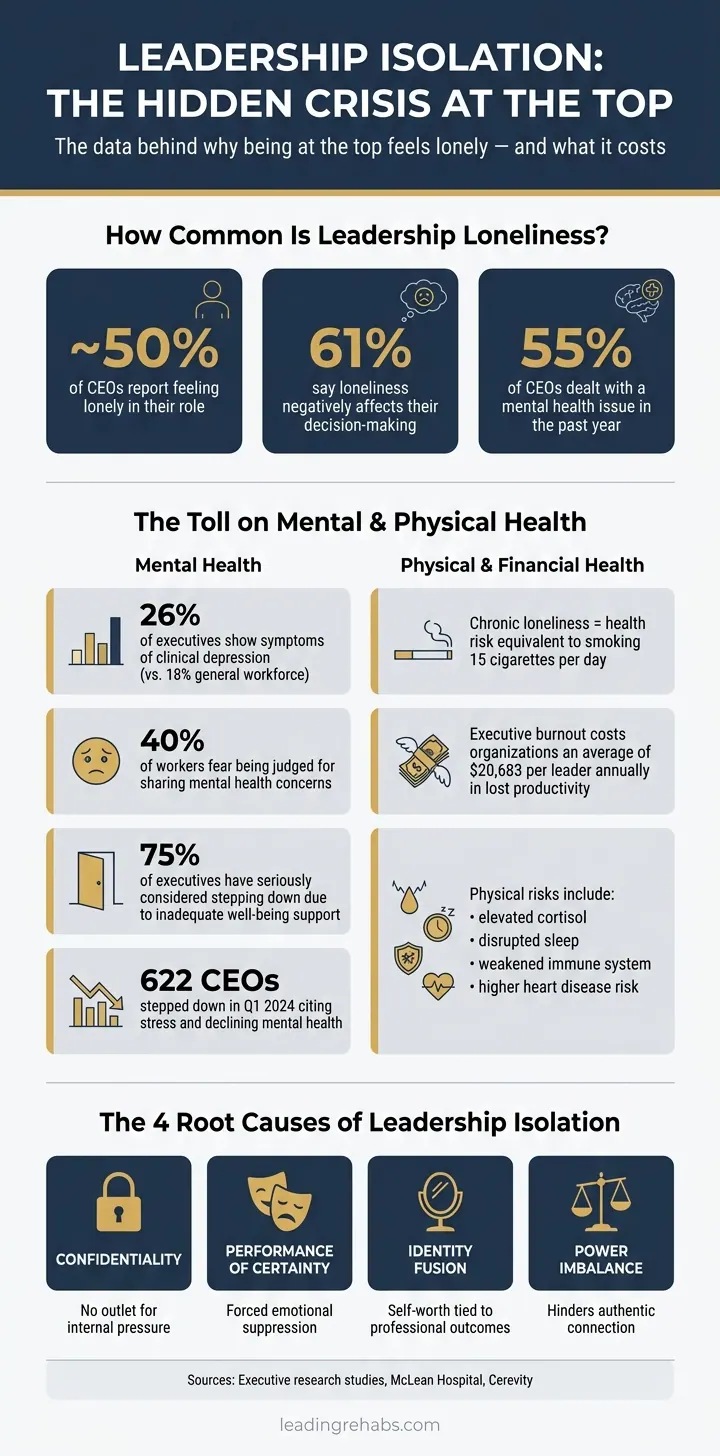
Leadership Isolation: Key Statistics, Causes & Effects
The Causes and Effects of Leadership Isolation
Root Causes of Leadership Isolation
Leadership isolation often arises from the unique demands and expectations placed on those in high-level positions. One major factor is confidentiality. Leaders frequently manage sensitive matters - like layoffs, acquisitions, or strategic changes - that they can't share, even with trusted colleagues or family. This secrecy creates a wall, making it harder for them to connect with others on a personal level.
Another challenge is what executive therapist Diana Chu calls the "performance of certainty." Leaders are expected to project unwavering confidence, even when they're grappling with doubts. Chu explains:
"The performance of certainty is exhausting. And when it becomes the only mode available... it stops being a professional skill and starts being a prison." - Diana Chu, Executive Therapist
Then there's identity fusion, where a leader's sense of self becomes so intertwined with their professional achievements that personal worth feels entirely tied to workplace success. Lastly, power imbalances make genuine, unguarded connections with others more difficult.
| Root Cause | How It Isolates the Leader |
|---|---|
| Confidentiality | Creates internal pressure with no outlet for release |
| Performance of Certainty | Forces emotional suppression in interactions with others |
| Identity Fusion | Ties personal worth entirely to professional outcomes |
| Power Imbalance | Hinders authentic, unguarded connection with others |
Mental and Physical Consequences
The prolonged isolation that leaders experience can take a serious toll on both their mental and physical health. Research shows that 26% of executives exhibit symptoms consistent with clinical depression, compared to 18% of the general workforce. Depression in leaders often shows up as irritability, cynicism, and a sense of emptiness, even when outwardly successful.
Physically, the impact of chronic loneliness can be just as severe. Studies equate the health risks of prolonged isolation to smoking 15 cigarettes a day. It can lead to elevated cortisol levels, disrupted sleep, a weakened immune system, and even a higher risk of heart disease. On top of that, executive burnout costs organizations an average of $20,683 per leader annually due to lost productivity.
To cope, some leaders turn to unhealthy behaviors like compulsive exercise, excessive drinking, or constant digital distractions. These habits may provide short-term relief but often worsen their overall well-being.
Barriers to Seeking Help
Even when leaders recognize their struggles, seeking help can feel nearly impossible. Cultural stigma plays a big role - 40% of workers fear being judged for sharing mental health concerns. This fear is amplified for executives, who worry that admitting vulnerability could undermine confidence in their leadership.
"People in executive roles often put their own well-being last. There's still a false belief that if a CEO or C-suite leader shows signs of struggle, it will erode confidence in their leadership." - Dr. Amy Gagliardi, Associate Medical Director, The Pavilion at McLean Hospital
Practical obstacles also discourage leaders from seeking support. Many worry about leaving a "mental health paper trail" that could resurface during board reviews or stakeholder meetings. Additionally, traditional therapy models often fail to accommodate the unpredictable, 24/7 schedules of high-level executives.
Because of these barriers, many leaders dismiss their isolation as mere "stress" or see it as an unavoidable part of their role - until the consequences, both personal and professional, become too severe to ignore. This highlights the importance of creating tailored, private solutions to address their unique challenges.
sbb-itb-4b13a7c
Private and Effective Paths to Healing
Choosing the Right Treatment Environment
Leaders face unique challenges like perfectionism, burnout, and imposter syndrome, which demand specialized care. To address these, it’s crucial to find programs that prioritize privacy, continuity, and a supportive peer environment. Look for facilities with HIPAA-compliant systems, a discreet admissions process, and staff trained to safeguard your identity. These features not only protect your privacy but also create an environment where genuine recovery can take place.
If stepping away from work entirely isn’t an option, a "business-friendly" recovery program might be the solution. These programs offer secure Wi-Fi, private conference rooms, and controlled technology access to help you stay connected to critical responsibilities without compromising your recovery. It’s also essential to ensure the facility can manage FMLA or disability paperwork discreetly and is familiar with professional licensure requirements.
| Criterion | What to Look For |
|---|---|
| Confidentiality | HIPAA compliance, private admissions, trained privacy staff |
| Professional Needs | Secure Wi‑Fi, controlled technology use, flexible scheduling |
| Clinical Focus | Burnout, leadership isolation, trauma‑informed care |
| Environment | Private suites, low client-to-staff ratio, luxury amenities |
| Administrative Support | Licensure protection, FMLA/disability documentation |
By focusing on these criteria, you can find a treatment environment that blends privacy and professionalism with effective care.
Luxury Residential and Retreat Programs
Luxury residential programs provide a discreet, high-quality setting for recovery, tailored to the needs of top-level professionals. These programs offer intensive care in a private environment, ensuring that seeking help doesn’t feel like a public admission of struggle. Executive programs typically last 30 to 45 days and include evidence-based therapies such as CBT and DBT, alongside executive coaching, trauma-informed care, and treatment for co-occurring conditions like anxiety or depression.
Facilities often feature private suites, chef-prepared meals, and resort-style amenities, creating a space where recovery feels less clinical and more restorative.
"At our luxury rehab facility in Florida, we prioritize executive privacy with comprehensive confidentiality protocols, secure digital systems, and discrete campus access to safeguard your personal information and professional reputation throughout treatment." - Headwaters
Counselors are available around the clock, and treatment plans are customized to address the unique pressures of leadership roles. Sharing the space with peers who face similar challenges also fosters a judgment-free environment.
Using Leading Rehabs to Find the Right Fit
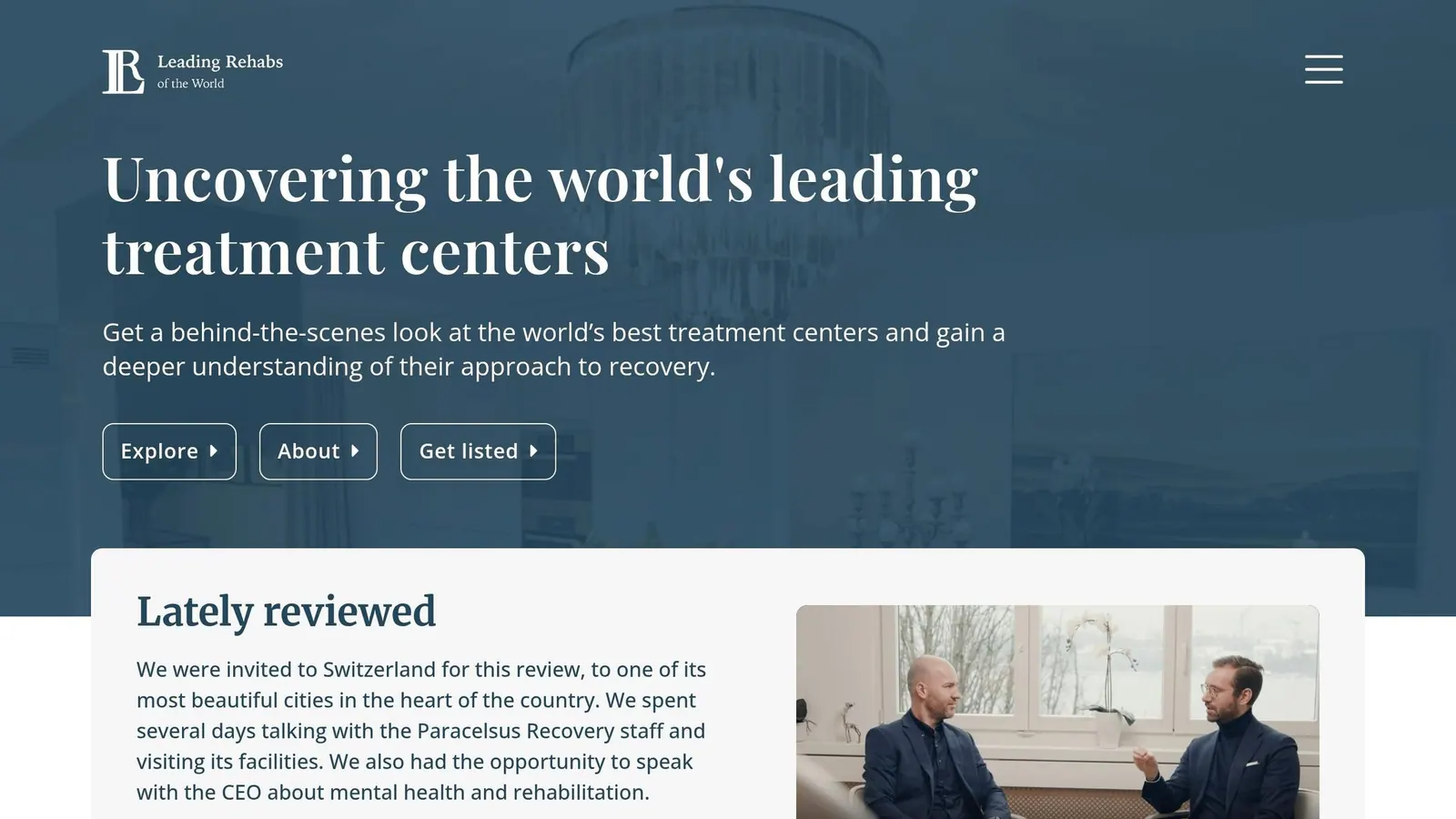
Finding a program that aligns with your need for privacy, executive-level care, and luxury accommodations can be overwhelming. That’s where Leading Rehabs comes in. This platform connects ultra-high-net-worth individuals with thoroughly vetted treatment centers worldwide. Each facility profile includes details on confidentiality measures, clinical expertise, amenities, and levels of care, making it easier to find a program that fits your lifestyle. Whether you’re seeking a full residential program or a flexible intensive outpatient program (IOP), this tailored approach ensures your privacy while addressing the isolation often experienced in leadership roles.
"You don't have to go public to get private help." - Altus Rehab
For those who need to act quickly and discreetly, having access to reliable, curated information can make all the difference.
Discreet Self-Care Practices for Leaders
Building a Personal Support Network
The pressures of leadership can take a toll. In fact, 55% of CEOs reported dealing with a mental health issue in the past year, and a record 622 CEOs stepped down in the first quarter of 2024, citing stress and declining mental health as major factors. Despite these numbers, many leaders are reluctant to seek help because of the stigma tied to mental health at senior levels.
Instead of openly sharing struggles, consider creating a private support network. A therapist can provide a space where you don’t have to worry about managing others’ expectations. As Diana Chu, an executive therapist, puts it:
"For many executives, genuine support means experiencing connection without the pressure of performance." - Diana Chu, Executive Therapist
Family or partner sessions can also help repair communication patterns and strengthen your mental well-being. These relationships often serve as the foundation for habits that bolster resilience in demanding roles.
Daily Self-Care for Leaders Who Value Confidentiality
For leaders, privacy is often a priority, even in self-care. Incorporating discreet practices into your daily routine can make a big difference. Concierge therapy is one option. It uses private-pay arrangements, which avoid diagnostic codes and insurance claims, ensuring you don’t have to explain sessions to HR or a board. You can schedule sessions flexibly, whether it’s a video call before an early flight or after a late dinner meeting. Following up with 10–15 minutes of journaling or quiet reflection after each session can help you process and implement new insights.
When stress levels spike, tools like discreet crisis support apps or remote monitoring services can provide immediate, private assistance. These tools complement ongoing therapy, offering practical help during particularly challenging times.
"The leaders who perform at the highest level over sustained periods aren't the ones who push hardest - they're the ones who've invested in understanding themselves well enough to lead with clarity, resilience, and authentic presence." - Maria Gonzalez, Psy.D, Cerevity
Setting Digital and Emotional Boundaries
Beyond daily routines, setting boundaries - both digital and emotional - can protect your mental health. Constant availability can lead to feelings of isolation and burnout. Without clear separation between work and personal time, your nervous system doesn’t get the chance to reset. It’s no wonder that 75% of executives have seriously considered stepping down due to inadequate well-being support.
Establishing boundaries isn’t about disengagement; it’s about sustainability. Strategies rooted in Cognitive Behavioral Therapy (CBT) can help break patterns that lead to burnout. For example, batch your email responses, turn off non-essential notifications after a set time, and use separate devices for work and personal communication. These small changes create the mental space needed to recover and recharge.
Conclusion: Leading with Strength and Support
Key Takeaways
Leadership isolation is not a personal failing but an inherent challenge of senior roles. As responsibilities grow, so does the difficulty in being fully transparent without risking how others perceive your competence. This constant need to project confidence takes a toll over time, impacting not only your well-being but also the health of your team and organization.
Unchecked, this isolation can lead to measurable declines in both mental and physical health. Executive therapist Diana Chu notes that many leaders feel seen only through the lens of their roles, not as whole individuals. This disconnect is where isolation begins to take root.
Addressing this issue doesn’t require public confessions or drastic measures. It starts with recognizing the problem and creating a private space for recovery. Options like concierge therapy, retreats, or setting firm personal boundaries can help leaders step away from the constant need to perform. These steps often lead to greater clarity, reduced reactivity, and improved presence both at home and in the workplace.
The Role of Leading Rehabs
Complementing these strategies, Leading Rehabs provides a bridge between executives and specialized treatment centers designed for leadership-specific challenges. Finding the right support involves more than just selecting a therapist - it means choosing a program that understands the complexities of boardroom dynamics, prioritizes confidentiality, and addresses unique issues like decision fatigue and identity struggles.
Whether it's burnout, emotional strain, or more serious mental health concerns, Leading Rehabs connects leaders with tailored solutions discreetly, ensuring their professional reputation remains intact.
"The strongest leaders are the ones who recognize when they need support and take action." - Dr. Amy Gagliardi, Associate Medical Director, The Pavilion at McLean Hospital
Why CEOs Feel Lonely At The Top
FAQs
How can I tell if I’m isolated or just stressed?
Feeling isolated goes beyond just being alone - it’s often tied to a deep sense of loneliness that stems from not being able to fully express yourself or show vulnerability. Even if you seem calm and collected on the outside, isolation can leave you feeling like no one truly understands or knows the real you. On the other hand, general stress tends to be more about external pressures, like work or daily responsibilities, and doesn’t usually come with that same emotional disconnection.
What private therapy options work best for executives?
Executives often find value in private therapy options specifically designed to address their unique challenges. These may include Cognitive Behavioral Therapy (CBT), Dialectical Behavior Therapy (DBT), trauma-focused therapy, executive coaching, holistic methods, and a mix of individual and group counseling. Such services are typically provided in discreet, upscale, and confidential environments, ensuring both privacy and flexibility to accommodate demanding schedules.
How do I get help without risking my reputation?
To safeguard your privacy and professional image, consider seeking mental health support outside of your employer’s insurance plan. Paying privately ensures that no records or claims are accessible within your organization, giving you complete confidentiality.
You might explore executive therapy services that prioritize strict privacy measures and offer flexible scheduling. These providers are well-equipped to help you address your mental health needs discreetly, allowing you to focus on your well-being without compromising your credibility or reputation.