
Hyper-Competition Burnout: The Executive Price of Constant Power

Burnout among executives is a growing crisis. It’s not just about feeling tired - it’s a state of deep physical, mental, and emotional exhaustion driven by relentless workplace pressures. Many leaders push through exhaustion, masking their struggles until it leads to severe health and performance issues.
Key Takeaways:
- Hidden Crisis: 60% of leaders feel drained daily, and 70% consider quitting for well-being-focused roles.
- Main Causes: Decision fatigue, identity tied to work, and the "always-on" culture.
- Impacts: Burnout affects mental health, causing anxiety, depression, and even physical issues like heart problems.
- Solutions: Delegation, structured routines, and luxury recovery centers offering tailored care for executives.
Burnout isn’t about weakness; it’s a signal to reassess priorities and build a healthier work-life balance. Leaders must act before it becomes a crisis.
Executive Burnout: Why High Achievers Crash
sbb-itb-4b13a7c
How Burnout Affects Mind and Body
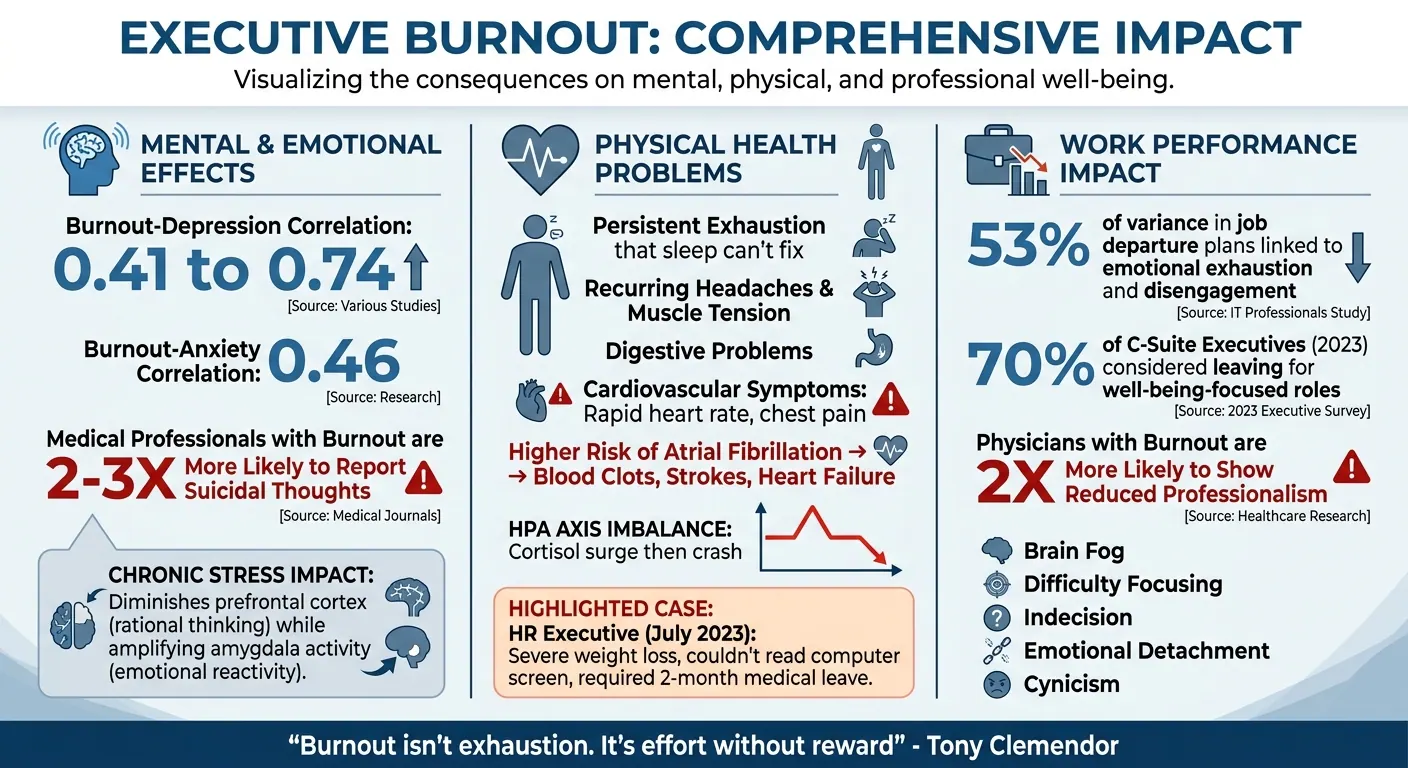
Executive Burnout Statistics: Mental, Physical, and Workplace Impact
Mental and Emotional Effects
The mental strain of burnout in high-pressure environments often runs deeper than many executives realize. What starts as occasional fatigue can quickly spiral into emotional narrowing - a state where curiosity fades, patience with loved ones wears thin, and even once-enjoyable tasks feel overwhelmingly burdensome. On a physiological level, chronic stress reshapes the brain. It diminishes dendritic branching in the prefrontal cortex - key for rational thinking - while amplifying the activity of the amygdala, which heightens emotional reactivity.
For many professionals, their identity becomes intertwined with their work. This fusion means that company challenges feel like personal failures, creating what some experts refer to as "existential fragility". Even during downtime, decision fatigue lingers, making basic choices feel insurmountable. The statistics are stark: burnout is strongly linked to depression, with correlations ranging from 0.41 to 0.74, and anxiety at approximately 0.46. Alarmingly, medical professionals experiencing burnout are 2 to 3 times more likely to report suicidal thoughts.
Beneath the surface, many executives wrestle with self-criticism, fear of being replaced, and guilt when attempting to set boundaries. As Tony Clemendor, Founder Coach, insightfully notes:
Burnout isn't exhaustion. It's effort without reward.
This relentless mental and emotional strain doesn’t stop there - it also takes a heavy toll on the body.
Physical Health Problems
Under chronic stress, the body's stress response system, the hypothalamic-pituitary-adrenal (HPA) axis, becomes unbalanced. Initially, cortisol levels surge, but over time they either level off or drop as the system wears out, leading to extreme fatigue and mental fog. This imbalance manifests in persistent exhaustion that sleep can’t fix, recurring headaches, muscle tension, digestive problems, and even cardiovascular symptoms like rapid heart rates or chest pain.
In July 2023, Kristin Durney, a human resource executive managing a team of over 20, shared her personal battle with burnout. The stress caused significant weight loss and physical symptoms so severe she could no longer read words on her computer screen. Her recovery required a two-month leave under the Family and Medical Leave Act to allow her body and mind to heal. Burnout has also been linked to a higher risk of atrial fibrillation, which can lead to serious conditions like blood clots, strokes, and heart failure.
To cope, some executives turn to "functional self-medication", using alcohol or sedatives to calm down at night and stimulants like Adderall to counter fatigue during the day. This stimulant-sedative cycle often leads to substance use disorders. Wealthier individuals face a unique challenge here: their financial resources enable them to mask symptoms for longer, delaying treatment and worsening the problem.
As physical health deteriorates, mental clarity and professional effectiveness decline, creating a compounding effect.
Effects on Work Performance
The health consequences of burnout inevitably spill over into work performance. Cognitive challenges like "brain fog", difficulty focusing, and indecision become the norm. In one study of IT professionals, emotional exhaustion and disengagement accounted for 53% of the variance in plans to leave their jobs.
Burnout among leaders often cascades through entire organizations, damaging morale and hurting productivity. Leaders under stress may become emotionally detached or cynical, pulling back from the collaborative relationships that successful leadership demands. For example, physicians experiencing burnout are twice as likely to show reduced professionalism at work. In 2023, 70% of C-suite executives reported considering leaving their roles for positions that better support their well-being.
Ironically, many high achievers respond to burnout by doubling down on their efforts - a phenomenon known as "overextension." They push harder, even when completely drained, which only worsens the cycle. As David Carter from New Life Rehab explains:
Burnout isn't a failure - it's feedback. And it usually means you've been strong for too long without support.
Luxury Treatment Options for Executive Burnout
Personalized Recovery Programs
When stress takes a severe toll on the mind and body, luxury rehabilitation centers step in with tailored recovery plans. These high-end facilities craft personalized programs that address each executive's unique stress factors, health needs, and demanding professional schedules. Unlike traditional rehab models that lean heavily on group therapy, luxury centers focus on individualized care, often offering up to four private therapy sessions per week compared to the standard one session.
The treatment process begins with an in-depth medical evaluation, including bloodwork and hormone testing, to uncover the physical effects of prolonged stress. From there, programs incorporate advanced therapies like neurofeedback, somatic experiencing, and even equine therapy to help rebuild emotional resilience [5, 11]. Some ultra-exclusive facilities go a step further, adopting a "one client at a time" approach. In these cases, an entire team - consisting of a doctor, therapist, nutritionist, and private chef - dedicates their attention solely to one individual [5, 11].
For executives who can’t completely disconnect from work, centers such as Soberman's Estate provide secure business amenities, including private Wi-Fi and business centers. This ensures that essential work responsibilities can be managed without compromising progress in recovery. These bespoke solutions aim to counteract the relentless pressures of competitive professional environments.
Privacy and Discretion at High-End Centers
For many ultra-high-net-worth individuals, concerns about privacy often delay seeking help. Luxury treatment centers address this by prioritizing absolute discretion. Facilities are housed in unmarked villas, secluded estates, or remote tropical settings, ensuring clients can focus on recovery without fear of exposure [5, 11].
Centers like Bonaire Bespoke Recovery in Mallorca (starting at €45,000 per week) and Nexa Retreat in Costa Rica ($55,000–$65,000 per week) cater to just one client at a time. This eliminates any chance of interaction with other patients, as all care is delivered through private sessions [5, 14].
In the U.S., privacy is further protected under strict regulations like HIPAA and 42 CFR Part 2, which safeguard substance use disorder records from even being shared with other medical providers. Admissions are often handled directly by founders or specialized executive coordinators, minimizing the number of staff aware of a client’s identity [12, 14]. These measures ensure the utmost confidentiality for individuals in recovery.
Leading Rehabs: Finding Top Treatment Centers

Choosing the right facility is key to aligning recovery with the demanding lifestyles of executives. Leading Rehabs provides a curated platform that simplifies this process. Executives can explore detailed profiles of top-tier facilities, complete with verified credentials, treatment specialties, and client reviews. Researchers evaluated 570 luxury rehab centers to identify those delivering the highest standards of care.
Each profile highlights essential details like Joint Commission or CARF accreditation, confirming adherence to rigorous safety protocols. Verified client reviews also provide transparency - for example, Kembali Recovery Center boasts a perfect 5.0 rating from 68 reviews, while Sea Recovery holds a near-perfect 4.9 from 54 reviews. The platform even includes immersive media, such as on-site videos and photo tours, giving prospective clients a clear picture of what to expect.
For treatment centers, Leading Rehabs offers tiered listing options. The Premium plan, priced at €5,000 per year, includes perks like on-site reviews, video podcasts, and priority profile placement. This setup helps facilities connect with high-net-worth clients seeking discreet and exceptional care.
Recovery Methods for Long-Term Success
These strategies are designed to combat the mental and physical strain caused by relentless stress, creating a foundation for sustainable performance.
Reducing Workload Through Delegation
Many executives hesitate to delegate tasks, often worrying about a potential dip in quality. But effective delegation not only clears mental space for strategic thinking but also helps team members grow. Heather Wolfson, CEO and Lead Strategist at Maven Leadership Consulting, outlines a simple framework:
"Effective delegation follows five steps: 1) provide context, 2) set clear expectations, 3) offer support, 4) give them space, and 5) say thanks".
To uncover inefficiencies, tools like Toggl or Clockify can be used for a week-long audit. This often reveals hidden time drains - small tasks that collectively consume hours. Identifying these patterns can help separate energy-draining activities, like administrative tasks or tough meetings, from those that encourage strategic thinking. By grouping low-energy tasks into specific blocks, executives can protect their most productive hours - usually in the morning - for high-priority work.
Kristin Durney, a Human Resource Executive and Consultant, highlights another benefit of delegation:
"When you delegate, you also teach your team members about what you do, so you're providing professional development too, making it a win-win all around".
Once the workload is streamlined, establishing structured daily routines becomes crucial for maintaining both mental and physical recovery.
Creating Energy-Focused Daily Routines
To maintain recovery, executives should prioritize non-negotiable time blocks for essentials like sleep, exercise, and family. Doug Zingale, Managing Partner at Blue Goose Capital, sums it up well:
"You can't stay fully engaged with business all the time without having your creativity and productivity suffer".
The trick is identifying personal "non-negotiables", such as ensuring eight hours of sleep, scheduling three workouts per week, or committing to phone-free family dinners. Treat these as fixed appointments, not optional activities. When leaders visibly uphold these boundaries, they send a powerful message: recovery is essential, not an afterthought.
Using Wellness Tools for Ongoing Mental Health
Alongside delegation and structured routines, daily wellness practices can further support mental clarity and resilience. Simple habits like disconnecting from devices, practicing rhythmic breathing exercises like "Anchor Breathing", and scheduling regular self-check-ins can make a big difference. Executives who fully unplug after work hours often recover more quickly and make sharper decisions.
Recurring self-check-ins - set through calendar reminders - allow leaders to evaluate their mental and physical state by reflecting on factors like sleep quality, appetite, and focus. Ginny Yi-Jiun Cheng, Global Head of Talent at ŌURA, stresses the importance of self-awareness:
"Listening to our bodies is key. Only we know ourselves and the warning signs that often creep up in our relationships, our patience, and... the knots in my neck and shoulders".
Recovery doesn’t always require grand gestures. Simple, low-effort activities like napping, watching TV, or even doing nothing can recharge mental energy and restore focus.
Conclusion: Making Well-Being a Priority
Executives need to start viewing burnout as a serious risk - not just for individuals but for the entire organization. Chronic stress doesn’t just take a toll on personal health; it physically alters the brain, weakening decision-making abilities and overall performance.
"The executives I work with who recover most effectively share one thing in common: they recognized the problem before it became a crisis, and they took it as seriously as they would any other performance issue in their business".
Achieving lasting success requires more than hard work - it calls for intentional cycles of effort and recovery. Structured delegation, setting firm work-life boundaries, and conducting regular wellness check-ins are all practical ways to make this happen. These strategies build on earlier recovery techniques, helping leaders stay sharp and resilient. Too often, high achievers confuse "getting by" with true well-being, failing to recognize that burnout means running on empty while still delivering results.
Recovery isn’t about taking a vacation - it’s about reconnecting with yourself and redefining your relationship with your role. Just as luxury recovery programs cater to individual needs, leaders must take the time to recalibrate their work-life balance. This involves separating personal identity from professional responsibilities to avoid deeper crises during tough times. As David Carter from New Life explains:
"Burnout isn't a failure - it's feedback. And it usually means you've been strong for too long without support".
Wealth and success can sometimes hide the signs of burnout until it’s too late, leading people to seek help only when the problem has escalated. Reflecting on the challenges discussed earlier, proactive self-care - whether through tailored treatments or personal adjustments - isn’t a retreat from leadership. It’s an evolution toward a sustainable way of working that supports both body and mind.
FAQs
How can I tell burnout from normal stress?
Burnout and everyday stress might feel alike, but they aren't the same. Stress tends to be temporary and often fades with proper rest. Burnout, on the other hand, builds up over time, typically as a result of ongoing stress. Key signs of burnout include constant fatigue, emotional detachment, cynicism, and a noticeable drop in motivation - all of which don’t improve with rest. Spotting these warning signs early is essential to avoid more serious mental and physical health challenges.
What are the earliest warning signs I’m ignoring?
Burnout can creep in subtly, often masked by outward productivity. Some early indicators include pushing yourself harder without feeling genuinely engaged or challenged, persistent fatigue that doesn’t go away, and emotional detachment from your work. You might also notice a drop in confidence or a fading sense of purpose, even if you're hitting your goals and performing well. These signs are easy to miss, but catching them early can spare you from deeper mental and emotional strain.
How do I choose a discreet executive recovery program?
When selecting an executive recovery program, privacy and personalization are key. Look for facilities that prioritize confidentiality, offering a private intake process and adhering to HIPAA regulations to safeguard your information.
Centers designed with high-level professionals in mind often provide retreat-style settings that combine privacy with convenience - perfect for those with demanding schedules. These programs typically offer tailored care and amenities to meet the unique needs of executives.
It's a good idea to contact the center directly to ask about their privacy protocols and how they cater to the specific requirements of busy professionals. This ensures the program aligns with your expectations for discretion and personalized support.