
Generational Wealth Trauma: Healing Family Legacies & Dynamics Discreetly

Generational wealth trauma refers to the emotional and psychological challenges passed down in wealthy families due to financial expectations, family dynamics, and legacy pressures. While $85 trillion in wealth is set to transfer in the U.S. over the next 15 years, studies show 70% of these transitions fail - not because of poor financial planning but due to unresolved emotional issues within families.
Key insights from the article include:
- Common challenges: Inheritor's Paralysis, legitimacy anxiety, and strained family relationships.
- Impact of unresolved trauma: Passed through family systems and even biological stress responses.
- Private solutions: Discreet trauma-informed therapy, family counseling, and mindfulness techniques tailored for affluent families.
- Specialized options: High-end treatment centers offering confidential, customized programs for healing.
The article emphasizes the importance of addressing emotional health alongside financial planning to preserve family legacies and relationships.
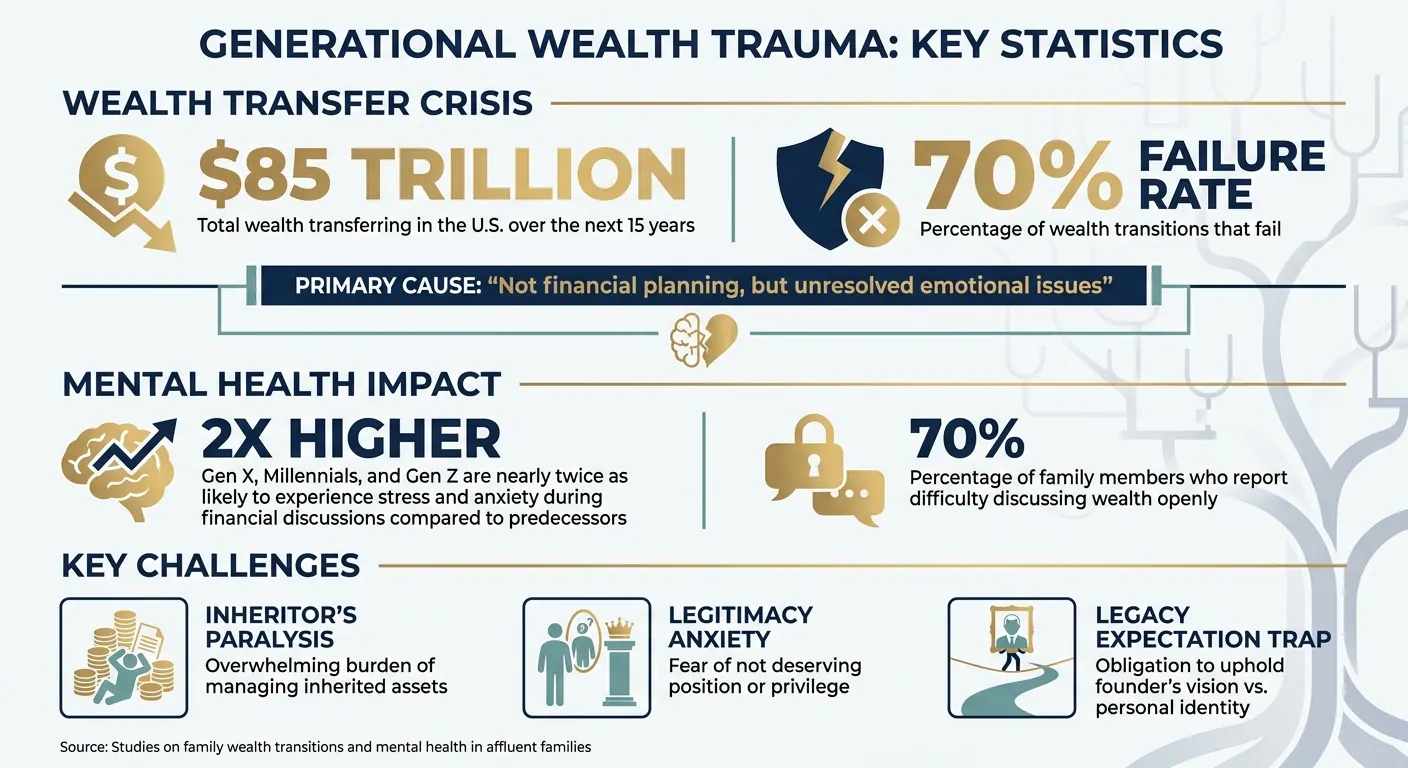
Generational Wealth Transfer Statistics and Family Trauma Impact
Why Building Generational Wealth Starts with Healing Your Money Wounds
sbb-itb-4b13a7c
How Wealth Affects Family Relationships and Mental Health
Wealth has a profound impact on family dynamics, often introducing psychological challenges that can go unnoticed in traditional therapeutic settings. The presence of significant assets brings unique pressures that can reshape relationships and mental well-being.
Mental Health Challenges Linked to Wealth
One of the most common struggles among next-generation leaders in wealthy families is something called Inheritor's Paralysis. This refers to the overwhelming feeling of being burdened by the responsibility of managing inherited assets while also feeling emotionally unprepared to do so. Another related issue is legitimacy anxiety - the fear of not deserving one's position or privilege. These feelings often lead to behaviors like overworking, perfectionism, or even self-sabotage, as individuals try to prove their worth. Emily Carter, PhD, a Licensed Clinical Psychologist at Cerevity, explains:
"When treating family office succession stress, the goal isn't to eliminate the pressure - these responsibilities matter. We focus on building a coherent identity that integrates your inherited role with your authentic self."
Wealthy families also face role confusion. Family members may simultaneously act as subordinates to parents, equals with siblings in decision-making, and authority figures to staff in the family office. This complexity, combined with concerns about confidentiality and competition, often leaves individuals isolated and unable to openly discuss financial stress. Younger generations - Gen X, Millennials, and Gen Z - are nearly twice as likely as their predecessors to experience stress and anxiety during financial discussions.
These mental health challenges often lay the groundwork for generational trauma.
How Unprocessed Trauma Passes Through Generations
When these psychological pressures go unresolved, they can become embedded in family systems and even influence biological responses. Epigenetic studies reveal that severe stress experienced by ancestors can alter gene expression, increasing the likelihood of anxiety and depression in future generations. In wealthy families, unspoken expectations often create what’s known as the Legacy Expectation Trap. Here, heirs feel an obligation to uphold the founder's vision while struggling to carve out their own identity. This dynamic frequently exacerbates feelings of Inheritor's Paralysis.
Adding to the pressure is the staggering amount of wealth set to change hands in the near future. Over the next 15 years, more than $85 trillion is expected to transfer to the next generation in the United States alone.
Unaddressed trauma often finds its way into family governance systems, further complicating relationships.
Family Structures That Reinforce Trauma Patterns
Family governance systems - such as trusts, estate plans, and decision-making structures - are designed to protect wealth. However, these mechanisms can sometimes deepen emotional wounds by prioritizing control over fostering healthy relationships. As James Coutré, Managing Director at Pathstone, points out:
"When love is replaced by control, image or legacy preservation, cohesion erodes - no matter how sophisticated the planning."
This emphasis on control often results in authorship conflicts, where older generations impose their vision on younger family members rather than collaborating on shared goals. Such dynamics can lead to family fragmentation. In fact, nearly 70% of family members report difficulty discussing wealth openly, perpetuating a cycle of silence and unresolved trauma.
Private Methods for Healing Generational Trauma
Breaking cycles of inherited trauma in wealthy families requires tailored approaches that go beyond traditional therapy. While conventional methods might alleviate symptoms, they often fall short of addressing the deeper identity conflicts and systemic family dynamics tied to wealth. Effective treatment for affluent families must balance privacy with addressing the unique psychological challenges that come with managing wealth and legacy.
Trauma-Informed Therapy for Families
For families who prioritize discretion, trauma-informed therapy is customized to maintain confidentiality while addressing deep-seated issues. These therapies work on multiple levels to tackle the complexities of generational trauma:
- Somatic Therapy: This approach identifies how generational trauma shows up physically, such as tension during family interactions. By helping individuals recognize stress patterns in their bodies, somatic therapy enables better nervous system regulation. This allows for more genuine and composed reactions during critical family decisions.
- Psychodynamic Identity Work: This method focuses on helping heirs separate their personal identity from inherited roles and expectations. By addressing challenges like "Inheritor's Paralysis" and the "Legacy Expectation Trap", individuals can align their personal values with family obligations, fostering a stronger sense of self.
- Family Systems Therapy: This therapy examines communication patterns within the family and supports individuals in maintaining emotional connections while establishing their independence. It proves especially useful when personal identity, family business roles, and inheritance become intertwined.
To ensure confidentiality, many therapists working with affluent families use private-pay models, avoiding insurance records that could compromise privacy. For example, Cerevity offers sessions ranging from $175 for a 50-minute session to $525 for longer, intensive options. Some families even choose telehealth services to avoid the risk of encountering business associates in local offices.
While these therapies focus on individual healing, family counseling provides a broader approach to managing the unique dynamics of wealthy households.
Family Counseling Designed for Wealthy Households
Family counseling for affluent families is distinct from traditional methods. Instead of clinical offices with shared waiting rooms, these sessions often occur in private, luxury retreats that prioritize confidentiality. Facilities like Privé-Swiss even forego group therapy entirely, offering one-on-one treatment to ensure privacy and flexibility.
These programs address the complex relational dynamics of wealthy families by creating safe spaces for multiple generations to share their visions for the future. This collaborative environment helps families co-create shared goals rather than merely passing down values from one generation to the next. High-end facilities may also offer intensive care, such as multiple individual sessions per week, and flexible technology policies that allow clients to stay connected to their businesses or estates during treatment.
In addition to these counseling strategies, mindfulness techniques provide tools for managing the physical and emotional stress tied to wealth and legacy pressures.
Mindfulness Techniques for Managing Wealth-Related Stress
Mindfulness practices tailored for affluent individuals go beyond general stress relief, targeting specific physical and emotional challenges tied to wealth. These techniques help clients address issues like perfectionism, feelings of unworthiness, and the constant vigilance required during high-stakes financial decisions. By recognizing these triggers, individuals can shift from reactive behaviors to more thoughtful and genuine responses.
Many programs combine spiritual and psychodynamic approaches with cognitive-behavioral therapy to tackle the emotional complexities unique to wealthy families. Therapists create safe, structured spaces - referred to as "containers" - where clients can process stress and conflict without fear of public exposure or family backlash.
To maintain privacy, these mindfulness sessions are often conducted via HIPAA-compliant video platforms and private-pay models. This ensures that sessions remain off corporate benefits reports and insurance records, shielding clients from scrutiny by business partners, boards, or during legal matters.
High-End Treatment Options Through Leading Rehabs
What Leading Rehabs Offers
Leading Rehabs connects ultra-high-net-worth families with trusted facilities that specialize in addressing generational wealth trauma. These centers provide confidential, clinician-led care tailored to challenges like succession planning, legacy stewardship, and the psychological complexities tied to wealth. Privacy is a top priority, with services structured around concierge private-pay models that shield clients from exposure during legal or corporate scrutiny.
The platform caters to the unique needs of various family members. For example, founders grappling with identity changes after selling a business or younger heirs (ages 18–35) dealing with pressures like "golden child" expectations or imposter syndrome can find specialized support. Beyond individual therapy, services extend to managing intricate family office dynamics, equipping advisors with the emotional tools needed to handle conflicting family priorities and promote effective wealth management. Options include nationwide telehealth for busy executives or intensive in-person sessions, lasting up to three hours, designed for pivotal moments like major succession decisions.
Treatment centers listed on the platform offer customized programs to address the diverse needs of ultra-high-net-worth families, ensuring access to discreet and specialized care.
Treatment Center Packages for Family Programs
To accommodate varying needs, Leading Rehabs provides several program tiers for treatment centers:
- Basic Light (free): Offers essential features like media uploads, details on conditions treated, therapies available, and a contact form.
- Basic ($275/year): Includes additional features such as photo galleries, verified badges, detailed treatment center profiles with direct links, and ad campaign tools to reach families seeking private care.
- Premium (starting at $5,000/year): Designed for maximum visibility, this package includes on-site reviews, professional image videos, video podcasts featuring clinical directors, and top-tier profile placement. Premium centers also receive dedicated support to showcase their expertise in areas like Wealth Integration™ - a three-month program aligning financial structures with family identity and purpose. Other offerings include multigenerational systemic therapy, which helps bridge value gaps and rebuild trust within families.
These tailored packages provide treatment centers with the tools they need to effectively reach and serve ultra-high-net-worth families.
Steps to Break Inherited Trauma Patterns
Rebuilding Family Relationship Patterns
Breaking generational trauma requires a deliberate shift in how families communicate and make decisions. Instead of one generation imposing its values, families should work together to create shared meaning across generations. As James Coutré, Managing Director at Pathstone, explains:
"Conflict isn't necessarily a failure of values or vision; it's evidence that those values or vision need to be renegotiated and regenerated for the next rendition of an ever-evolving family."
The foundation of this process is proactive and consistent communication. Regular family meetings can serve as a platform to discuss values, financial goals, and transparency, ensuring that everyone feels heard and included. Courtney Pullen, a family advisor, emphasizes this point: "Our need to be heard is second only to our need for oxygen."
Another important step is creating governance structures that balance independence with connection. For instance, allowing adult children to step away from the family business while maintaining their place within the family dynamic reflects a healthy, mature system.
During significant transitions, such as succession planning, consider working with a financial therapist. These professionals address the emotional and psychological aspects of wealth that traditional financial advisors might not focus on. As Gary Wolf, a financial therapist, explains:
"Inheritance and succession are not just about money, they never really are. It's about the legacy, the shift in family dynamics, and the tension that arises when that shift happens."
By addressing the deeper emotional layers of wealth, families can navigate these transitions more smoothly. From there, the focus can shift to healing individual money narratives.
Working Through Money-Related Trauma
Once family communication is strengthened, it’s time to turn inward and address personal money narratives. Family dynamics and individual healing go hand in hand when breaking cycles of inherited trauma.
Start by exploring your financial lineage. Documenting family money stories - such as experiences with bankruptcy, scarcity, or feelings of unworthiness - can reveal patterns that continue to influence present-day stress around wealth. This process, often called "financial archaeology", helps uncover how ancestral experiences shape current beliefs and behaviors.
The next step is to process these inherited patterns emotionally. Focus on a specific money story, notice where you feel related emotions in your body, and practice accepting that history without judgment. Elizabeth Husserl offers this perspective:
"The sooner we digest and integrate the challenges of our ancestors, the sooner we stop paying for our past."
Reframing limiting beliefs is also key. For example, if your family has always believed that "wealth is only for earning, not enjoying", you could consciously reframe it as, "I am a capable steward of abundance." While this mindset shift takes time and repetition, it can lead to meaningful, long-term changes.
Finally, consider incorporating emotional healing into your estate planning. Trusts and wills can go beyond legal tools - they can also promote financial wellness. Including provisions for financial literacy or guidelines for responsible wealth management ensures that future generations inherit not just assets, but also the skills and emotional resilience to handle them wisely.
Case Studies: Wealthy Families Who Healed Generational Trauma
Real-life examples show how wealthy families have successfully addressed generational wealth trauma through professional guidance. While confidentiality prevents sharing specific identities, these stories highlight the transformative impact of committing to healing.
One family faced challenges in succession planning. The founder of a family business struggled to let go of control, leading to an identity crisis. At the same time, the next generation felt immense pressure to meet lofty expectations without being given meaningful authority. With the help of financial therapy experts like Gary Wolf, MA, LMHC, CFT, the founder redefined their purpose outside the business. This shift allowed the younger generation to shape their own vision of success and assume leadership roles with confidence.
Another situation involved sibling rivalry reigniting during the process of wealth transfer. Long-standing childhood resentments over perceived favoritism flared up as parents began dividing assets and leadership responsibilities. The core issue wasn’t money - it was about belonging and recognition. Through trauma-informed family counseling and structured dialogue, the siblings learned to separate fairness from equality. They eventually established governance systems that respected each individual’s contributions and ambitions, fostering collaboration rather than conflict.
In a particularly complex case, cognitive decline added another layer of difficulty to succession planning. One family had to navigate the emotional and practical challenges of an Alzheimer’s diagnosis in their patriarch while making critical business decisions. Financial therapy helped the family balance their grief with the need for strategic planning. Together, they crafted a shared vision that aligned business succession with personal goals, preserving both their legacy and their relationships. This example underscores the importance of addressing emotional and practical needs early to prevent fractures within the family.
Across these cases, common threads emerge: seeking professional intervention early, shifting from avoidance to open communication, and prioritizing dialogue as the cornerstone for stronger family connections. These elements have proven essential in turning generational challenges into opportunities for growth and unity.
Conclusion: Protecting Your Legacy Through Healing
Planning for generational wealth isn’t just about numbers; it’s about addressing the emotional ties and shared purpose that bind a family together. The fact that 70% of wealth transitions fail highlights the importance of focusing on emotional legacy alongside financial strategies. Families that thrive through these transitions recognize that emotional connections and shared values often outweigh tax planning and legal documents.
Tackling generational wealth trauma early can turn potential conflicts into opportunities for growth. Families who engage in trauma-informed therapy, financial counseling, and guided discussions create a foundation for better communication. This framework is crucial for navigating challenges like succession planning, inheritance disputes, and identity struggles. Without it, younger family members may drift apart or struggle with internalized pressures. By addressing these issues proactively, families not only resolve conflicts but also strengthen their legacy for future generations.
Experts emphasize the power of collaboration in this process:
"When families are given the tools to co-author their future, conflict becomes not a threat to legacy but a catalyst for its renewal." - James Coutré, Managing Director, Pathstone
For high-net-worth families, discreet therapy plays a key role in this healing journey. Specialized, private-pay therapy ensures confidentiality and addresses the unique challenges these families face. Leading Rehabs connects families with luxury treatment programs tailored to meet these needs. These programs, ranging from individual therapy for inheritor challenges to intensive family sessions for succession planning, offer a safe environment for genuine healing.
Your legacy is about more than financial assets - it’s about ensuring the next generation leads with confidence and unity. Investing in professional support is a step toward preserving not just wealth, but the values and connections that define your family’s story.
FAQs
How do I know if my family is dealing with generational wealth trauma?
Generational wealth trauma often manifests in emotional and relational struggles within families. You might notice repeated arguments about inheritance, a tendency to keep financial matters secret, or an inability to have open conversations about money. These patterns can also bring about feelings like guilt, entitlement, or even a sense of worthlessness tied to wealth, which can strain family bonds over time. Unspoken expectations or lingering issues related to family legacies often keep these cycles alive. To address these challenges, approaches like family counseling or trauma-informed therapy can play a key role in creating healthier, more open dynamics.
What kind of therapy works best for inheritor stress and legacy pressure?
Therapies aimed at tackling the psychological and emotional hurdles of wealth transfer can be incredibly helpful for managing inheritor stress and the weight of legacy expectations. Approaches like trauma-informed practices, family counseling, and identity-centered strategies empower individuals to reconcile their inherited roles with a stronger sense of self. Counseling that focuses on family dynamics and succession issues can also alleviate tensions, lower anxiety, and encourage healthier relationships. This makes navigating the intricate responsibilities tied to legacy much more manageable.
How can we get help without risking privacy or exposure?
High-net-worth families have access to counseling and therapy services that are specifically designed with confidentiality in mind. These services often feature private one-on-one sessions, secure communication channels, and even virtual therapy options to maintain privacy at every step. Professionals who specialize in working with affluent families understand the unique emotional challenges that can come with wealth and legacy. They create a safe, trusted environment to navigate these issues while ensuring sensitive information remains protected.