
Existential Dissatisfaction: When Money Isn’t Enough

Money doesn’t always equal happiness. Many wealthy individuals experience a sense of emptiness after achieving financial success. This phenomenon, often called "existential dissatisfaction" or "success depression", stems from deeper questions about life's purpose, isolation, and a lack of fulfillment despite material wealth.
Key takeaways:
- Existential dissatisfaction arises when financial milestones fail to provide meaning or purpose.
- Mental health challenges for the ultra-wealthy include isolation, mistrust in relationships, and fear of losing wealth.
- Standard therapy often falls short in addressing these unique struggles.
- Luxury rehab centers offer tailored treatments, privacy, and therapies like existential psychotherapy, mindfulness, and experiential programs to help restore a sense of purpose.
If financial success leaves you questioning, "What’s next?" specialized care may help address deeper emotional and philosophical concerns.
Why Successful People Feel Empty
sbb-itb-4b13a7c
What Is Existential Dissatisfaction?
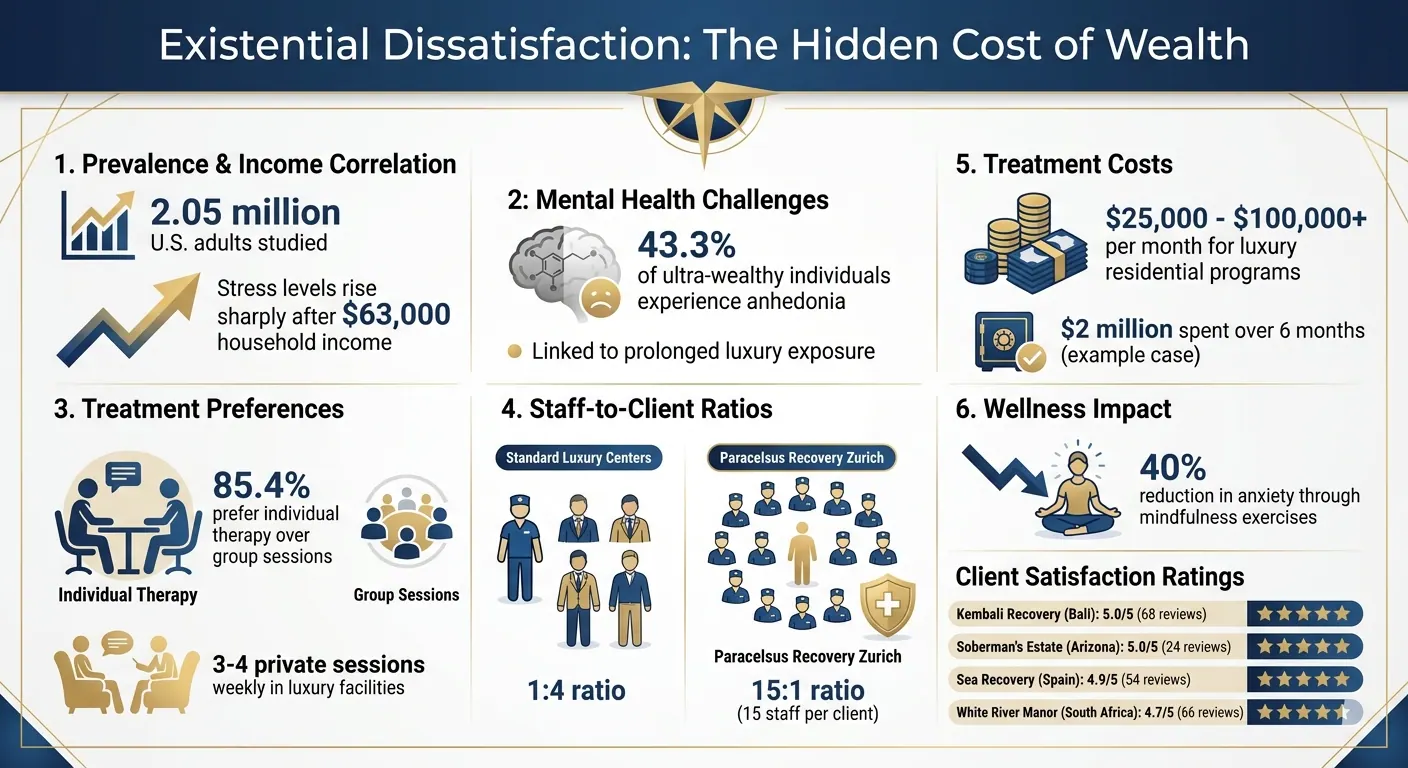
Existential Dissatisfaction Among Wealthy Individuals: Key Statistics and Mental Health Challenges
Existential dissatisfaction refers to a type of post-success depression where individuals feel deeply unfulfilled despite achieving significant financial milestones. Unlike clinical depression, which is often linked to biological factors or specific life events, this condition stems from broader philosophical concerns about life's meaning, personal freedom, and purpose. It’s often described as a persistent feeling of “what’s next?” that arises after major goals have been accomplished.
Common Signs and Symptoms
People experiencing existential dissatisfaction tend to fixate on questions about life’s purpose and the inevitability of mortality. This often leads to social detachment, as they question whether their relationships are genuine or motivated by their wealth. Wealth counselor Amanda Falkson highlights this struggle:
"When there's no need to work, where do you get your sense of meaning and purpose and structure? Do you become a walking dollar sign?"
This sense of isolation is often paired with physical and emotional exhaustion - even when financial resources are abundant.
What Causes This Emotional Emptiness
For many high achievers, self-worth becomes closely tied to professional accomplishments. Once these milestones are reached, they may face an identity crisis as the structures that once gave their lives direction and meaning disappear. While financial success eliminates many basic stressors, material wealth often fails to fill the emotional void.
The source of wealth can also play a role. Those who inherit money or experience sudden financial windfalls often struggle more with identity issues compared to individuals who have worked to build their wealth. Without a strong internal sense of control, maintaining a sense of purpose can become a challenge. Additionally, living within the exclusive circles of the top 1% - where few can relate to their experience - can further deepen feelings of isolation. These dynamics help explain why existential dissatisfaction is so common among the ultra-wealthy.
How Common Is This Among Wealthy Individuals
Surprisingly, existential dissatisfaction is widespread among affluent individuals. Studies reveal a link between wealth and increased mental health challenges. For example, research involving 2.05 million U.S. adults found that while life satisfaction generally improves with income, stress levels begin to rise sharply once household income surpasses about $63,000.
This condition is particularly prevalent among introspective individuals - such as intellectuals, artists, and high achievers. Interestingly, high-income earners who report daily stress often experience lower overall life satisfaction. These findings suggest that the pressures and expectations tied to wealth can significantly undermine the happiness many assume financial success will bring.
Why Standard Mental Health Treatment Falls Short
Obstacles to Getting Effective Help
Mental health struggles among wealthy individuals are often overlooked or dismissed. The societal expectation to maintain a facade of constant happiness, coupled with privacy concerns that traditional clinics cannot adequately address, discourages many from pursuing help.
For ultra-wealthy clients, the stakes are even higher. They often need a "one-client model" - a setting where they are guaranteed complete privacy and never encounter other patients. Unfortunately, such environments are rarely available in standard treatment facilities. Jan Gerber, founder of Paracelsus Recovery, highlights the delicate nature of trust in these situations:
"If a client gets the slightest feeling of being judged - it can be the flicker of an eye - they'll leave. They've already walked a world of shame and guilt about their privilege."
These barriers, combined with the limitations of conventional therapy, leave the unique needs of the ultra-wealthy largely unmet.
The Gap in Standard Therapy Approaches
Standard therapy often focuses on helping individuals regain functionality for work or daily life. However, this approach typically falls short when it comes to addressing the deeper, more complex issues faced by ultra-high-net-worth individuals. For example, the phenomenon of "post-success depression" - a sense of emptiness or lack of purpose after achieving all material goals - is frequently overlooked in traditional mental health care.
Research shows that 43.3% of ultra-wealthy individuals experience anhedonia, a condition linked to prolonged exposure to luxury and a resulting decrease in dopamine sensitivity. Addressing this requires highly specialized treatments that go beyond what conventional therapy offers.
Additionally, standard therapeutic models often miss the mark when it comes to the unique challenges faced by the wealthy. These include legacy anxiety, the erosion of trust within social networks, and the existential void that can emerge when financial success eliminates the necessity of work. In some cases, individuals have spent as much as $2 million over six months in specialized clinics after finding no relief through traditional treatments.
These limitations highlight the growing demand for tailored, privacy-focused treatment programs designed to meet the specific needs of this population.
Addressing Existential Emptiness Through Luxury Rehabilitation
Therapies Designed for Wealthy Clients
Luxury rehabilitation centers provide therapies that go beyond the scope of standard treatment facilities. One example is existential psychotherapy, which helps clients confront profound issues like mortality, isolation, and personal freedom. This approach encourages self-acceptance and promotes personal growth.
The treatment philosophy in these centers is distinct from traditional methods. Studies reveal that 85.4% of clients in luxury settings prefer individual therapy, leading many facilities to offer three to four private sessions weekly. This allows for a comprehensive focus on addiction, trauma, and overall mental health.
Advanced treatments such as Transcranial Magnetic Stimulation (TMS) and neurofeedback are also available to support brain health and recovery. Many luxury centers maintain an impressive staff-to-client ratio of 1:4 or better, ensuring tailored care from highly qualified clinicians. For instance, Paracelsus Recovery in Zurich offers an unparalleled ratio of approximately 15:1, with an entire team dedicated to each client.
Experiential and Wellness Programs
Luxury rehabilitation isn't just about clinical therapies - it also incorporates wellness and experiential programs that deepen emotional healing. These activities are designed to complement traditional treatments and foster a sense of wholeness.
Experiential therapies play a key role in this process. Equine therapy helps clients process complex emotions through interactions with horses, while art therapy provides a creative, nonverbal way to explore feelings of emptiness. Activities like guided hikes or beach walks promote mindfulness and a sense of calm.
Holistic wellness practices are another cornerstone of these programs. Techniques like yoga, acupuncture, and nutritional counseling help reduce stress hormones and improve brain function by enhancing neuroplasticity. Mindfulness exercises, in particular, have been shown to lower anxiety levels by as much as 40%, making them an essential part of treatment.
The environment itself is designed to support healing. Many facilities resemble luxury resorts, private villas, or serene beachfront properties. This tranquil atmosphere helps clients relax and engage in meaningful introspection.
"Healing happens when you feel safe, supported, and genuinely cared for. That's why luxury treatment centers are designed to feel like a sanctuary."
– Resident Contributor
Results and Client Success Stories
The success of these tailored programs is evident in the outcomes they deliver. In December 2025, Better Days Treatment helped Michael, a 48-year-old CFO, overcome alcohol dependency and work-related stress. Eighteen months later, he remains sober and thriving.
Another notable case is David, a 52-year-old tech entrepreneur who addressed cocaine addiction and ADHD during a critical business acquisition. The center ensured his recovery journey didn't disrupt essential company operations by coordinating daily check-ins with his CFO.
An inspiring example is Jan Gerber, CEO of Paracelsus Recovery. After battling severe depression and what he described as a "reality collapse", he found a renewed sense of purpose through specialized care. His personal journey has shaped the center's approach to addressing the unique challenges faced by ultra-high-net-worth individuals.
Client feedback further highlights the effectiveness of these programs. For example, Kembali Recovery Center in Bali holds a 5.0 rating from 68 reviews, Soberman's Estate in Arizona has a 5.0 rating from 24 reviews, Sea Recovery in Spain scores 4.9 out of 5 from 54 reviews, and White River Manor in South Africa earns a 4.7 rating from 66 reviews.
How Leading Rehabs Connects Clients to Top Treatment Centers

Detailed Profiles of Luxury Treatment Centers
Leading Rehabs provides in-depth profiles of top rehabilitation centers around the world, offering a comprehensive look at their therapies, conditions treated, and specialized services. This detailed information helps affluent individuals decide if a center aligns with their needs, whether it focuses on existential therapy, humanistic approaches, or a multidisciplinary model combining psychiatry, psychotherapy, and neurobiological treatments.
The platform highlights facilities that follow a "One Client at a Time" approach, limiting admissions to ensure personalized attention and discretion. These profiles also include executive-specific features like private workspaces, flexible schedules for business commitments, and strict confidentiality backed by non-disclosure agreements. For high-performing professionals grappling with existential dissatisfaction, these insights make it easier to find a center that understands the unique pressures of maintaining success while addressing deeper psychological challenges.
Privacy and individualized care are cornerstones of the treatment philosophy at these elite centers:
"We intentionally limit the number of clients we work with at any given time. This allows for greater clinical availability, faster response to change or risk, higher levels of discretion, and a calmer, more contained therapeutic environment."
– THE BALANCE Rehab Clinic
These profiles serve as a foundation for selecting a membership plan tailored to each client’s needs.
Membership Plans: Basic Light, Basic, and Premium
Leading Rehabs offers tiered membership plans to match varying levels of access and service needs. The Basic Light plan is free, providing essential details like media, rehab type, conditions treated, therapies available, and contact information. For $275 per year, the Basic plan enhances the profiles with photo galleries, verified badges, additional treatment details, links to treatment options, and ad campaigns to boost visibility.
The Premium plan, starting at $5,000 annually, delivers top-tier exposure and exclusive services. These include on-site reviews, professional image videos, video podcasts, prominent profile placement, and premium customer support. This plan is ideal for ultra-high-net-worth individuals seeking discreet, tailored access to global treatment programs.
Access to Elite Treatment Centers Worldwide
The centers featured by Leading Rehabs are not only known for their privacy and expertise but also for their focus on restoring purpose and well-being. Clients gain access to premier facilities in sought-after locations such as Mallorca, Zurich, London, and Marbella. These centers specialize in dual-diagnosis care, addressing existential dissatisfaction alongside conditions like depression masked by overwork or anxiety hidden by perfectionism. Treatment begins with private consultations to assess clinical needs and readiness.
Leading Rehabs prioritizes facilities staffed by doctorate-level therapists and psychiatrists, ensuring the highest standard of care. Many centers are situated in serene, secluded settings - whether by the ocean or in the mountains - environments that encourage deep self-reflection. With luxury residential programs ranging from $25,000 to over $100,000 per month, the platform helps clients find options that deliver measurable results and sustainable aftercare plans.
Conclusion: Finding Meaning Beyond Money
Main Points About Existential Dissatisfaction
We’ve seen how financial success, while desirable, doesn’t automatically bring emotional contentment. In fact, it often comes with its own set of challenges. Many high achievers face post-success depression or become overly focused on luxury consumption, which only provides temporary relief from deeper emotional struggles. As Paracelsus Recovery aptly puts it:
"When self-worth is fused with net worth, luxury becomes a drug itself".
These issues often intersect with deeper questions about purpose, isolation, and personal freedom. The pressure to maintain status, coupled with social isolation and a lack of direction after achieving financial goals, can intensify these existential dilemmas.
How Luxury Rehab Restores Purpose
Specialized treatment centers address these struggles by using approaches like existential therapy, which helps individuals explore profound questions about identity and purpose. Many programs also incorporate neuroscience-based therapies, mindfulness practices, and conscious consumption to help recalibrate the brain’s reward system. The goal? To shift focus away from external validation and toward internal fulfillment. These centers offer the privacy and tailored care that are often essential for addressing such complex challenges.
Creating a peaceful, supportive environment plays a key role in this process. A Resident Contributor from Resident Magazine describes it well:
"When your surroundings reinforce peace instead of stress, your nervous system starts to relax. That's when the real work begins".
In these serene settings, clients are encouraged to redefine success by aligning their actions with personal values such as empathy and creativity. Eloise Casal from New Life Rehab highlights this approach:
"Existential depression may not always have a definitive cure... but it can be effectively managed... helping individuals refocus on core values, relationships, and meaningful activities".
This process of reconnecting with one’s values and purpose lays the foundation for a more meaningful life.
Next Steps: Visit Leading Rehabs
Leading Rehabs provides access to some of the world’s most exclusive treatment centers, designed to address post-success depression and similar challenges. With detailed profiles and tiered membership options, the platform bridges the gaps in traditional care discussed earlier in this article. Facilities in sought-after locations like Mallorca, Zurich, and London combine clinical expertise with absolute discretion. If you’re grappling with post-success depression or questioning life after financial achievement, these specialized programs can help you uncover a deeper sense of peace - one that no amount of money can buy.
FAQs
How is existential dissatisfaction different from depression?
Existential dissatisfaction and depression stem from very different roots and focus on distinct aspects of human experience.
Depression often manifests as a lingering sadness, a lack of interest in activities, and biochemical imbalances that interfere with daily functioning. It’s a condition that typically requires medical attention, such as therapy or medication, to manage its symptoms.
On the other hand, existential dissatisfaction isn’t rooted in a clinical condition. Instead, it arises from profound questions about life’s purpose, personal identity, and the search for meaning. This type of dissatisfaction often revolves around themes like freedom, isolation, and the inevitability of mortality. Addressing it calls for a different approach - one that includes philosophical reflection, mindfulness practices, and broader methods that nurture the mind and spirit.
Why do wealthy people feel lonely or mistrustful of others?
Wealth often brings unexpected challenges, particularly when it comes to building genuine relationships. Affluent individuals can feel isolated, caught in a web of mistrust as they question whether others are drawn to them for who they are or for their money. This fear of exploitation or insincerity can make it difficult to form authentic bonds.
On top of that, many wealthy people wrestle with a deeper sense of dissatisfaction. Material success, while rewarding in some ways, often falls short of addressing emotional needs or providing a sense of purpose. Without meaningful connections or a strong sense of community, this can leave them feeling unfulfilled and disconnected, despite their financial achievements.
How do I know if a luxury rehab is the right next step?
If you’re dealing with emotional challenges like ongoing emptiness, a lack of fulfillment, or feelings tied to existential depression, a luxury rehab might be worth considering. These struggles can persist even when material success is present. Signs such as losing interest in activities you once enjoyed (anhedonia), withdrawing from social connections, or grappling with a sense of meaninglessness could indicate that specialized care is needed. Seeking advice from mental health professionals who understand the unique experiences of high-net-worth individuals can help determine if a personalized, high-end rehab program is the right fit for you.