
Emotional Resilience for Global Business Leaders Facing Market Volatility

Market volatility is tough on leaders, but emotional resilience can make all the difference. Stress affects decision-making, mental clarity, and long-term leadership effectiveness. The good news? Resilience isn’t a fixed trait - it’s a skill you can build.
Here’s what you need to know:
- Chronic stress harms decision-making: It disrupts the brain’s ability to think clearly or strategically.
- Resilience is learnable: Techniques like mindfulness, structured routines, and social support help leaders manage pressure.
- Physical health matters: Sleep, exercise, and nutrition directly impact emotional stability.
- Professional help is available: Luxury rehab centers and concierge mental health services offer tailored support for executives.
Investing in resilience isn’t just about surviving challenges - it’s about thriving as a leader in a world of constant uncertainty.

Emotional Resilience for Executives: Key Stats & Strategies
Emotional Resilience and Market Volatility: What Leaders Need to Know
What Emotional Resilience Means for Business Leaders
Emotional resilience is the ability to absorb shocks, adapt to uncertainty, and stay clear-headed under intense pressure. For leaders, it’s not just about recovering from setbacks but about navigating a transformed reality with strength and focus.
"Resilience is the ability to bounce back from difficulties. The leadership version goes further: Resilience is the ability to bounce back stronger than before." - Scot Chisholm, CEO and Founder
While many executives possess technical expertise, what sets exceptional leaders apart during crises is their ability to regulate emotions and think clearly under stress. These traits become critical when market volatility challenges their mental and emotional stamina.
How Market Volatility Affects Leaders Psychologically
Market turbulence doesn’t just strain finances; it also impacts the brain. Stressful conditions narrow focus and push leaders toward quick, instinctive decisions rather than thoughtful analysis. Prolonged exposure to stress builds up what’s known as allostatic load, which diminishes cognitive function and leads to reactive choices.
Adding to the difficulty is the isolation that often comes with senior roles. As leaders rise to the top, their peer group shrinks, making it harder to share doubts or vulnerabilities. This isolation often forces leaders to manage stress silently, which can amplify its effects. Instead of a dramatic collapse, many leaders face a slow burnout fueled by overlapping pressures like geopolitical unrest, technological upheavals, and fluctuating capital markets.
Surveys show that around 70% of leaders feel that emotional labor and mental overload impair their decision-making. Furthermore, executives with lower resilience are nearly four times more likely to experience depression compared to their more resilient counterparts.
The Core Components of Emotional Resilience
Given these psychological challenges, building resilience requires focusing on key areas:
- Self-awareness: Spotting early signs of stress and identifying emotions instead of suppressing them.
- Cognitive flexibility: Viewing setbacks as learning opportunities rather than personal failures and adapting strategies as needed.
- Emotional regulation: Staying composed and measured in response to challenges. A leader’s demeanor can set the tone for whether their team feels encouraged to innovate or trapped in survival mode.
- Social support: Proactively seeking out mentors, peers, or board members before stress becomes overwhelming. Sharing perspectives often restores balance more effectively than enduring in silence.
One powerful approach is the Stockdale Paradox: balancing unwavering faith in a positive long-term outcome with a clear-eyed acknowledgment of current difficulties. It’s not about blind optimism but about maintaining a disciplined and realistic perspective - a skill that’s especially critical in volatile markets.
"What appears to matter most is not having all the answers, but knowing you are not failing by lacking them." - Egon Zehnder
sbb-itb-4b13a7c
How to Build Emotional Resilience: Practical Strategies
Mindfulness and Stress Reduction Techniques
Recognizing the impact of market volatility on mental well-being is just the beginning. Leaders need actionable strategies they can use in the moment to stay grounded.
Neuroscience explains why mindfulness is so effective: high-pressure situations activate the brain's amygdala, which drives reactive, instinctive responses. Techniques like conscious breathing can engage the prefrontal cortex, allowing for more rational decision-making under stress.
"Mindfulness is not about slowing down productivity or escaping pressure. It is about training the mind and nervous system to stay clear, regulated, and intentional - even in high-stakes situations." - Susan Hobson, CEO of Elite High Performance
Two mindfulness practices are particularly useful for their simplicity and immediate results. Box breathing involves inhaling for 4 counts, holding for 4, exhaling for 4, and holding again for 4. It can be done quietly before a challenging meeting or phone call. Another option is the 3Cs Practice, which takes just 10 minutes: Check-in (recognize your current thoughts and emotions), Center (spend one minute on slow, deep breathing), and Connect (set a small, focused intention for the day). Both methods help break the cycle of stress before it escalates.
Learning to view emotions and thoughts as temporary can also reduce impulsive reactions during turbulent times. This mindset shift helps leaders maintain focus and avoid rash decisions.
A Daily Routine That Supports Emotional Resilience
Building resilience doesn’t happen overnight; it’s the result of consistent, daily habits. A well-structured routine creates moments of recovery throughout the day, preventing stress from snowballing.
| Routine Phase | Action | Purpose |
|---|---|---|
| Morning | Cross-lateral movements (like figure-8 arm swings) and HRV tracking | Stimulate key brain circuits and assess recovery from the previous night |
| Midday | Take 5-minute breaks between meetings to breathe and hydrate | Break up stress and regain focus |
| Evening | Write out tomorrow’s priorities ("Brain Dump") and avoid screens for 30–60 minutes before bed | Clear mental clutter and improve sleep quality |
This kind of routine not only helps regulate stress but also sets the stage for healthier physical habits.
For example, a CFO at a manufacturing company revamped his schedule to include two designated "decision windows" for emails and approvals. This change reduced his email workload by 40% and allowed him to stop working by 9:00 PM. By managing his cognitive load, he avoided overextending his work hours.
"Learning to pause was the hardest - and most necessary - leadership lesson of my life." - Suze Shaner-Brodax, Leadership Advisor
A daily routine like this provides the consistency needed to build emotional resilience while creating space for physical well-being practices.
How Physical Health Supports Emotional Resilience
Mental resilience and structured routines are only part of the equation. Physical health plays an equally important role in emotional stability. Chronic stress can physically alter the brain, but targeted health practices can counteract these effects.
Three key areas of physical health directly contribute to emotional resilience:
- Sleep: Sticking to a consistent wake-up time is one of the best ways to regulate your body’s internal clock and maintain mental clarity.
- Exercise: Just 15–20 minutes of high-intensity interval training (HIIT) in the morning can help reduce cortisol levels and prepare you for the day ahead.
- Nutrition: Foods rich in omega-3s, like salmon and walnuts, help reduce inflammation, while magnesium-packed options, such as leafy greens, support nervous system function.
Leadership and Organizational Approaches to Resilience
Staying Composed as a Leader During a Crisis
The way leaders handle themselves during a crisis sets the tone for the entire organization. When leaders lose their composure, it can quickly spread unease and anxiety throughout their teams.
One effective strategy is affect labeling - shifting from saying "I am angry" to "I am experiencing a surge of anger." This subtle reframing helps create distance between your emotions and your identity. Pair this with sensory grounding, such as focusing on physical sensations, to interrupt stress responses and regain control. These techniques reduce activity in the brain's amygdala, allowing for thoughtful responses instead of knee-jerk reactions.
Dr. Jill Bolte Taylor, a neuroanatomist, explains the science behind this:
"When a person has a reaction to something in their environment, there's a 90-second chemical process that happens; any remaining emotional response is just the person choosing to stay in that emotional loop."
This 90-second window is a critical opportunity for leaders to break the emotional cycle before it escalates. Leaders who master this skill not only maintain their own composure but also set an example for their teams, creating a ripple effect of calm and resilience.
Building Teams and Cultures That Handle Pressure Well
While personal composure is essential, leaders must also cultivate a work environment that supports resilience at every level. It’s not just about individual coping mechanisms - it’s about embedding resilience into the culture of the organization.
At the Semafor World Economy Summit in April 2026, over 450 global CEOs identified "leadership endurance" as a core capability for navigating what they called the "era of the unknown". Acknowledging the challenges of volatility openly can prevent isolation and the gradual decline in team performance that often follows. Leaders can further strengthen their teams by reconnecting them to the organization's mission during high-pressure periods, shifting focus away from short-term distractions and back to long-term goals.
Samir Nurmohamed, PhD, from The Wharton School, highlights this balance:
"A lot of people think about resilience as something individual... But for leaders, the question is also: How do I help my team stay focused? How do I acknowledge what people are going through without losing sight of our goals?"
The solution? Treat resilience as an organizational capability. This means integrating it into governance, planning, and team norms, rather than viewing it as a personal trait that only certain individuals possess.
Using Professional Mental Health Support in Your Organization
Even the best internal strategies have their limits, and that’s where professional mental health support becomes a vital resource. Executive burnout and disengagement come with a hefty price tag - costing employers an average of $20,683 per executive annually. Replacing a C-suite leader is even more expensive, often costing 200% to 400% of their annual salary.
Unfortunately, traditional Employee Assistance Programs (EAPs) often fall short for senior leaders. With low usage rates (around 4%), limited sessions (typically 3–6 visits), and counselors who may lack experience with high-stakes executive dynamics, these programs fail to meet the needs of top-tier talent. Concierge or private-pay mental health benefits offer a better alternative. These services provide flexible scheduling, eliminate insurance-related concerns, and connect leaders with specialists in high-performance psychology and fiduciary challenges.
The financial benefits are clear: comprehensive behavioral health programs yield an average return of $2.30 in reduced health plan spending for every $1 invested. For organizations looking to retain their top talent through uncertain times, this is an investment that pays off.
Managing Stress, Uncertainty & Burnout | Resilience Strategies for Leaders and Professionals
Luxury Mental Health and Rehabilitation Options for Executives
Sometimes, personal resilience strategies aren't enough. Certain challenges demand professional care tailored to high-performing individuals.
Signs That Professional Help May Be Needed
Executive burnout often creeps in quietly. Instead of a sudden crash, it manifests as subtle changes - feeling emotionally detached, losing empathy for your team, or growing cynical about work that once inspired you. These aren't just personality shifts; they're clinical indicators.
Other red flags might include relying on alcohol to relax, stimulants to stay sharp, or sedatives to sleep. When even rest fails to recharge you, it’s no longer just about lifestyle - it’s about neurobiology. Studies link chronic workplace stress to actual changes in the brain, particularly in the prefrontal cortex.
"The very qualities that drive leadership success - relentless drive, high standards, tolerance for stress... are the same qualities that make mental health deterioration both more likely and more invisible until it becomes a crisis." - Hana Giambrone, Author
Recognizing these warning signs is the first step toward seeking specialized, confidential care.
What Sets Luxury Rehabilitation Centers Apart
Executives face unique challenges when seeking help - privacy concerns, fear of exposure, and maintaining professional responsibilities. Luxury rehabilitation centers are designed to address these specific needs.
These facilities prioritize discretion, often operating in secluded locations with unmarked entrances and accommodations that don’t outwardly signal rehabilitation. Staff members, from clinicians to housekeeping, are bound by strict non-disclosure agreements (NDAs). Some programs even limit their capacity to as few as six clients to ensure no overlap with a professional peer network.
The care offered is as intensive as it is discreet. Top-tier programs can include up to 65 private therapy sessions per month, led by doctorate-level psychologists familiar with the pressures of corporate life. Treatment is framed as "performance medicine", focusing on rebuilding decision-making clarity, emotional resilience, and sustainable leadership habits.
Importantly, these centers understand that stepping away from work entirely isn't always an option. Secure workspaces, encrypted Wi-Fi, and scheduled "business windows" allow executives to handle critical tasks while staying on track with recovery. One leading facility boasts a 94% success rate for its tailored programs, with admissions for urgent cases often arranged within 48 to 72 hours.
"What I needed wasn't a 12-step meeting. I needed a private clinician, a private suite, and absolute certainty no one would ever know." - R.M., Former CEO
This level of care comes at a premium. A 30-day stay at a top U.S. facility, such as Annandale Behavioral Health, typically costs between $40,000 and $90,000. Many executives choose to pay privately to avoid leaving an insurance record that could appear in employer-related checks.
These specialized approaches ensure that care aligns seamlessly with the demands of an executive lifestyle.
How Leading Rehabs Helps Executives Find the Right Care
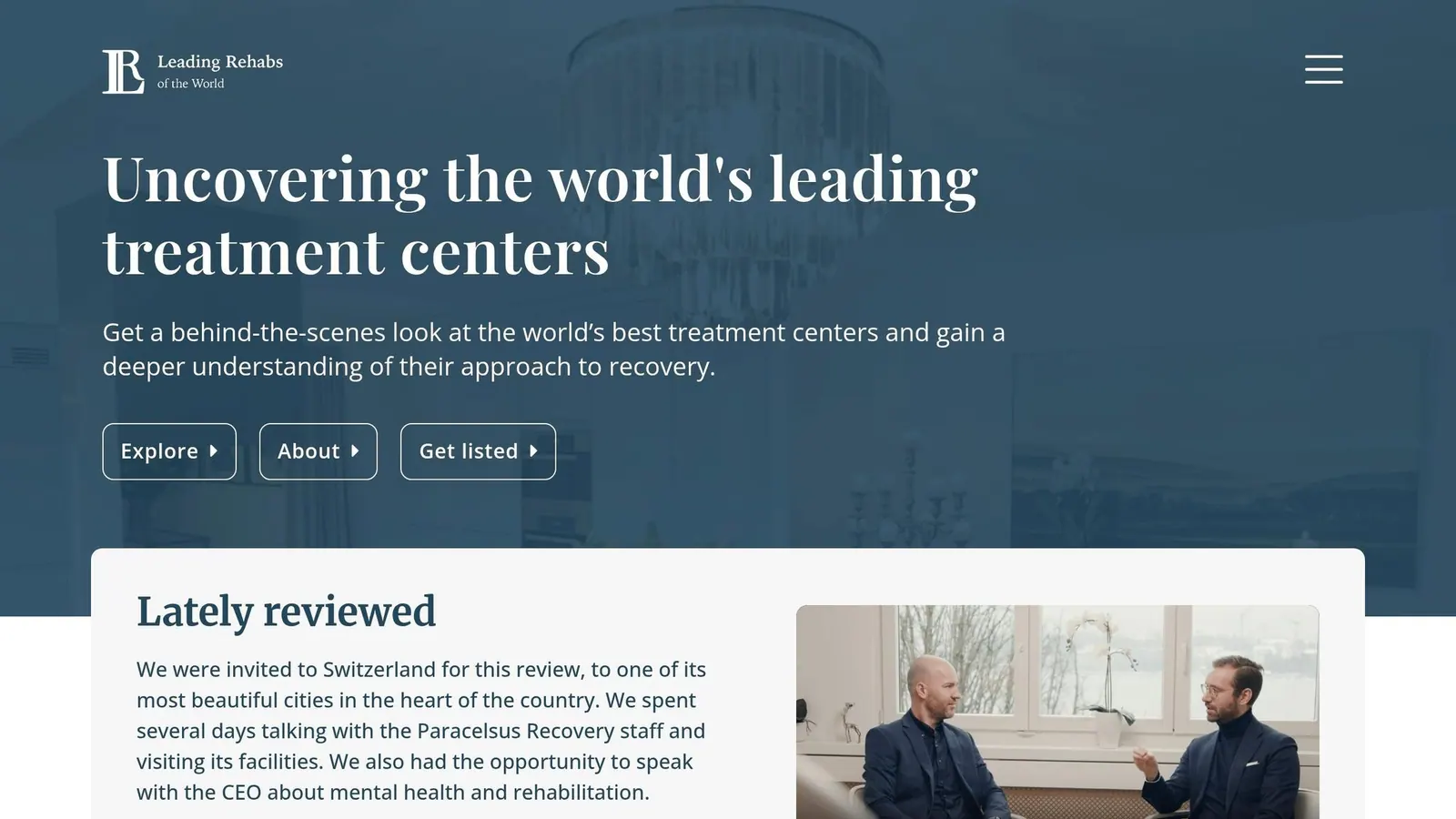
Choosing the right facility isn’t straightforward. Not all programs marketed as "executive" meet the rigorous standards of clinical care, privacy, and work-life integration that leaders require.
The Leading Rehabs platform simplifies this process by offering detailed profiles of top-tier centers. Executives can quickly compare facilities based on their clinical offerings, privacy measures, and ability to accommodate professional obligations. For those under pressure to make a decision quickly, having a trusted resource like this is invaluable. It allows leaders to find the right balance of care, confidentiality, and support for their unique needs.
Conclusion: Investing in Long-Term Emotional Resilience
Throughout this guide, we've seen how building emotional resilience is not just about weathering challenges - it's about setting yourself up for long-term leadership success. Think of it as an essential skill that can be cultivated with deliberate effort and the right tools.
"Resilience is the #1 predictor of leadership success. Not IQ. Not market. Not funding. Plans are always wrong at first. The leaders who win are the ones who stay in the game long enough to find the right one." - Scot Chisholm, CEO and Founder, Highland
The strategies we’ve covered - like aligning your circadian rhythms, incorporating Zone 2 cardio, fostering peer connections, and reconnecting with your mission - aren’t just optional extras. They’re fundamental habits that can sharpen your thinking and strengthen your ability to lead effectively. Research backs this up: executives with lower resilience face a 4-times higher risk of depression and nearly 3-times higher anxiety. These numbers highlight how critical it is to prioritize practices that support mental clarity and decision-making, especially in unpredictable environments.
Recovery is not a luxury or a reward - it’s a strategic priority. Sleep, exercise, and mental breaks are as vital to leadership as any business strategy. And when personal efforts fall short, turning to professional support is not a sign of weakness but of strength. As Maryann Rosenthal, PhD, CEO of Alta Mira Recovery, explains: "Choosing executive rehab is an act of strength and strategic intelligence. It's the ultimate investment in your most valuable asset: your mind and health."
Success doesn’t come from achieving constant stability - it comes from building the stamina to navigate ongoing uncertainty. Start small: try a delegation audit, establish a morning light routine, or reach out to a trusted peer this week. Each step you take strengthens your ability to lead with resilience.
FAQs
How can I tell if I’m stressed or actually burning out?
Stress tends to be short-lived and linked to particular challenges, while burnout creeps in gradually and lingers, even with rest. Some clear signs of burnout are persistent exhaustion, feeling emotionally distant, a drop in confidence, and long-term problems like trouble concentrating, irritability, or getting sick more often. If you've been feeling completely drained for weeks or months and rest doesn't seem to make a difference, you're likely dealing with burnout, not just momentary stress.
What’s the fastest resilience tool I can use before a high-stakes meeting?
The physiological sigh is a simple yet effective tool that takes only 30–60 seconds to perform. Here's how it works: inhale deeply through your nose, then take a quick second inhale to fully expand your lungs. Finally, exhale slowly and completely through your mouth. This technique helps calm your nervous system, eases anxiety, and leaves you feeling more focused and composed - perfect for moments when you need to center yourself quickly.
When should an executive consider concierge mental health care or luxury rehab?
Executives might explore concierge mental health care or luxury rehab when chronic stress, burnout, or substance use starts interfering with their performance and traditional programs don't provide the support they need. These services are particularly well-suited for individuals who require privacy, customized clinical care designed for high-pressure roles, or an environment that allows recovery while maintaining secure professional connections. It's time to seek help if anxiety, trauma, or depression becomes too overwhelming to manage through work alone.
Related Blog Posts
- Hyper-Competition Burnout: The Executive Price of Constant Power
- Executive Burnout: The Hidden Crisis Among Leaders and Discreet Recovery Solutions
- Leadership Isolation: Why Being at the Top Feels Lonely and How to Heal Privately
- The Mental Toll of Managing Vast Wealth: Stress, Anxiety & Sustainable Solutions