
Distrust & Paranoia: The Psychological Price of Extreme Wealth

Wealth may bring freedom and opportunity, but it often comes with hidden costs like distrust, paranoia, and isolation. Ultra-high-net-worth individuals frequently struggle to form genuine relationships, fearing others may value them only for their money. This emotional strain is compounded by public scrutiny, security concerns, and family disputes over wealth.
Key points:
- Isolation: Many wealthy individuals withdraw from social interactions to avoid being seen as "walking dollar signs."
- Mental health challenges: Nearly 43.3% of ultra-wealthy individuals report symptoms like emotional numbness and anxiety.
- Triggers: High-profile incidents and societal hostility push many to hide their affluence (e.g., avoiding luxury items like Birkin bags).
- Coping mechanisms: Many turn to "silent luxury", private security, and curated social circles for safety.
Specialized therapy and luxury rehabilitation programs address these challenges, focusing on trust-building, emotional regulation, and stress management. These tailored solutions help the wealthy navigate the psychological burdens of their lifestyle while working toward emotional balance and meaningful connections.
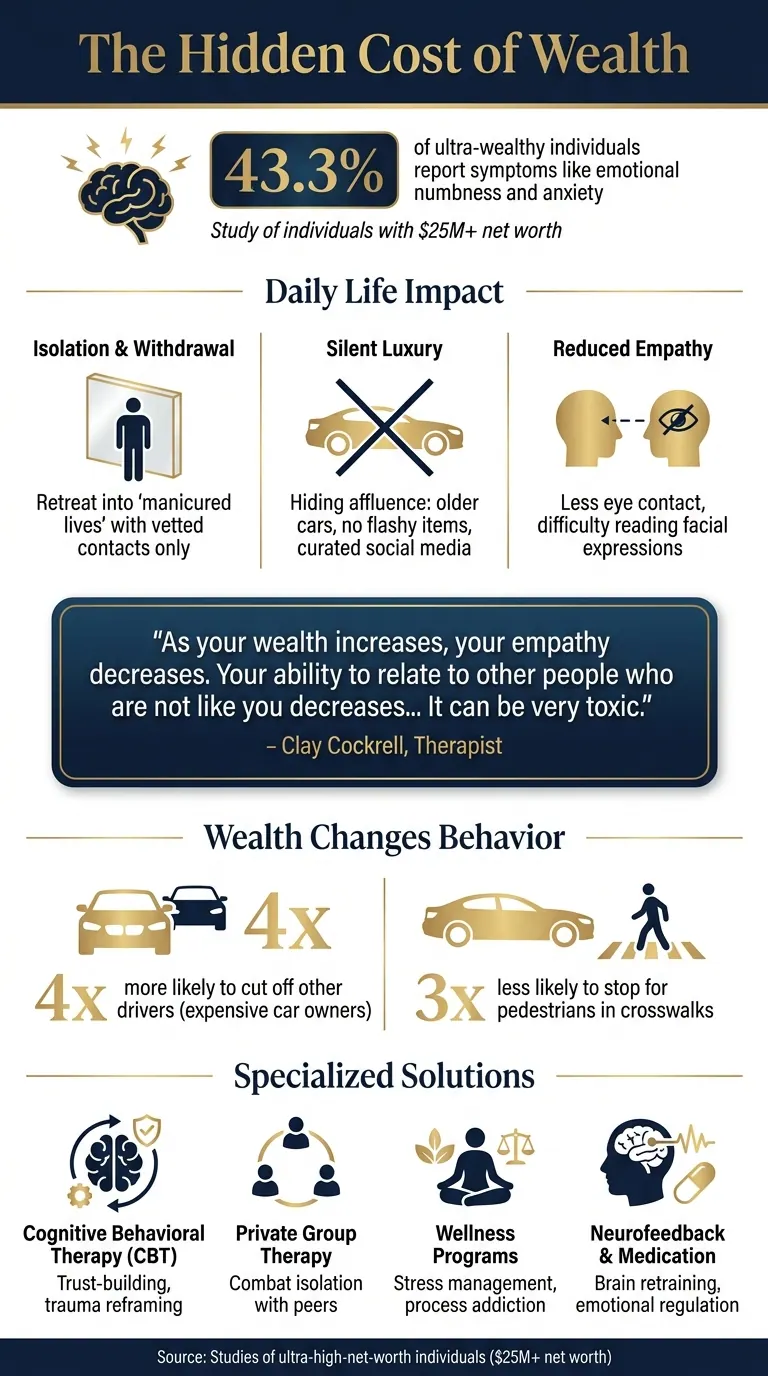
The Psychological Impact of Extreme Wealth: Key Statistics and Effects
The Psychological Burden of Distrust and Paranoia
How Distrust and Paranoia Show Up
For ultra-high-net-worth individuals, distrust isn't just a fleeting concern - it becomes a constant filter through which they view their relationships. A common question that plagues their minds is: Do people care about me, or are they only here because of my money?
This doubt often turns personal relationships into transactional ones. As Paul Hokemeyer explains:
"Their relationships become defined for what they can provide to others rather than for who they are of themselves".
Wealthy individuals frequently feel taken advantage of by those seeking financial benefits, career opportunities, or elevated social standing. Attempts to set boundaries can result in them being labeled as "selfish" or "mean-spirited". Adding to this is imposter syndrome, which amplifies feelings of inadequacy and the fear of being exposed as undeserving.
These patterns lay the groundwork for specific triggers that heighten the psychological toll.
Common Triggers for Psychological Strain
Certain events and circumstances intensify these emotional challenges. Public hostility, for instance, has become more pronounced. Following the December 2024 incident, security concerns escalated, and many ultra-wealthy individuals began hiding luxury items like Birkin bags to avoid drawing attention.
Therapist Clay Cockrell highlighted this shift in societal attitudes:
"In times past, wealthy people were considered aspirational figures. Now, it's more like, 'If you're wealthy, you did something wrong'".
Family disputes over inheritance and wealth distribution add another layer of stress. These conflicts often blur the line between genuine familial bonds and financial motives. On top of that, relentless media scrutiny and invasions of privacy force many to remain hyper-aware of their public image.
For those who inherit wealth, the burden can be even heavier. Unlike self-made individuals who often develop a sense of control over their success, inheritors may wrestle with questions about their identity and feel guilt over privileges they believe they haven't earned.
These triggers collectively reshape how the wealthy navigate their daily lives.
Effects on Daily Life
The psychological pressures tied to extreme wealth leave a noticeable mark on day-to-day living. One major response has been the rise of "silent luxury", where individuals downplay their affluence. Many now drive older cars, avoid wearing flashy items, and carefully curate their social media presence to avoid unwanted attention.
Social isolation is another common coping mechanism. A 2011 study of 1,000 individuals with a net worth of at least $25 million found that many reported ongoing anxiety, dissatisfaction, and even financial insecurity despite their wealth. To shield themselves from constant requests and public judgment, many retreat into what Cockrell describes as "manicured lives" - controlled environments where interactions are limited to trusted, vetted individuals [1,4].
Research also reveals how extreme wealth affects brain function and behavior. Studies show that higher-income individuals tend to spend less time making eye contact and have more difficulty interpreting facial expressions. As Cockrell notes:
"As your wealth increases, your empathy decreases. Your ability to relate to other people who are not like you decreases.… It can be very toxic".
This detachment, rooted in distrust, also influences everyday behavior. For example, studies indicate that drivers of the most expensive cars are about four times more likely to cut off other drivers and three times less likely to stop for pedestrians in crosswalks. These behaviors reflect how suspicion and emotional distance become ingrained in even the smallest decisions.
sbb-itb-4b13a7c
Root Causes and Mental Health Implications
Constant Vigilance and Security Threats
For the ultra-wealthy, life often feels like a high-stakes balancing act, dominated by physical and financial threats that most people never experience. High-profile incidents of violence have pushed many to pour significant resources into private security to guard against risks like kidnapping, extortion, and targeted attacks. This hyper-awareness extends beyond physical safety to financial markets, where constant monitoring - sometimes referred to as "ticker shock" - keeps their stress levels perpetually high. Living in this continual state of fight-or-flight might protect assets, but it also chips away at trust, making personal connections even more difficult.
The Difficulty of Forming Genuine Relationships
This state of unrelenting vigilance doesn’t just heighten external fears - it also deeply affects personal relationships. Extreme wealth often breeds skepticism, making it hard to distinguish genuine connections from those motivated by money. For romantic relationships, this can be particularly taxing. Wealthy individuals frequently worry about being exploited, while their partners may battle unfair "gold digger" stereotypes.
Outside of romance, many wealthy individuals encounter what therapists term exploitative relationships. In these dynamics, others view them as sources of financial support rather than as people, reducing them to "walking dollar signs". This constant wariness erodes the ability to form authentic bonds and often leads to a sense of isolation. It also makes fostering empathy and building a true sense of community incredibly challenging.
Mental Health Consequences
The emotional toll of constant vigilance and strained relationships often manifests in serious mental health issues. Chronic anxiety, fear, and mistrust can spiral into depression, addiction, and even panic attacks. A 2011 study by Boston College's Center of Wealth and Philanthropy surveyed 1,000 individuals with a net worth of at least $25 million. Surprisingly, many participants reported feelings of anxiety, dissatisfaction, and even financial insecurity - despite their immense wealth.
To cope, some turn to substances like ketamine, psilocybin, or micro-dosing LSD as a way to manage symptoms of "Sudden Wealth Syndrome." This condition is characterized by irritability, insomnia, paranoia, and depression. Paul Hokemeyer, a clinical psychotherapist, offers a striking perspective on the dual-edged nature of wealth:
"When used properly and channeled to productive outcomes, [wealth] makes people happy. But when it's channeled in destructive ways or used recklessly, it screws people up and makes them miserable".
Treatment Options: Luxury Rehabilitation and Mental Health Programs
Cognitive Behavioral Therapy (CBT) for Wealth-Related Paranoia
Addressing wealth-related paranoia starts with understanding the distinct pressures faced by ultra-high-net-worth individuals. Treatment plans are tailored to these unique challenges, with a focus on culturally sensitive care to address trauma-related responses.
The most effective programs replace traditional weekly therapy sessions with integrated teams of psychologists, psychiatrists, and counselors working together. This collaborative approach allows for addressing multiple layers of the issue simultaneously, leading to quicker progress. Trust-building is prioritized before formal therapy begins, as chronic suspicion of others' motives often makes it difficult for these individuals to open up. Therapists focus on creating a secure and private environment where clients feel safe to be vulnerable.
Modern trauma-focused therapy reinterprets hyper-control and paranoia as responses to past trauma rather than personality flaws. As Paracelsus Recovery explains, hyper-control often stems from experiences of chaos, loss, or betrayal and is later reinforced by the pressures of high responsibility and public scrutiny. Therapy aims to rewire the nervous system, helping clients move from a perpetual fight-or-flight state to one of internal regulation and emotional balance. This groundwork enables clients to rebuild healthier relationships and develop better emotional control.
Private Group Therapy for Building Trust
Private group therapy complements individualized CBT by providing a communal space to combat isolation. For individuals who view relationships through a lens of suspicion, peer-only group therapy offers a unique opportunity to connect with others who share similar life experiences. These sessions are conducted in private settings, ensuring participants feel understood and supported by individuals who face comparable challenges.
Many luxury programs also incorporate structured family interventions, like "family weekends", to address emotional distance - often referred to as "affluent neglect." High-pressure careers or reliance on domestic staff can sometimes replace parental involvement, straining family dynamics. These sessions aim to repair relationships and encourage open, constructive communication.
Wellness Programs for Stress Management
Luxury rehabilitation programs often include wellness initiatives to promote physical and mental balance. Chronic stress, which is common among ultra-wealthy individuals, is addressed through holistic approaches that focus on the physical effects of stress. Programs may also tackle the compulsive drive for wealth, often categorized as a "process addiction." This behavior is treated similarly to addictions like gambling, with an emphasis on understanding the dopamine-driven "rush" of deal-making and its impact on brain chemistry.
Dr. Med. Thilo Beck, Chief Consultant Psychiatrist at Paracelsus Recovery, emphasizes the importance of tailoring treatments to each client's specific needs. These wellness programs help clients manage stress while fostering healthier habits and perspectives.
Medication and Neurofeedback Treatments
For many wealthy individuals, effective medication management requires a fresh start. Seeking opinions from multiple global experts can lead to disjointed treatments, so specialized programs conduct thorough evaluations to create cohesive plans. These assessments often include hormonal balance, sleep quality, and nutrition, ensuring a comprehensive approach to care.
Biological treatments, such as SSRIs, are combined with skills-based interventions for emotional regulation. Neurofeedback, a cutting-edge technique, is used to retrain the brain's response patterns, which is particularly beneficial for those whose chronic stress has impacted their decision-making abilities. These treatments aim not only to manage symptoms but also to help clients increase their tolerance for uncertainty and recognize that safety is possible without constant vigilance.
How Leading Rehabs Connects You to Specialized Treatment
Finding World-Class Luxury Rehabs
Leading Rehabs specializes in connecting ultra-high-net-worth individuals to treatment centers that address wealth-related psychological challenges. These facilities often operate on a one-client-at-a-time model, ensuring absolute discretion to protect both personal and professional reputations. The platform highlights centers where multidisciplinary teams work together to treat co-occurring issues like trauma and chronic stress. This collaborative approach helps clients avoid the pitfalls of fragmented care that often arise from consulting multiple providers independently. The carefully curated selection of facilities sets the stage for the verified services described below.
Platform Features and Services
Leading Rehabs stands out by offering access to clinically governed centers, addressing the unique sense of isolation and distrust often experienced by the ultra-wealthy. Verified badges help users distinguish between centers focused on clinical excellence and those primarily offering luxury amenities. The platform prioritizes facilities staffed by culturally aware clinicians who understand the pressures faced by high-profile individuals, such as a CEO’s limited availability for extended treatment.
Listings include detailed profiles of centers offering specialized therapies like biochemical restoration, neurofeedback, and trauma-informed care, all tailored to individuals under significant professional and personal stress. Additionally, Leading Rehabs identifies programs designed to address unique traumas, such as "affluent neglect" and "boarding school syndrome", which are common among second- and third-generation wealthy individuals.
Recovery Success Stories
The platform’s focus on personalized care has led to notable treatment outcomes. Clients at these specialized centers have reported moving from states of chronic hyper-vigilance to improved emotional balance. The intensive, coordinated team approach used by these facilities often leads to faster progress compared to traditional weekly therapy sessions.
"Wealthy people are isolated in our society in a way, and they don't have... the same possibilities as regular people have... they are very hesitant to have social contacts because you never know whether people really like you because of the person you are or because you have the money."
– Dr. Med. Thilo Beck, Lead Psychiatrist
Does Wealth Break Your Brain?
Conclusion
Extreme wealth doesn’t shield individuals from the basic human need for connection, purpose, and meaning. In fact, without the right mental health support, those with ultra-high net worth can find themselves stuck in cycles of distrust and isolation. This often leads to paranoia, withdrawal, and depression, making it even harder to form meaningful relationships or maintain a sense of identity.
Paul Hokemeyer captures this dynamic well by comparing wealth to electricity - it can either light up a life or burn it down. When handled responsibly, it can enhance well-being. But when mismanaged or used recklessly, it can bring misery. The solution lies in integrating mental health frameworks that help individuals manage their wealth in a way that supports emotional health.
Addressing these unique challenges requires specialized care. Unlike traditional therapy, which may overlook the nuances of extreme wealth, targeted interventions focus on identity crises, trauma responses, and the tendency to view relationships as purely transactional. Luxury rehabilitation centers use a coordinated, team-based approach to tackle both the psychological and practical realities of wealth, often yielding progress faster than conventional weekly therapy sessions.
Leading Rehabs steps in by connecting ultra-high-net-worth individuals to top-tier treatment centers equipped to handle these unique challenges. Their verified listings ensure access to facilities where discretion, expertise, and tailored care meet. Seeking help through such resources can turn the isolating burden of wealth into an opportunity for growth, fostering emotional balance and genuine human connection.
FAQs
How can I tell if someone likes me for me - not my money?
To figure out if someone values you for who you are rather than your money, pay close attention to how they act over time. Real care shows through consistent and sincere interactions, as well as genuine interest in your thoughts and feelings - not in what you can provide materially. They’ll embrace your personality, including your imperfections and boundaries. If their behavior stays steady regardless of changes in your financial situation, their affection is likely real. On the other hand, if they pull away or seem overly focused on your wealth, it might indicate their interest isn’t as deep as it seems.
What are early signs my wealth is causing paranoia or anxiety?
Feelings of isolation, fear of losing financial security, guilt, and emotional distress can all be early indicators that wealth might be linked to growing paranoia or anxiety. These emotions often tie into what's known as sudden wealth syndrome, where individuals struggle with trusting others or maintaining relationships, worried that hidden motives might be at play.
What should I look for in a private luxury rehab program?
When selecting a private luxury rehab program, it's important to focus on treatments designed to meet individual mental health needs. Challenges like distrust, paranoia, and emotional isolation require specialized care. Seek out programs with experienced therapists, trauma-informed practices, and options like mindfulness and stress management techniques. A safe, confidential setting and continued support are essential for achieving long-term progress. These elements are key to addressing the distinct psychological pressures that often accompany extreme wealth.