
Cocaine & Stimulant Addiction in High Finance: Discreet Luxury Recovery

In the high-pressure world of finance, cocaine and stimulant addiction is a growing issue. Professionals like traders, bankers, and executives often turn to these substances to manage demanding schedules, stay alert, and maintain confidence. However, this reliance can quickly spiral into dependency, with significant personal and professional consequences.
Key points:
- Why it happens: High-stress environments, long hours, and the perception of stimulants as performance enhancers drive usage.
- Signs of addiction: Behavioral changes, secrecy, financial problems, and physical symptoms like weight loss and fatigue.
- Barriers to treatment: Fear of exposure, stigma, and concerns over professional reputation delay seeking help.
- Treatment options: Evidence-based therapies (CBT, motivational interviewing, Contingency Management), dual-diagnosis care, and luxury rehabilitation programs designed for finance professionals.
- Luxury rehab features: Private settings, personalized care, flexibility for work obligations, and strict confidentiality.
High-end rehab centers provide tailored, discreet care that aligns with the unique needs of finance professionals, offering a path to recovery while safeguarding their careers and privacy.
High Finance Culture and Addiction Risks
Work Pressures and Performance Myths
The finance world thrives on relentless performance. For traders and bankers logging 80- to 100-hour weeks, anything that sharpens focus or boosts energy can feel like less of a gamble and more of a necessity.
Substances like cocaine and prescription stimulants such as Adderall and Vyvanse often become part of this equation. They promise immediate results - better focus, higher energy, and a sense of control - aligning perfectly with the demands of high finance. As Trevor Lunsford, an M&A professional at Ascend Capital, explained:
"It's a very core, integral component of my life, and to me, something that is a very, very important tool." - Trevor Lunsford, M&A Professional, Ascend Capital
However, cocaine’s effects are fleeting, lasting just 20 minutes to 2 hours, which often leads to a relentless cycle of redosing to maintain functionality. Over time, the drug’s benefits diminish, leaving behind serious drawbacks - memory issues, impaired decision-making, and heightened stress sensitivity. What starts as a "tool" eventually becomes a trap.
This constant drive for peak performance often gives way to noticeable behavioral and physical changes.
Behavioral and Clinical Warning Signs
In many cases, finance professionals can operate as "functional" users for extended periods. Their output may remain steady, but subtle signs emerge - less collaboration, inconsistent engagement, and erratic work patterns. This makes early detection of cocaine dependency especially challenging in this field.
Behaviorally, red flags include secrecy, defensiveness about habits, unexplained financial difficulties despite a high salary, and withdrawal from colleagues or loved ones. On the professional front, warning signs might appear as chronic lateness, disengagement, or erratic performance.
Physical symptoms are harder to hide over time. These can include noticeable weight loss, bloodshot eyes, poor skin tone, and a perpetually "worn down" look. When not using, individuals may experience severe energy crashes, irritability, and intense cravings - classic signs of stimulant withdrawal.
These warning signs often deepen the stigma and hesitation around seeking help, creating significant obstacles to recovery.
Barriers to Seeking Treatment
The same high-pressure environment that drives substance use also discourages vulnerability. Admitting to a problem can feel like a career risk. Confidentiality is a major concern - many worry that seeking treatment could damage their reputation, leak into professional circles, or even invite regulatory scrutiny. For those in licensed or fiduciary roles, these fears aren’t unfounded.
This culture of silence often leads professionals to delay treatment until a crisis forces their hand. By that point, the addiction is far more entrenched, making recovery an even steeper climb.
sbb-itb-4b13a7c
How Is Cocaine Addiction Treated? #AddictionTreatment #SubstanceUseTreatment
Evidence-Based Treatments for Stimulant Addiction
In high-pressure environments like finance, evidence-based treatments provide focused and practical paths to recovery.
Core Clinical Treatment Approaches
As of 2024, there are no FDA-approved medications specifically for cocaine or stimulant addiction. Instead, treatment relies heavily on behavioral therapies like Cognitive Behavioral Therapy (CBT), motivational interviewing, and Contingency Management (CM). Each method targets different aspects of recovery:
- CBT helps individuals recognize and reshape the thought patterns and triggers that lead to substance use.
- Motivational interviewing strengthens personal commitment to sobriety by fostering intrinsic motivation.
- CM offers tangible rewards - such as cash, gift cards, or prizes - based on verified abstinence, which is confirmed through biological testing.
CM resonates particularly well with finance professionals, as it mirrors the performance-based incentives they’re accustomed to. Gabriela Khazanov, PhD, Research Associate at the Penn Center for Mental Health, emphasizes its impact:
"It's a simple concept that, when implemented correctly, is highly effective, enjoyable for providers and patients, and has the capacity to transform lives."
While federal guidelines limit CM incentives to $75, studies suggest that increasing the reward amount and extending the program duration (up to 24 weeks) could improve long-term engagement and outcomes.
Dual-Diagnosis and Executive-Focused Care
Professionals in finance often grapple with co-occurring challenges like anxiety, depression, sleep disorders, and burnout. Dual-diagnosis care addresses both addiction and these underlying mental health issues simultaneously, making it a standard approach for this group.
For executives, specialized programs incorporate additional elements such as stress management, sleep recovery, personalized health strategies, and financial planning. These programs can include mapping out debts and setting achievable repayment plans, offering a holistic approach that aligns with the demands of high-stakes careers. Many of these features are integrated into luxury rehabilitation programs tailored to finance professionals.
Confidential and Flexible Treatment Options
For those unable to step away from work for extended periods, outpatient and intensive outpatient programs (IOPs) provide structured care while accommodating tight schedules. Initial assessments can be conducted through secure, HIPAA-compliant online platforms, and 24/7 text-based support ensures privacy.
Additionally, virtual CM programs are emerging as a discreet way for high-profile individuals to access evidence-based treatment. These options allow participants to maintain their professional responsibilities while receiving the care they need.
Together, these evidence-based approaches create a foundation for the specialized luxury rehabilitation programs discussed in the following section.
Luxury Rehabilitation for Finance Professionals
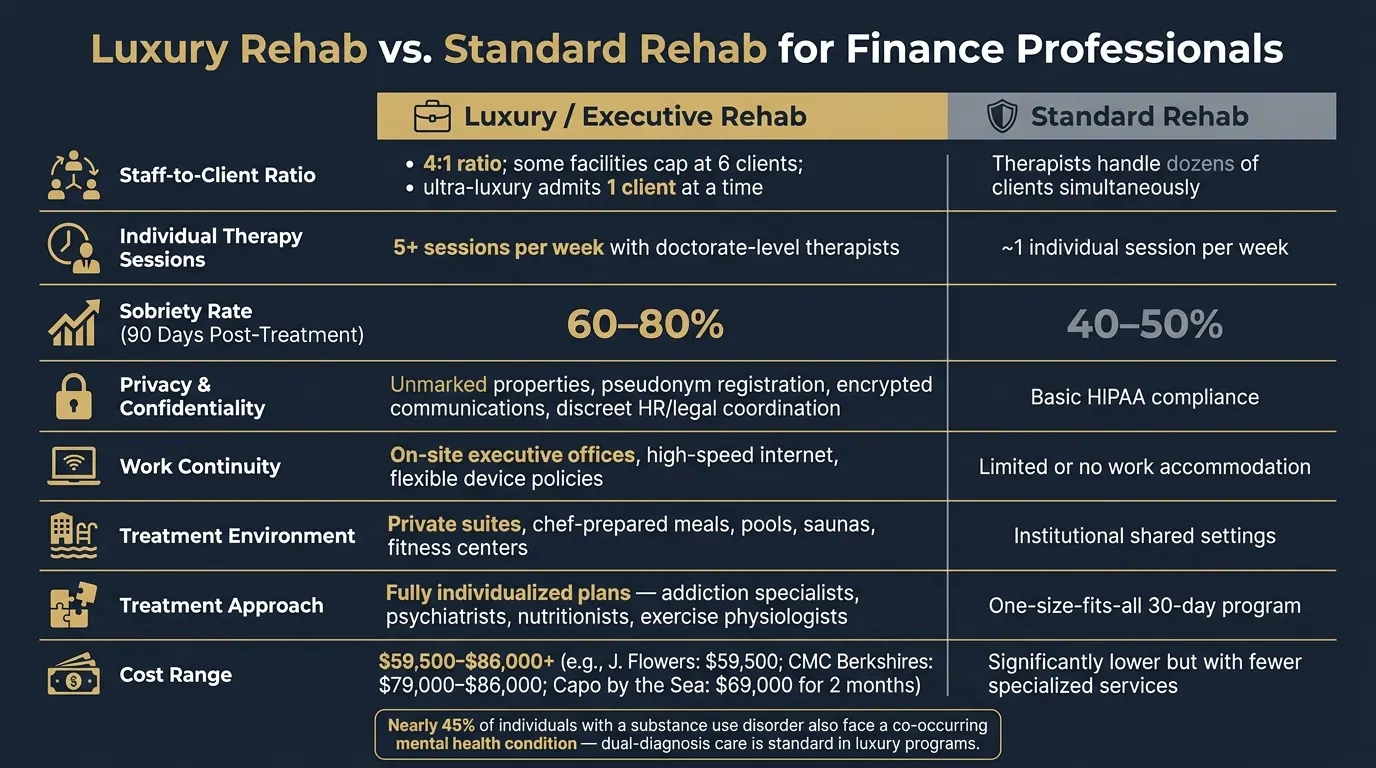
Luxury vs. Standard Rehab for Finance Professionals: Key Differences
What Luxury Rehab Looks Like for Finance Professionals
The difference between standard rehab and luxury executive rehab is substantial. Luxury rehabilitation centers focus on creating an environment that enhances the effectiveness of treatment through personalized care and amenities.
One standout feature is the staff-to-client ratio. Luxury facilities often maintain a ratio of 4:1, with some capping their enrollment at just six clients. Ultra-luxury clinics, such as THE BALANCE Rehab Clinic, take exclusivity even further by admitting only one client at a time, ensuring undivided clinical attention. This contrasts sharply with traditional facilities, where therapists may handle dozens of clients simultaneously.
The physical environment also plays a critical role. Features like private suites, chef-prepared meals, and resort-style amenities - think pools, saunas, and fitness centers - help ease the discomfort often associated with institutional settings. These comforts can encourage clients to remain in treatment long enough to see results. Data shows that luxury rehabs achieve sobriety rates of 60–80% at 90 days post-treatment, compared to 40–50% for standard facilities.
For finance professionals, work continuity is a crucial factor. Facilities such as Capo by the Sea accommodate this need by offering on-site executive offices equipped with telephones, high-speed internet, and flexible device policies. This setup allows clients to meet critical work obligations without compromising their recovery.
In addition to tailored care, maintaining absolute privacy is non-negotiable.
Privacy and Confidentiality in Treatment
For those in the finance sector, the fear of exposure can often feel as damaging as the addiction itself. The stakes include professional reputation, licensing, and key relationships. Luxury rehab centers address these concerns by embedding privacy into every aspect of their operations.
Many facilities operate on unmarked properties in secluded locations, sometimes spanning over 100 acres. Clients may register under pseudonyms and use encrypted communication for added security. Staff members are rigorously trained in confidentiality protocols, not just to meet legal requirements but as a core value of the treatment process.
"Every member of our treatment team is specially trained to prioritize privacy from addiction recovery admission to discharge planning." - Altus Rehab
While HIPAA compliance sets a baseline, top-tier facilities go far beyond it. For example, they coordinate discreetly with HR departments, legal advisors, or medical boards when documentation like FMLA paperwork is required - all without revealing the client’s identity or status.
Personalized Treatment Plans for Finance Executives
Luxury rehab centers don't just provide privacy; they also deliver highly individualized treatment plans. These programs are tailored to address each client’s unique substance use patterns, mental health conditions, professional demands, and recovery objectives - moving away from the one-size-fits-all 30-day approach.
At the clinical level, this often includes five or more individual therapy sessions per week with doctorate-level therapists. In contrast, standard programs typically offer just one individual session weekly. Many luxury facilities also incorporate biochemical restoration, addressing nutritional deficiencies and hormonal imbalances caused by years of chronic stress or stimulant use. Holistic therapies like biofeedback, equine therapy, and guided breathwork further enhance resilience and support long-term recovery.
"We do not simplify presentations to fit predefined programs. Instead, we coordinate care across disciplines within one shared clinical plan, allowing treatment to respond to reality rather than theory." - THE BALANCE Rehab Clinic
Costs vary widely depending on factors like location, program duration, and medical needs. For example, U.S.-based programs like J. Flowers Health Institute start at $59,500, while CMC Berkshires ranges from $79,000 to $86,000. Capo by the Sea offers an Executive Package at $69,000 for a two-month program. While these prices are significant, the real comparison lies in the long-term financial and professional risks of leaving addiction untreated.
Maintaining Recovery While Working in Finance
Returning to High-Stakes Professional Roles
Heading back to work after treatment can feel overwhelming, especially in the high-pressure world of finance. Tight deadlines, demanding clients, and constant performance expectations don’t go away. To ease this transition, a phased approach is key - start with smaller responsibilities and build from there. It’s also essential to set boundaries right away. This might mean limiting work hours, identifying situations that could lead to stress or temptation, and having a plan in place to manage those moments. Many employers offer support through structured Drug-Free Workplace programs. These programs often include supervisor training and clear policies to ensure recovery is respected and supported from day one.
As you step back into demanding roles, having a strong plan for ongoing support and relapse prevention becomes even more important.
Relapse Prevention and Continued Support
Treatment doesn’t stop when residential care ends - it’s just the beginning. Regular therapy, whether in-person or virtual, can provide the continued support that’s essential during early recovery. This is especially important because nearly 45% of individuals with a substance use disorder also face a co-occurring mental health condition, such as anxiety or depression. Addressing these challenges alongside sobriety is crucial for long-term success.
One resource that’s often overlooked is peer support. Connecting with others who’ve successfully navigated recovery while managing professional responsibilities can provide accountability and encouragement. For finance professionals, this shared experience can be particularly valuable. Additionally, for immediate guidance or treatment referrals, SAMHSA's National Helpline (1-800-662-HELP) is available 24/7 as a free and confidential resource.
Building Healthier Habits and Redefining Success
Sustainable recovery isn’t just about managing work - it’s also about redefining what success looks like. In finance, success is often tied to numbers - deals closed, hours worked, and bonuses earned. But in recovery, it’s about more than that. True success involves building a life that prioritizes health and well-being. This means focusing on essentials like sleep, proper nutrition, regular exercise, and time to unwind. These habits help restore the brain’s dopamine balance, which is often disrupted by chronic stimulant use.
Creating daily routines that include physical activity, mindfulness practices, and real breaks from work can provide the stability needed for lasting sobriety. For finance professionals seeking discreet, personalized care, programs like those offered by Leading Rehabs integrate these strategies into luxury recovery plans. The aim is to create a professional life that isn’t dependent on substances but instead supports a healthier, more balanced way of living.
Conclusion: Finding Discreet Luxury Recovery Through Leading Rehabs
Cocaine and stimulant addiction continues to grow within the high-stakes world of finance. Unfortunately, many traditional treatment programs fail to address the unique challenges faced by professionals in this sector. The intense pressure to perform, grueling work hours, and the perception of cocaine as a "productivity enhancer" create an environment where dependency often flies under the radar - even for those directly affected. As Dr. Christian Rowan, Addiction Specialist and Medical Director at The Banyans Health and Wellness Residence, points out, many high-achieving finance professionals may not realize they’re struggling with addiction, convinced they’re still in control.
Addressing these challenges requires a recovery approach that prioritizes both confidentiality and specialized care. For finance professionals, a generic 30-day program often isn’t enough. Instead, they benefit from a tailored approach where a team of experts - addiction specialists, psychiatrists, nutritionists, and exercise physiologists - work together in a private, secure setting. This is where Leading Rehabs steps in, connecting individuals with elite treatment centers that combine discretion, comfort, and advanced clinical care. Each center is thoroughly profiled, covering therapies, conditions treated, and the level of privacy and luxury offered, helping individuals and their families make informed choices without fear of exposure.
With only 24.2% of adults who need substance abuse treatment actually receiving it, breaking down barriers to access is essential. Leading Rehabs bridges this gap by offering high-net-worth professionals recovery options that seamlessly integrate into their demanding lives. By combining luxury amenities and top-tier clinical expertise, these programs provide a pathway to recovery that aligns with the unique needs of finance professionals.
FAQs
How do I know if my stimulant use is becoming an addiction?
Signs of stimulant addiction can show up in several ways. One common indicator is needing larger doses over time to achieve the same effect. Withdrawal symptoms, such as extreme tiredness or irritability, can also surface when the stimulant wears off. Another red flag is when using the substance starts to take precedence over responsibilities, relationships, or other important aspects of life. Continuing to use despite harmful consequences is a significant warning sign as well.
Identifying these patterns early is crucial. In high-pressure environments, where maintaining privacy and tailored care is often a priority, seeking professional help discreetly can make all the difference.
Can I get treatment without my employer or clients finding out?
Luxury rehab centers focus heavily on privacy and discretion, providing treatment in secluded settings and offering confidential services. These facilities are specifically designed to keep your recovery process private, ensuring that neither your employer nor your clients are aware of your treatment journey.
What’s the best option if I can’t step away from work for rehab?
If stepping away from work for a typical rehab program isn’t feasible, luxury treatment centers provide tailored solutions for professionals with demanding schedules. Options such as outpatient care or partial hospitalization let you receive treatment while continuing to meet work obligations. These programs emphasize privacy, offering personalized therapies in exclusive, serene environments. Additionally, confidential support services can guide you toward flexible treatment plans that align with your professional responsibilities.