
Co-Occurring Disorders: The Full Degree Approach Only One Client at a Time Allows

Co-occurring disorders (CODs) involve the simultaneous presence of a mental health condition and a substance use disorder (SUD). Treating these disorders together is critical because they often worsen each other. However, only 14.5% of individuals with CODs receive integrated care that addresses both issues simultaneously. The Full Degree Approach offers a personalized, one-client-at-a-time treatment model tailored to individual needs, focusing on privacy, flexibility, and integrated care.
Key highlights:
- CODs affect 21.2 million U.S. adults, yet effective treatment remains rare.
- High-net-worth individuals face unique challenges, such as privacy concerns and professional pressures.
- The Full Degree Approach uses a multidisciplinary team, customized treatment plans, and evidence-based therapies like CBT, DBT, and EMDR.
- Treatment includes medical detox, inpatient care, and step-down programs like PHP and IOP, with a focus on long-term recovery through aftercare planning.
This approach prioritizes individualized care, addressing both mental health and addiction in a coordinated way, ensuring better outcomes and lasting recovery.
Co-occurring Disorders - Treating Addiction and Mental Health Issues
sbb-itb-4b13a7c
The Principles Behind Integrated COD Treatment
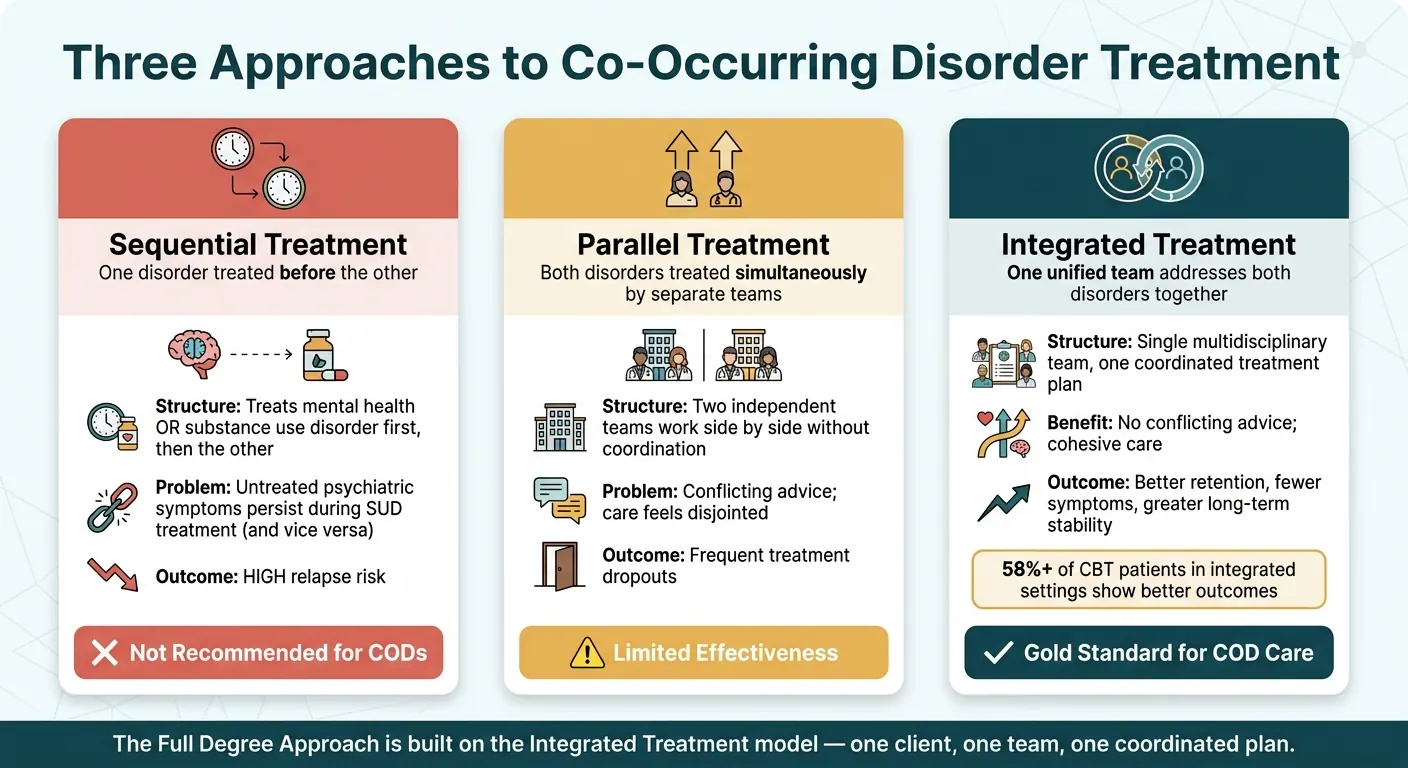
Sequential vs. Parallel vs. Integrated COD Treatment: Outcomes Compared
Core Principles of Integrated Treatment
Treating co-occurring disorders effectively relies on a few key principles that guide clinical decisions. At the heart of this approach is simultaneous treatment, which addresses mental health and substance use disorders together within a coordinated system. This is crucial because leaving one area untreated can disrupt recovery in the other.
Two other principles strengthen this approach. Trauma-informed care acknowledges that substance use often stems from unresolved trauma. Treatment must, therefore, focus on creating a safe emotional environment, empowering individuals, and offering them choices. Another cornerstone is stage-wise intervention, which adjusts treatment intensity to match where the individual is in their recovery journey.
"Recovery is not about addressing one problem first and then the other, it's about treating both, simultaneously and cohesively." - Transformation House
Accurate diagnosis is also essential. Clinicians typically allow a 30-day stabilization period to distinguish between withdrawal symptoms and underlying psychiatric conditions.
Evidence-Based Models for CODs
Building on these principles, several evidence-based treatment models bring integrated care to life. One standout is the Integrated Dual Disorder Treatment (IDDT) model, often considered the gold standard. In this model, a single multidisciplinary team tackles both disorders through a unified treatment plan, avoiding the conflicting advice that can arise from separate approaches.
Psychotherapeutic techniques also play a significant role. Cognitive Behavioral Therapy (CBT) helps individuals recognize and change thought patterns that fuel both mental health challenges and addiction. Meanwhile, Dialectical Behavior Therapy (DBT) teaches emotional regulation and distress tolerance - skills crucial for managing mood swings and cravings. Studies show that over 58% of patients receiving CBT for substance use have better outcomes compared to those treated in non-integrated settings.
Motivational Interviewing (MI) is another tool, designed to strengthen a person’s own motivation for recovery. For those with trauma histories, treatments like Eye Movement Desensitization and Reprocessing (EMDR) provide a safe way to process traumatic memories.
Here’s a comparison of three common treatment approaches:
| Treatment Approach | Structure | Outcome in COD Care |
|---|---|---|
| Sequential Treatment | One disorder is treated before the other | High relapse risk; untreated psychiatric symptoms persist |
| Parallel Treatment | Both disorders are treated at the same time but by separate teams | Care can feel disjointed; conflicting advice often leads to dropouts |
| Integrated Treatment | One team uses a unified plan to address both disorders | Considered the gold standard: better retention, fewer symptoms, and more stability over time |
"Treating one while neglecting the other is ineffective and can lead to a high risk of relapse. For treatment of both an addiction and a mental health disorder to be effective, it must address both illnesses simultaneously." - Addiction Center
These models highlight the value of integrated care, which lies at the heart of the Full Degree Approach.
Levels of Care in COD Treatment
Putting these models into practice requires a flexible continuum of care tailored to each person’s needs. Decisions about care levels depend on factors like symptom severity, withdrawal risks, safety, and home environment.
The process often begins with 24/7 medical detox for individuals at high risk of withdrawal. From there, clients may move to residential or inpatient programs for intensive, round-the-clock care. As they stabilize, they can transition to Partial Hospitalization Programs (PHP), which provide structured daily support without requiring overnight stays. Eventually, clients may step down to Intensive Outpatient Programs (IOP), which allow them to continue treatment while managing work or family obligations.
Luxury rehab centers reflect this continuum by offering personalized care that adjusts in real time - a hallmark of the Full Degree Approach.
How the Full Degree Approach Works in Practice
The One-Client-Centered Model Explained
The Full Degree Approach is all about focusing on the individual. Every part of the program revolves around a single client's needs, pace, and goals for recovery, rather than sticking to a rigid group schedule.
This flexibility is key because co-occurring disorders demand different approaches. For example, someone dealing with alcohol dependence and depression will need a different treatment plan than someone facing opioid use and PTSD. The importance of this approach is backed by research - 85.4% of clients in luxury settings prefer individual therapy over group or online formats. To meet this need, some programs offer at least four one-on-one sessions per week with doctorate-level clinicians. Other support services, like medical check-ins, nutritional advice, and somatic therapies, are built around these core therapy sessions.
This personalized schedule works hand-in-hand with a dedicated, multidisciplinary team.
The Multidisciplinary Treatment Team
A multidisciplinary team is the backbone of personalized care, especially when dealing with the complexities of co-occurring disorders. This team often includes professionals like a medical director, psychiatrist, doctorate-level psychologist, licensed therapist, registered nurse, nutritionist, and wellness specialists.
These team members collaborate closely, sharing observations and holding weekly interdisciplinary meetings. This ensures that insights from therapy sessions can directly influence decisions about medication or adjustments to the wellness plan. As the National Alliance on Mental Illness (NAMI) highlights:
"It's clear that mental and physical health are intertwined, and care for both should be linked together within health care delivery systems."
The treatment plan is constantly updated based on clinical observations, standardized assessments, and feedback from the client. This dynamic approach is a stark contrast to programs that create a plan during intake and rarely revisit it.
After this collaborative effort, the next step involves a detailed biopsychosocial assessment to shape a truly individualized treatment plan.
The Biopsychosocial Assessment Process
The Full Degree Approach starts with a thorough intake assessment designed to look at the whole person. This biopsychosocial assessment evaluates multiple aspects:
| Assessment Category | What's Evaluated |
|---|---|
| Psychiatric | Diagnoses, medication review, mood, and cognitive function |
| Medical | Metabolic health, nutritional gaps, sleep patterns, and neurobiological factors |
| Psychosocial | Trauma history, family relationships, work stress, and identity-related challenges |
| Behavioral | Emotional triggers, unhealthy coping mechanisms, and substance use history |
For high-net-worth clients, the psychosocial evaluation often digs deeper into unique pressures like public visibility, frequent travel, and the stress tied to wealth - factors that traditional programs might overlook. Input from external providers is also included to create a more complete picture.
It's worth noting that accurate diagnoses take time. Substance use can sometimes mimic or hide underlying psychiatric conditions, which is why top programs include a stabilization period of at least 30 days before finalizing any diagnosis. Rushing this process increases the risk of misdiagnosis.
"Treatment planning is the foundation of effective therapy. Without a clear, personalized roadmap, both client and therapist may find themselves wandering without direction." - Dr. Todd Grande, Mental Health Counselor
The result of this detailed assessment is an Individualized Treatment Plan (ITP). This plan combines clinical strategies with holistic support and is built around SMART goals, ensuring that progress is both measurable and meaningful.
Therapies and Tools Used in the Full Degree Approach
Psychotherapeutic Modalities
Therapies are carefully selected based on the Individualized Treatment Plan, ensuring they address each client's unique challenges.
Cognitive Behavioral Therapy (CBT) helps clients identify and replace harmful thought patterns with healthier, more constructive responses. Dialectical Behavior Therapy (DBT) teaches skills for managing distress and regulating intense emotions, offering tools to navigate situations without resorting to substances. Motivational Interviewing (MI) focuses on enhancing a client's internal drive for recovery, especially when they feel uncertain about making changes. For those dealing with trauma, Eye Movement Desensitization and Reprocessing (EMDR) provides a way to process painful experiences without re-experiencing the trauma.
"We ask, 'What happened to you?' rather than 'What is wrong with you?'" - Refresh Recovery & Wellness
Here’s a breakdown of how these modalities fit into the Full Degree Approach:
| Modality | Focus | Ideal For |
|---|---|---|
| CBT | Negative thought patterns | Managing cravings and depression |
| DBT | Emotional regulation | High-intensity emotions and distress tolerance |
| MI | Building motivation | Clients resistant or ambivalent to change |
| EMDR | Trauma processing | PTSD and trauma-driven substance use |
| ACT | Mindfulness and values | Psychological flexibility and urge reduction |
These therapies are seamlessly combined with medication management and lifestyle adjustments to create a well-rounded recovery plan.
Medication and Medical Management
To address the neurobiological components of co-occurring disorders (COD), medication management plays a key role alongside therapy. A multidisciplinary team oversees psychiatric and addiction-related medications, ensuring a cohesive treatment approach.
For example, a client with opioid use disorder and depression might be prescribed Buprenorphine to reduce cravings and an SSRI to stabilize mood. Medications with a high risk of dependency, such as certain benzodiazepines, are used sparingly and only in short-term detox settings when absolutely necessary. The team, including psychiatrists and pharmacists, regularly evaluates the client’s progress, adjusting medications as needed to manage side effects, mood changes, or therapeutic milestones, while closely monitoring for drug interactions as the treatment evolves.
"If individuals with a dual diagnosis are solely treated for their substance use disorder without treating their mental health disorder, their mental health symptoms will progressively worsen once the individual stops drinking or using drugs." - AddictionCenter
This integrated approach ensures that both mental health and substance use issues are addressed together, forming a strong foundation for sustained recovery.
Skills Building and Lifestyle Interventions
Achieving long-term recovery requires more than therapy and medication. Practical skills and lifestyle changes are essential components of the Full Degree Approach.
Clients work on personalized relapse prevention strategies, identifying triggers and creating plans to handle high-risk situations before they arise. Sleep restoration is another key focus, helping to repair disrupted circadian rhythms and improve emotional and cognitive functioning. Nutritional counseling tackles metabolic imbalances that can impact energy and mood. For high-net-worth professionals, executive coaching provides tools to manage demanding careers and maintain a healthy work-life balance.
Additionally, complementary practices like mindfulness, trauma-informed yoga, somatic grounding, and breathwork are integrated into the program. These techniques help regulate the nervous system, supporting the overall goal of coordinated, individualized care.
Long-Term Recovery and the Role of Leading Rehabs
Aftercare Planning and Continuity of Care
Recovery doesn’t stop when treatment ends - it evolves into a phase that demands ongoing structure and support. In the Full Degree Approach, aftercare planning starts right at intake, not on the final day of treatment. This forward-thinking strategy ensures that essential elements like housing, clinical care, and psychiatric follow-up are already in place before a client leaves the facility. The transition typically follows a step-down model: moving from residential care to partial hospitalization (PHP), then to intensive outpatient (IOP), and finally to standard outpatient (OP) treatment. Each phase is designed to build resilience in real-world settings, creating a foundation for lasting progress. For high-net-worth professionals, aftercare often includes tailored services like executive coaching and family therapy, helping them reintegrate into their professional lives while continuing personal healing.
"Without aftercare, the entire process (and progress you've made) risks collapse." - 1 Method Treatment Center
Luxury centers also offer ongoing support through monthly alumni meetings and remote check-ins, helping clients stay connected to their recovery community long after leaving the program.
Tracking Outcomes Over Time
Sustained recovery is strengthened by consistent tracking of outcomes. Rather than relying on assumptions, progress is measured using standardized tools like the PHQ-9 for depression, the GAD-7 for anxiety, and Quality of Life scores on a 0–100 scale. These assessments monitor improvements across various areas, including emotional and physical well-being. Regular relapse risk evaluations allow the clinical team to adjust aftercare plans as necessary. Multidisciplinary meetings are held to review this data, ensuring that treatment plans remain effective and tailored to the client’s evolving needs. This evidence-based approach gives clients valuable insights when choosing a treatment facility.
How Leading Rehabs Helps Clients Make Informed Decisions
Selecting a facility that embodies the Full Degree Approach requires more than a quick internet search. Leading Rehabs provides in-depth profiles of luxury treatment centers worldwide, detailing critical aspects such as therapies offered, conditions treated, staff expertise, and accreditation. This allows clients and their families to compare programs based on meaningful care metrics rather than superficial features. Indicators of high-quality care include Joint Commission Accreditation, low client-to-staff ratios (e.g., centers with only six beds), and frequent individual therapy sessions - top-tier programs often provide 6 to 8 one-on-one sessions per week, far exceeding the 1 or 2 sessions typical of standard facilities.
"Integrated treatment approaches... combine various therapeutic interventions to address the multifaceted nature of addiction... designed to cater to the psychological, physical, and social dimensions of an individual's well-being." - Dr. Blair Steel, Licensed Clinical Psychologist, Carrara Rehab
FAQs
How do I know if I have a co-occurring disorder?
Determining whether you have a co-occurring disorder starts with a professional evaluation. Since symptoms of mental health conditions and substance use disorders can overlap or even mimic one another, it takes a trained mental health professional to make an accurate assessment. They may use a combination of clinical interviews, questionnaires, and behavioral observations to get a full picture of your situation. If you think you might have a co-occurring disorder, it’s important to pursue a thorough evaluation so both concerns can be identified and treated together for the best outcome.
What makes one-client-at-a-time treatment different from group-based rehab?
The one-client-at-a-time treatment model delivers personalized, focused care designed specifically for each individual. Unlike group rehab programs, this method ensures there’s no competition for attention, guarantees absolute privacy, and allows the pace of recovery to adapt to the person’s needs. It’s especially effective for addressing personal histories, managing professional obligations, and treating co-occurring disorders - offering a tailored recovery journey that group settings often struggle to provide.
How long does integrated COD treatment usually take?
The length of integrated treatment for co-occurring disorders isn't fixed - it’s customized to fit each person's unique needs and the complexity of their condition. Generally, a minimum of 30 days in a residential program is recommended to allow for proper stabilization and a comprehensive assessment. The overall treatment timeline can vary based on factors such as the severity of symptoms, how well someone responds to therapy, and their individual recovery goals. Adjustments are made along the way as progress is monitored.