
Behavioral Addictions in Luxury Lifestyles: Gambling, Sex, Shopping, Crypto

Behavioral addictions are increasingly prevalent among affluent individuals, driven by wealth, access, and psychological factors. These addictions often manifest in gambling, compulsive shopping, cryptocurrency trading, and sexual behaviors. While financial resources may mask the immediate consequences, the emotional and relational toll is significant.
Key insights:
- Behavioral addictions hijack the brain's dopamine reward system, creating compulsive cycles.
- Wealth enables discreet access to high-risk activities, intensifying these addictions.
- Challenges in detection: Affluence often conceals the problem under the guise of refined tastes or entrepreneurial ambition.
- Luxury rehab solutions offer tailored care, focusing on privacy, individualized therapy, and dual-diagnosis treatment.
Addressing these addictions requires specialized approaches, including cognitive behavioral therapy, trauma-informed care, and structured aftercare plans, ensuring long-term recovery.
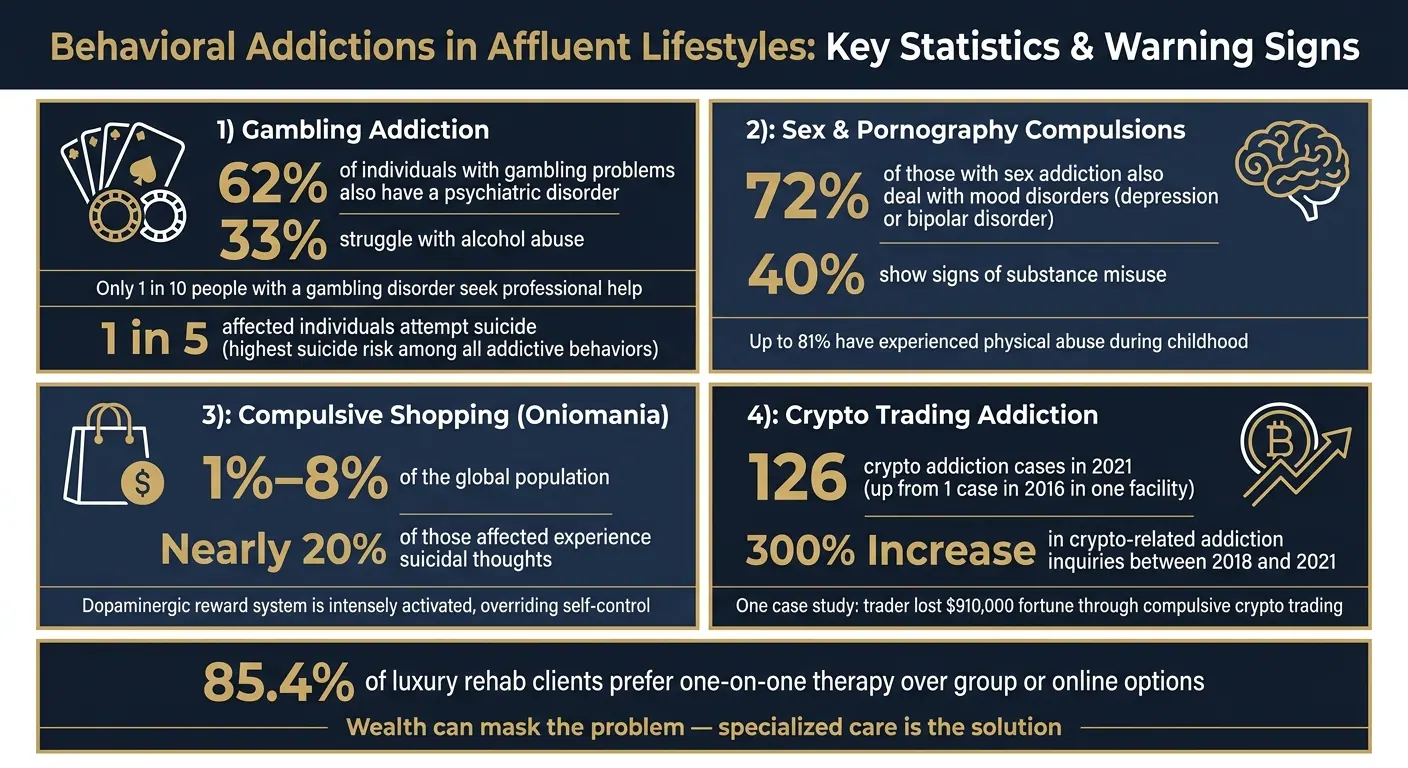
Behavioral Addictions in Affluent Lifestyles: Key Statistics & Warning Signs
Gambling Addiction in Affluent Circles
High-Stakes Gambling Among the Wealthy
For affluent individuals, gambling often takes place in exclusive settings like VIP lounges, private clubs, or high-end online platforms. These environments are tailored to encourage risk-taking. Complimentary alcohol flows freely, lowering inhibitions, while the luxurious atmosphere makes extravagant spending feel normal.
Winning triggers a surge of dopamine and norepinephrine, creating an intense, almost addictive thrill:
"The rush that accompanies a win can be so exhilarating that gamblers begin to crave it. When gamblers lose, the emotional crash of a loss requires a quick fix to regain that high."
For the wealthy, this cycle can spiral out of control because their financial resources often mask the problem. They can easily cover losses, allowing the addiction to deepen without immediate financial consequences. This makes it harder to recognize the issue until it escalates.
Warning Signs and Escalation Patterns
In affluent circles, gambling addiction often hides behind a veneer of financial security. Early signs might not include visible financial distress but can show up in other ways, such as unexplained absences, large and unexplained withdrawals, or the secret sale of expensive assets. These behaviors are often concealed, making it difficult for others to notice the problem.
As the addiction progresses, tolerance builds, and individuals need to place larger bets to experience the same thrill. They may also start chasing losses, which is a major red flag. Compulsive gambling often goes hand-in-hand with other issues - 62% of individuals with gambling problems also have a psychiatric disorder, and 33% struggle with alcohol abuse. Despite these alarming statistics, only 1 in 10 people with a gambling disorder seek professional help.
The consequences of ignoring these warning signs can be devastating. Gambling addiction carries the highest suicide risk among all addictive behaviors, with approximately 1 in 5 affected individuals attempting suicide.
Gambling Formats and Their Risks: A Comparison
Different gambling formats pose varying levels of risk, as shown below:
| Format | Risk Level | Common Warning Signs |
|---|---|---|
| VIP Casinos / Private Clubs | High | Chasing losses, increasing bet sizes, secrecy about time spent gambling |
| Online Platforms / Crypto Betting | Very High | Preoccupation with gambling, lying about its extent, using gambling to cope with stress |
| Exclusive Betting Circles | High | Borrowing money from others, neglecting career opportunities, restlessness when trying to stop |
Online platforms and crypto-related betting are particularly dangerous. They’re accessible 24/7, require no physical presence, and are easy to hide. For affluent individuals, the overlap between gambling and high-risk financial activities, like crypto trading, can blur the lines further - a topic that will be explored later in this guide.
sbb-itb-4b13a7c
Sex and Pornography Compulsions in Luxury Lifestyles
Understanding Compulsive Sexual Behaviors
Sex and pornography addiction don’t stem from a desire for intimacy. According to the American Addiction Centers:
"The drive for sexual fulfillment comes from an unmet psychological need to relieve anxiety, depression, or psychological tension, not from a need for closeness or the desire to form a relationship."
These behaviors create a cycle of dopamine highs followed by emotional crashes, fueling the addiction. In affluent circles, wealth often facilitates access to costly outlets, such as high-end escorts, exclusive cybersex platforms, and private arrangements.
The mental health aspects of these addictions are stark. Around 72% of individuals struggling with sex addiction also deal with mood disorders like depression or bipolar disorder, and 40% show signs of substance misuse. Childhood trauma plays a major role, with up to 81% of those affected having experienced physical abuse during their early years.
Adding to the complexity is the role of technology, which often shields these compulsions from public scrutiny.
How Privacy and Digital Access Fuel Compulsive Behaviors
Wealth doesn’t just enable extravagant lifestyles; it also creates an environment where privacy and technology can mask unhealthy behaviors. High-net-worth individuals often have private residences, multiple devices, encrypted services, and access to premium digital platforms that make it easier to hide compulsive sexual behaviors. Devices like iPhones, iPads, and laptops, paired with high-speed internet, allow constant, private access to pornography.
This digital access feeds the dopamine cycle. Anticipation alone can trigger chemical rewards in the brain, even before the compulsive act takes place. Studies show that the same brain regions activated by drug or alcohol use light up during compulsive sexual behaviors.
"In 2026 online privacy is a luxury, not a right." - Thomas Bunting, Analyst, Nesta
For affluent individuals, privacy becomes both a shield and a trap, enabling addiction and undermining accountability. Over time, this unchecked behavior damages personal relationships and deepens the cycle of compulsion.
Emotional and Relationship Consequences
Secrecy often leads to distrust, with compulsive behaviors replacing genuine intimacy with superficial interactions. For many wealthy individuals, the stigma of appearing ungrateful or spoiled - despite their material success - stops them from seeking help.
"The misconception is: 'how can one possibly suffer when surrounded by excess?' This can all too often trigger a fear of being seen as 'ungrateful' or 'spoiled'." - Paracelsus Recovery
| Impact Area | What It Looks Like | How Luxury Rehab Helps |
|---|---|---|
| Psychological | Chronic emptiness and identity confusion | Neuroscience-based therapy and identity rebuilding |
| Emotional | Guilt, anxiety, dopamine depletion | Mindfulness and emotional regulation techniques |
| Relationship | Secrecy, broken trust, emotional distance | Therapy aimed at fostering genuine intimacy |
| Lifestyle | Escalation through privacy and technology | Controlled digital environments and accountability tools |
284 ‒ Overcoming addictive behaviors, elevating wellbeing, & thriving in an era of excess
Shopping and Spending Addictions in Affluent Lifestyles
Just like gambling or sexual compulsions, compulsive spending in affluent lifestyles stems from emotional and neurological factors rather than financial necessity.
What Drives Compulsive Spending?
Compulsive spending often begins as a way to cope with emotions like stress, loneliness, or anxiety. The act of shopping triggers a temporary dopamine rush, offering a fleeting sense of relief. But that high quickly fades, often replaced by guilt or regret.
"Shopping often becomes a way of coping with stress, anxiety and depression. Spending money is a way to fill emotional voids, escape from negative emotions and experience a temporary boost." - Susan Albers, PsyD, Psychologist
Patrick Trotzke, a psychologist from Charlotte Fresenius University, explains that for those struggling with shopping addiction, "the dopaminergic reward system is intensely activated" - essentially, the brain's reward system overrides the part responsible for self-control. Research shows this disorder affects 1% to 8% of the global population, with nearly 20% of those affected experiencing suicidal thoughts. Among affluent individuals, the problem can remain hidden longer, as financial resources often mask the consequences.
"People who have the resources to spend money liberally may not realize or feel the consequences initially. In those cases, it may be helpful to look for patterns or trends in your spending behavior, instead of focusing on how much you have in your bank account." - Susan Albers, PsyD, Psychologist
Social influences and the allure of status symbols further complicate compulsive spending, adding another layer to this behavioral addiction.
The Luxury Branding Trap
In wealthy circles, compulsive spending often blends into the culture of luxury. High-end purchases like Birkin bags or limited-edition watches can mask an addiction, but the underlying behavior remains similar.
Jan Gerber, CEO of Paracelsus Recovery, highlights the role of luxury goods in social validation:
"A designer handbag becomes a modern symbol of social validation."
This creates a cycle where each purchase offers diminishing satisfaction, pushing individuals to spend even more to regain the initial thrill. As Gerber explains:
"The dopamine system, designed to motivate and protect us, gets trapped in a cycle of short-term highs and long-term depletion. We end up on a hedonic treadmill - always chasing, never arriving."
Modern shopping platforms amplify this cycle. Features like countdown timers, personalized ads, and gamified incentives erode self-control. Online shopping, in particular, offers anonymity, allowing compulsive behaviors to go unchecked. Stanford psychiatrist Anna Lembke compares this phenomenon to substance addiction:
"The Internet has, in effect, turned 'mundane behaviours' such as shopping into 'something that resembles a drug.'" - Anna Lembke, Psychiatrist, Stanford University
Spending Behaviors Compared
Different motivations lead to distinct shopping behaviors, each with unique patterns and consequences. Here's a comparison of common spending habits:
| Feature | Impulse Buying | Compulsive Shopping (Oniomania) | Status-Driven Luxury Purchasing |
|---|---|---|---|
| Primary Driver | External trigger (e.g., a sale) | Emotional distress or dopamine seeking | Social validation and status signaling |
| Frequency | Occasional and spontaneous | Chronic, repetitive, and often secretive | Frequent, focused on exclusive or latest items |
| Emotional Cycle | Brief pleasure, rarely followed by shame | Brief high, then guilt and regret | Brief boost in self-worth, then renewed craving |
| Financial Impact | Usually manageable | Can lead to significant debt regardless of income | High expenditure that might strain even substantial finances |
A common red flag across these behaviors is when the act of buying becomes more rewarding than the item itself. As Susan Albers points out:
"The enjoyment you get is from the experience of making a purchase, not so much from the item itself."
Signs like unopened packages or items left unused can indicate that the thrill lies in the act of shopping, not in the actual ownership or use of the product.
Crypto Trading Addiction in High-Net-Worth Individuals
Crypto trading addiction has become a growing concern, particularly among affluent individuals. Similar to gambling or compulsive shopping, it taps into the brain's reward system but amplifies the risks with the convenience of modern technology.
Why Crypto Trading Appeals to Wealthy Individuals
The crypto market's 24/7 availability makes it especially enticing for high-net-worth individuals. With just a smartphone, trades can be executed at any time, feeding into the allure of constant accessibility.
What sets crypto apart is how its high-risk nature is often disguised as legitimate investing. As Jan Gerber, CEO of Paracelsus Recovery, explains:
"Many people view crypto-trading as a form of investing, which confers a certain respectability."
This perception distances crypto trading from traditional gambling in the minds of many wealthy traders. Tony Marini, Senior Specialist Therapist at Castle Craig, highlights another aspect of its danger:
"Its rapid volatility triggers an immediate dopamine surge."
On a biological level, some people may be predisposed to risky financial behavior. Research links an elongated version of dopamine receptor No. 4 to a greater likelihood of taking financial risks. With such a potent mix of psychological and biological factors, crypto trading can quickly spiral out of control.
Behavioral Patterns and Financial Risks
Crypto trading addiction often follows a predictable pattern: an initial thrill, obsessive monitoring of prices, frantic attempts to recover losses, and eventual isolation coupled with depression. Warning signs include compulsively checking price charts, feeling a rush during market swings, and neglecting personal relationships or routines to stay glued to trading platforms.
The financial consequences can be devastating. For instance, in May 2021, one trader lost over $325,000 in a single hour on a highly leveraged Dogecoin position. He eventually burned through his $910,000 fortune before seeking help for his addiction, which was compounded by substance abuse issues.
The scope of the problem is expanding rapidly. One rehab facility reported treating just one crypto addiction case in 2016, but by 2021, that number had soared to 126. Another clinic noted a 300% increase in crypto-related addiction inquiries between 2018 and 2021. Even seasoned investors are not immune, as Thilo Beck, Lead Psychiatrist at Paracelsus Recovery, points out:
"These are very intelligent people, but they stop thinking straight. They know enough about statistics to understand that the chance that they will win back is really small, but they still believe it."
| Feature | Cryptocurrency Trading | Traditional Gambling (e.g., Roulette) |
|---|---|---|
| Availability | 24/7, Global | Often restricted by location or hours |
| Social Perception | Viewed as "investing" | Viewed as "gambling" |
| Dopamine Trigger | High volatility and rapid price swings | Immediate win/loss outcome |
| Access Method | Smartphone or digital apps | Physical casino or specific apps |
The emotional toll of crypto trading addiction can be immense. Steven Elphinstone, a recovering trader who lost everything to compulsive Bitcoin trading, described his struggle to quit:
"I'm in mourning. It's like I have this overwhelming feeling that I've lost the most special friend I've ever had in my life."
These distinct characteristics of crypto trading addiction highlight the urgent need for tailored recovery approaches, which will be explored in later sections.
Luxury Rehab Treatment for Behavioral Addictions
Recovering from behavioral addictions is a unique journey, distinct from overcoming substance dependency. Unlike substance addiction, there’s no physical withdrawal or detox to endure. Eloise Casal of New Life Rehab puts it succinctly:
"Behavioural addiction recovery can be more complicated because the person is not physically dependent on a substance. This means that therapy and treatment... require time and commitment."
This difference underscores the need for specialized and focused care to address the emotional and psychological complexities of behavioral addictions.
Evidence-Based Therapies for Behavioral Addictions
Therapies for behavioral addictions are designed to address the psychological triggers and patterns driving compulsive behaviors. Here’s a closer look at some of the most effective approaches:
- Cognitive Behavioral Therapy (CBT): A cornerstone of treatment, CBT helps individuals identify and challenge the thoughts and triggers behind their compulsive actions. For example, it addresses distorted beliefs like the illusion of control in gambling or the gambler’s fallacy, making it highly relevant for issues like crypto trading or impulsive luxury spending.
- Dialectical Behavior Therapy (DBT): DBT equips clients with tools to manage intense cravings and tolerate distress without giving in to compulsions. It’s particularly effective for compulsive shopping and sexual behaviors, where shame often follows the act.
- Trauma-Informed Care: Many compulsions are rooted in unresolved trauma. By addressing underlying issues such as childhood trauma or PTSD, this approach helps regulate the stress response, reducing the drive for compulsive behaviors. Techniques like Tension & Trauma Releasing Exercises (TRE) and functional breathwork can also ease the physical restlessness that often precedes these actions.
- Family Systems Therapy: Recovery isn’t just about the individual - it’s about healing relationships too. This therapy focuses on rebuilding trust and creating a supportive home environment, which is vital for sustained recovery.
How Luxury Rehab Centers Personalize Treatment
What sets luxury rehab centers apart isn’t just their upscale surroundings but their commitment to individualized care. These facilities often prioritize one-on-one therapy over group sessions, ensuring confidentiality and tailored treatment. A typical high-intensity program might include 7 to 10 hours of individual psychotherapy weekly, along with additional skills training and planning sessions.
Treatment plans are adjusted daily based on each client’s progress. For example, individuals recovering from compulsive shopping or crypto trading may benefit from "digital environment design" strategies. This could involve implementing device curfews, limiting app access, or removing saved payment methods. Oasis Premium Recovery in Marbella, Spain, even uses a "wishlist and 48-hour delay rule" to test clients’ readiness for real-world recovery before discharge.
For high-profile clients, privacy is a top priority. Many luxury rehabs operate discreetly out of private, unbranded villas. These programs also address professional challenges, helping executives set healthy work boundaries and manage burnout - factors that often contribute to addictive behaviors.
Since behavioral addictions often coexist with conditions like anxiety or depression, many luxury centers offer dual-diagnosis care. This integrated approach tackles both the compulsive behavior and its underlying emotional roots, setting the stage for long-term recovery.
Therapy Types in Luxury Rehab: A Comparison
| Therapy Type | Primary Goal | Most Relevant For |
|---|---|---|
| CBT | Identifying triggers and restructuring thought patterns | Gambling, crypto trading |
| DBT | Building distress tolerance and mastering urge surfing | Shopping, sexual compulsions |
| Motivational Enhancement Therapy (MET) | Resolving ambivalence and aligning values with behavior | Executive burnout, high-functioning individuals |
| Somatic Therapy (TRE) | Reducing physiological arousal before compulsive acts | All behavioral addictions |
| Neurofeedback | Restoring healthy brain wave and reward patterns | All behavioral addictions |
| Family Systems Therapy | Repairing relationships and building home support | All behavioral addictions |
Relapse Prevention and Long-Term Recovery Support
Completing a luxury rehab program is just the first step; maintaining recovery over the long term requires dedication and consistent effort. For high-net-worth individuals, this means combining disciplined daily habits with a strong network of support to continue the personalized care they received during treatment.
Building a Recovery-Friendly Daily Routine
Structure is an often-overlooked but powerful tool in recovery. A steady routine that incorporates morning practices like journaling or breathwork, along with evening reflection, can help regulate the nervous system and reduce impulsive behaviors. For high-net-worth individuals, managing digital distractions is equally critical. This might involve removing trading platforms, uninstalling shopping apps, and setting firm boundaries for work-related communication throughout the day.
Physical wellness also plays a key role. Regular exercise, quality sleep, and practices like cold immersion or sauna sessions can help calm overstimulation, which often drives compulsive behaviors common in high-pressure lifestyles. For those recovering from shopping or crypto addictions, employing a simple "pause" protocol - pausing before making a purchase or trade to ask, "What am I really feeling right now?" - can help break the cycle of chasing dopamine.
"The rush [of dopamine] dulls over time, meaning we need ever more - bigger purchases, bigger risks - to get the same dopamine hit." - Paracelsus Recovery
These daily habits provide a solid foundation for recovery, which can be further strengthened with personalized aftercare solutions.
Support Options After Leaving Rehab
While daily routines are essential, long-term recovery thrives on customized aftercare. High-net-worth individuals often benefit from tailored support that aligns with their unique lifestyles. Studies show that 85.4% of clients in luxury rehab settings prefer one-on-one therapy, compared to group (14.2%) or online (0.4%) options. This preference has driven the rise of concierge-style aftercare in high-end recovery programs.
Many luxury rehab centers offer industry-specific coaching, pairing clients with therapists and advisors who understand the demands of high-stakes careers, such as deal-making, investor relations, and public visibility. Short "recalibration" stays are another option, allowing clients to return for brief, retreat-like visits that reinforce their mental health without requiring full re-admission. Alumni networks also play a valuable role, providing a discreet space for connecting with peers who share similar professional and social challenges.
| Support Option | Primary Benefit for High-Net-Worth Individuals |
|---|---|
| Concierge Coaching | Expertise in managing professional pressures and public image |
| Remote Therapy Sessions | Convenient access for those with demanding travel schedules |
| Alumni Programs | Confidential peer support and accountability |
| Recalibration Stays | Mental health tune-ups without full re-admission |
"In practice, you are investing not only in comfort but in the depth and intensity of individualized care that can support lasting recovery while you maintain your role and reputation." - Reflections
Conclusion: Choosing the Right Luxury Rehab for Behavioral Addictions
Key Takeaways on Behavioral Addictions and Recovery
When selecting a rehab center, it’s crucial to address the specific needs tied to behavioral addictions. These addictions - whether related to gambling, compulsive sexual behavior, luxury shopping, or crypto trading - stimulate the same brain reward systems as substance abuse. For individuals with significant financial resources, these behaviors can escalate quickly, fueled by greater access, privacy, and the ability to engage in high-stakes activities without immediate consequences.
Recovery is achievable but demands a combination of expert clinical care, structured treatment, and ongoing support tailored to the complexities of high-pressure and high-profile lifestyles.
How to Evaluate a Luxury Rehab Center
Turning recovery insights into action starts with evaluating potential rehab centers based on key criteria.
The first priority is ensuring the center specializes in behavioral addictions. Not all facilities are equipped to handle compulsive behaviors like gambling, luxury shopping (sometimes called "opulomania"), or crypto trading addiction. It’s essential to confirm their experience in treating these specific conditions.
Privacy is another critical factor. Look for centers that offer private accommodations, discreet logistics, and an environment that encourages open and honest communication without external pressures. Beyond this, the facility should address co-occurring mental health conditions - such as anxiety, depression, or ADHD - through integrated dual-diagnosis care.
Lastly, consider the aftercare plan. A strong program will include a detailed 90-day discharge strategy and long-term follow-up support, ensuring clients are prepared to navigate the challenges of returning to demanding environments.
FAQs
How can I tell if “high-end habits” have become an addiction?
Recognizing when "high-end habits" cross the line into addiction involves spotting key warning signs. These might include a loss of control, noticeable negative effects on daily life, or even financial troubles. Activities like excessive gambling, compulsive shopping, or risky cryptocurrency trading can shift from enjoyable indulgences to harmful behaviors if they lead to stress, anxiety, or strained relationships.
Some clear indicators to watch for are:
- Obsessive thoughts about the activity.
- Repeatedly failing to cut back, despite wanting to.
- An increasing dependency on the habit for a sense of satisfaction or escape.
When these patterns emerge, it’s worth taking a closer look at how these habits are affecting your overall well-being.
Is crypto trading addiction different from gambling addiction?
Crypto trading addiction and gambling addiction share some similarities, but they aren't the same. Both involve compulsive behaviors and high risks, but the key difference lies in their focus. Crypto trading revolves around attempting to profit from the unpredictable nature of digital assets, while gambling is about betting money on games of chance.
That said, they do share common traits, such as intense cravings, a lack of control over behavior, and negative effects on mental health. However, the extreme volatility of cryptocurrency markets can make the compulsive behaviors tied to trading even more intense.
Luxury rehab centers are stepping in to address these issues, offering personalized and in-depth treatment plans for both crypto trading and gambling addictions. These programs aim to tackle the underlying causes and provide support for long-term recovery.
What should I look for in a luxury rehab for behavioral addictions?
When choosing a luxury rehab for behavioral addictions, focus on centers that offer therapies specifically designed for challenges like gambling, shopping, sex, or even cryptocurrency trading. The best facilities take a well-rounded approach, blending psychological counseling with holistic treatments and advanced recovery techniques.
Pay attention to amenities that cater to a high standard of living, such as private accommodations and exclusive services. Discretion, comfort, and a team of skilled professionals experienced in treating behavioral addictions are essential for achieving recovery in a premium environment.