
Alcohol Dependency for High-Stress UHNWIs: Private Executive Rehab

Alcohol dependency is a growing issue among high-stress ultra-high-net-worth individuals (UHNWIs), fueled by the pressures of leadership, constant decision-making, and social environments where alcohol is readily available. While wealth and success may shield them from immediate consequences, they often face unique challenges in seeking help due to concerns about confidentiality, public image, and professional responsibilities.
Key Points:
- Stress and Alcohol Dependency: Chronic stress in executive roles disrupts brain function, leading to dependency. Alcohol offers temporary relief but worsens mental and physical health over time.
- Challenges for UHNWIs: Leadership isolation, high-pressure decisions, and constant access to alcohol increase risks. Wealth often delays seeking treatment due to fewer external consequences.
- Co-Occurring Issues: Anxiety, depression, burnout, and other mental health conditions often accompany alcohol dependency, creating a vicious cycle.
- Private Rehab Solutions: Tailored programs offer discreet, personalized care, addressing both addiction and mental health. These facilities maintain strict privacy, provide luxury amenities, and accommodate professional obligations.
- Post-Treatment Support: Aftercare plans, alumni programs, and ongoing coaching help executives maintain sobriety while managing high-stress environments.
Private executive rehab programs are designed to meet the unique needs of UHNWIs, offering flexible treatment options that balance recovery with professional responsibilities. Seeking help is a proactive step toward safeguarding both personal well-being and career success.
How High-Stress Lifestyles Drive Alcohol Dependency
Living under constant high stress, especially in demanding executive roles, can disrupt the brain's HPA axis, leaving it stuck in a state of prolonged stress. For many, alcohol becomes a quick fix, offering temporary relief. Over time, what starts as an occasional drink can evolve into a nightly habit, leading to dependency. This cycle is often worsened by the unique pressures tied to executive positions.
Common Triggers in Executive Lifestyles
Executive roles come with a set of challenges that significantly increase the risk of alcohol dependency. Studies reveal that men in high-pressure UHNWI (Ultra High Net Worth Individual) roles are 2 to 4 times more likely to develop alcohol use disorders compared to those in less stressful jobs. Why? Because several factors converge to create a perfect storm.
Leadership pressure and limited control - executives face immense pressure to make high-stakes decisions, often with little ability to control outcomes. This lack of control is closely linked to problem drinking. Adding to this is the social availability of alcohol. Whether it’s boardroom dinners, client meetings, or industry events, alcohol is almost always present, weaving itself into the fabric of professional life.
Then there’s isolation at the top. Many executives experience loneliness, frequent travel, and disrupted sleep patterns. These factors increase the likelihood of turning to alcohol as a coping mechanism. Compounding the issue is the inability to show vulnerability in leadership roles, which can trap individuals in unhealthy drinking habits.
For UHNWIs, the risks are even more pronounced. Their wealth and influence often shield them from the natural consequences - like financial strain, job loss, or relationship breakdowns - that might otherwise push someone to seek help. As The Private Client explains:
"The executive with unlimited resources can maintain appearances, manage consequences, and avoid the natural feedback loops - financial strain, job loss, relationship failure - that might otherwise motivate treatment."
Without these external warning signs, alcohol dependency can quietly take root and grow over time.
Co-Occurring Mental Health Concerns
In many cases, alcohol dependency among high-stress executives doesn’t exist in isolation. It’s frequently paired with other mental health challenges such as anxiety, depression, burnout, sleep issues, or even ADHD - conditions that may have existed before or developed alongside the drinking. These issues and alcohol use often reinforce each other, creating a vicious cycle.
As Alcohol.org points out:
"Alcohol can be a method of self-medicating anxiety and may temporarily relieve stress... When alcohol wears off, however, anxiety and stress are often amplified".
This rebound effect pushes individuals to drink more in an attempt to regain that fleeting sense of relief, fueling a cycle that can escalate over time.
Chronic stress also physically alters the brain. It reduces dendritic branching in the prefrontal cortex, which is responsible for rational decision-making and impulse control, while increasing activity in the amygdala, the brain’s emotional center. This means that:
"The chronically stressed executive becomes simultaneously less capable of rational decision-making and more reactive to emotional stimuli".
This is why effective treatment must address both the addiction and the underlying mental health challenges. Focusing on one without tackling the other leaves the root issues unresolved, making long-term recovery much harder to achieve.
sbb-itb-4b13a7c
Private Executive Rehab: What It Offers UHNWIs
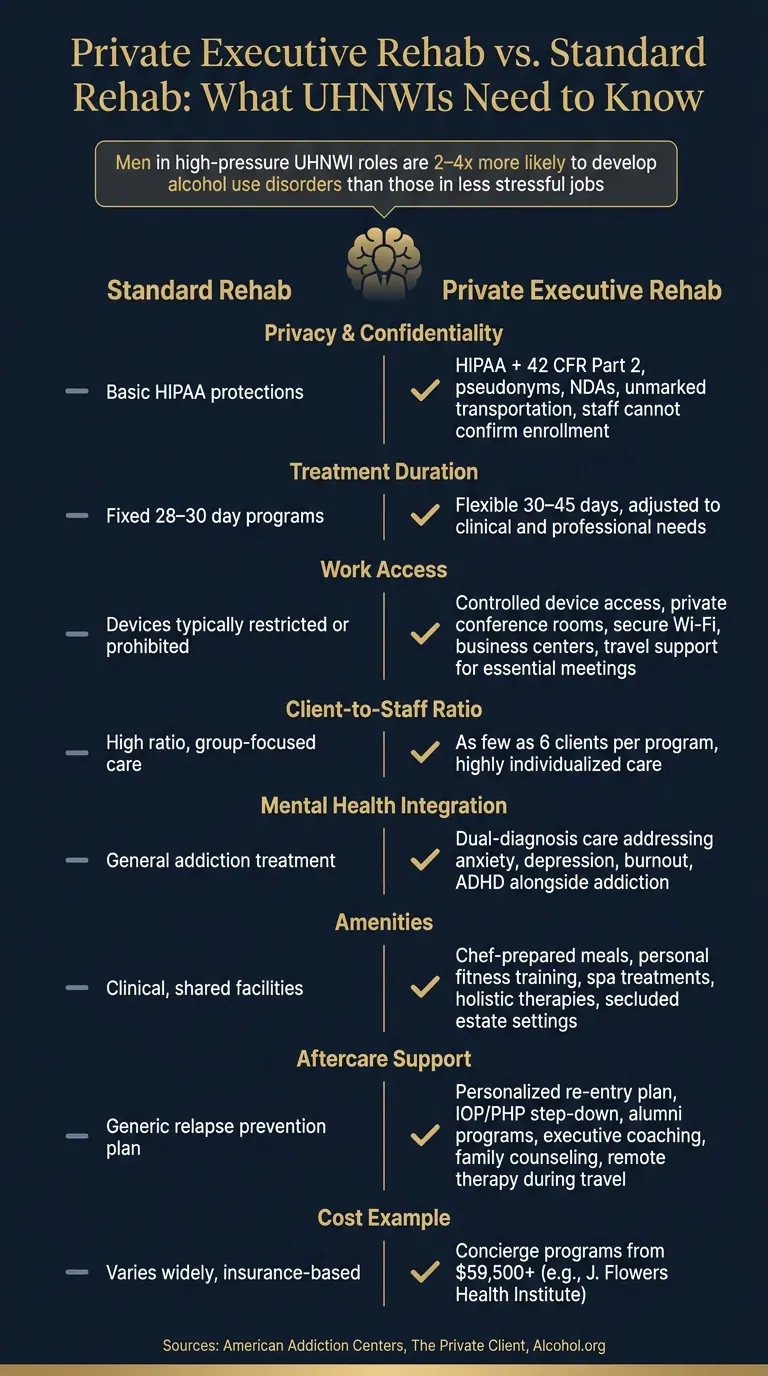
Private Executive Rehab vs. Standard Rehab: Key Differences for UHNWIs
Understanding the reasons behind alcohol dependency among executives is just one part of the equation. The other? Finding treatment options that align with their demanding professional lives.
Personalized Treatment Plans
Executives face unique stressors and lifestyles, so private rehab centers tailor their programs to meet these specific needs. Treatment typically begins with a comprehensive medical evaluation, followed by medically supervised detox and therapies backed by research.
These programs focus on integrated care, addressing alcohol dependency alongside co-occurring mental health issues. As American Addiction Centers explains:
"Executive rehab programs are designed to enable executives or other high-level employees to continue with their work responsibilities while being treated for drug and/or alcohol abuse."
To tackle the pressures of leadership that often contribute to alcohol use, many programs include executive coaching and stress management training. Treatment durations are typically 30 to 45 days, adjusted based on individual clinical needs.
These customized plans also emphasize strict privacy measures, which are critical for high-profile clients.
Privacy and Confidentiality Measures
For executives, maintaining discretion is non-negotiable. Private rehabs adhere to HIPAA and 42 CFR Part 2, which provide strict protections for substance use disorder records. American Addiction Centers highlights:
"The added protection under 42 CFR Part 2 even removes staff from being able to verify your presence in the rehab program altogether should someone inquire."
To ensure anonymity, these facilities employ legal safeguards, pseudonyms, unmarked transportation, and enforce strict NDAs. Clinical teams also assist clients in crafting professional explanations for their absence, allowing them to address boards or HR without revealing treatment details.
Luxury Amenities That Support Recovery
The environment plays a key role in recovery, and private executive rehab centers are designed to feel more like luxury retreats than clinical facilities.
Clients enjoy chef-prepared meals, personal fitness training, spa treatments, and holistic therapies. Many centers are set on secluded estates with private, home-like settings, providing both physical and mental space for recovery.
These facilities emphasize structured routines, balanced nutrition, regular exercise, and restorative sleep - essentials for long-term sobriety. For executives accustomed to high-pressure environments, this balance is vital for achieving both personal recovery and professional success.
Balancing Recovery With Professional Responsibilities
For high-level executives, balancing the demands of recovery with ongoing professional responsibilities can feel like walking a tightrope. Many worry about losing control over their businesses during treatment. However, private rehab programs are designed to address this concern by enabling executives to maintain their professional roles while prioritizing recovery. This balance is achieved in two key ways:
Maintaining Work Continuity During Treatment
Executive rehab programs differ from traditional options by accommodating the professional needs of their clients. Controlled access to devices, private conference rooms, secure Wi‑Fi, and dedicated business centers make it possible for executives to handle tasks like video calls or document reviews. Some programs even offer travel support for essential off-site meetings, ensuring that business obligations don’t disrupt the recovery process.
Flexibility is another hallmark of these programs. Treatment schedules are designed to adapt to urgent work demands, allowing executives to address critical business matters while staying engaged in their therapeutic sessions. For instance, concierge-style programs such as the one at J. Flowers Health Institute (starting at $59,500) tailor their clinical schedules to meet the dual needs of recovery and professional life.
"With our executive track rehab programs, professionals can easily continue working remotely, attending to important business matters, or even attend in vital meetings while receiving top notch care." - Capo by the Sea
This approach ensures continuous work access is practical and effective, but it also emphasizes the need for clear boundaries to protect the recovery process.
Setting Boundaries Between Work and Recovery
While staying connected to work is an important feature, it’s not meant to overshadow treatment. The most effective programs treat work access as a tool to reduce stress, not a distraction. As THE BALANCE Rehab Clinic explains:
"Hospitality exists to remove stressors and protect privacy - not to distract from treatment. Every aspect of the environment is considered through a clinical lens." - THE BALANCE Rehab Clinic
To make this work, clients collaborate with admissions specialists to create a structured plan that separates work time from mandatory clinical sessions. This balance ensures that the recovery process remains intact while the client’s professional reputation stays protected. By maintaining this structure, executives can focus on healing without sacrificing their leadership responsibilities.
Maintaining Sobriety After Leaving Private Rehab
Completing residential treatment is a crucial step, but it's not the end of the journey. For high-powered executives, returning to demanding environments - like boardrooms, intense deal negotiations, and public scrutiny - brings unique challenges that require a well-thought-out transition plan.
Discharge and Aftercare Planning
The best rehab programs don't stop at discharge; they prepare clients for life after treatment by crafting personalized re-entry plans. These plans take into account the challenges of executive life, such as constant travel, high-pressure negotiations, and maintaining public visibility.
A common strategy involves a step-down process, where clients transition into an Intensive Outpatient Program (IOP) or Partial Hospitalization Program (PHP). This phased approach allows executives to test their sobriety in real-world scenarios before fully resuming their professional responsibilities. To accommodate busy schedules, secure remote therapy sessions are often included, ensuring that support continues even during work trips.
Relapse prevention plans are tailored to the individual, focusing on specific triggers rather than generic ones. These plans include actionable strategies for managing high-risk situations, such as industry events or extended overseas travel. They are designed to address the unique pressures of executive life, helping to ease the return to high-stress environments. As Reflections highlights:
"In practice, you are investing not only in comfort but in the depth and intensity of individualized care that can support lasting recovery while you maintain your role and reputation."
This structured transition sets the stage for long-term accountability and support.
Long-Term Monitoring and Support
Sustaining sobriety requires ongoing accountability. Many private rehab facilities offer alumni programs that include regular check-ins, peer support networks, and continued coaching - all conducted discreetly and in compliance with HIPAA. For executives feeling early signs of stress or burnout, short-term return stays or private mental health retreats provide a chance to reset without the need for full re-admission.
Executive coaching is another key component. These specialized coaches help address issues like perfectionism, workaholism, and the relentless pressure to achieve, all of which can contribute to relapse. Family counseling also plays a vital role in recovery, as rebuilding trust and creating a stable home environment strengthens the foundation for long-term success. As Altus Rehab explains:
"Long-term recovery requires more than just detox or behavioral modification. It requires rebuilding identity, self-worth, and emotional resilience."
Conclusion: Getting the Right Care as a High-Stress UHNWI
Finding the right care is crucial. Alcohol dependency doesn’t discriminate based on wealth or status, and for UHNWIs, leaving it untreated can have serious consequences for both personal and professional life. The encouraging news is that there are tailored programs designed to fit even the most demanding lifestyles.
Private executive rehab programs stand out for their key features: strict confidentiality, treatments grounded in research, and flexibility that allows you to keep up with professional obligations while focusing on recovery. Many of these programs intentionally keep their enrollment small - sometimes as few as six clients - to provide a low client-to-staff ratio and highly individualized care.
This holistic approach creates the foundation for lasting recovery. Addressing deeper issues, like burnout or perfectionism, is essential for overcoming dependency. As Peak Path Health aptly states:
"Seeking treatment is not a sign of weakness, but an act of leadership." - Peak Path Health
When selecting a rehab facility, it’s essential to ask the right questions: Does the program include dual-diagnosis care? Is there a custom aftercare plan? Does the treatment align with your privacy and professional needs? These aren’t optional extras - they’re critical for individuals in high-profile positions.
Recovery is a long-term journey, not a quick solution. The right program protects both your well-being and your career. It’s an investment in your future.
FAQs
How do I know if my drinking is dependency or just stress relief?
To figure out whether your drinking stems from dependency or is simply a way to cope with stress, look for these indicators: Dependency often shows up as an inability to quit drinking even when it negatively affects your health, relationships, or safety. It may also involve relying on alcohol to handle emotions or manage stress. On the other hand, drinking for stress relief tends to be occasional and remains within your control. If you notice your drinking increasing or feel like you need it to get through daily life, it's important to reach out to a healthcare professional for support.
Can I keep working during private executive rehab without harming recovery?
Many private executive rehab programs are specifically tailored for professionals who need to stay connected to their work while undergoing treatment. These programs often include flexible schedules, private accommodations, and discreet services to help maintain confidentiality. That said, it’s crucial to ensure that work responsibilities don’t overshadow essential recovery activities like therapy sessions and medical care. A well-structured plan can help balance professional duties and recovery, with health always taking precedence.
What happens after rehab to prevent relapse in high-stress environments?
Staying sober in high-stress environments can be challenging, but it's absolutely possible with the right tools and support. One of the most important steps is developing strong coping skills. Learning how to handle triggers and manage stress without turning to alcohol is essential. Techniques like cognitive therapy and relaxation exercises can make a big difference in building resilience.
Ongoing support is another critical factor. Whether it's through therapy, support groups, or even helplines, having a network to lean on can help you navigate tough times. Establishing healthy routines, like regular exercise, balanced meals, and consistent sleep, also provides structure and stability. Finally, avoiding situations that might tempt you to drink is key to staying on track and maintaining long-term sobriety.