
Affluenza: The Guilt, Isolation & Mental Health Realities of Extreme Wealth

Affluenza refers to the emotional and mental struggles tied to extreme wealth. While wealth offers comfort, it often leads to guilt, loneliness, and disconnection. Many wealthy individuals face unique challenges, including:
- Guilt over privilege: Inheriting or gaining wealth can create identity struggles and public scrutiny.
- Emptiness despite success: Achieving financial goals often doesn’t bring lasting happiness, leading to feelings of aimlessness.
- Social isolation: Trust issues and living in exclusive environments can make forming genuine relationships difficult.
- Mental health risks: Anxiety, depression, and substance abuse are common among the affluent.
Addressing these issues requires tailored therapy, privacy-focused rehab options, and redefining success through meaningful connections and purpose beyond material wealth.
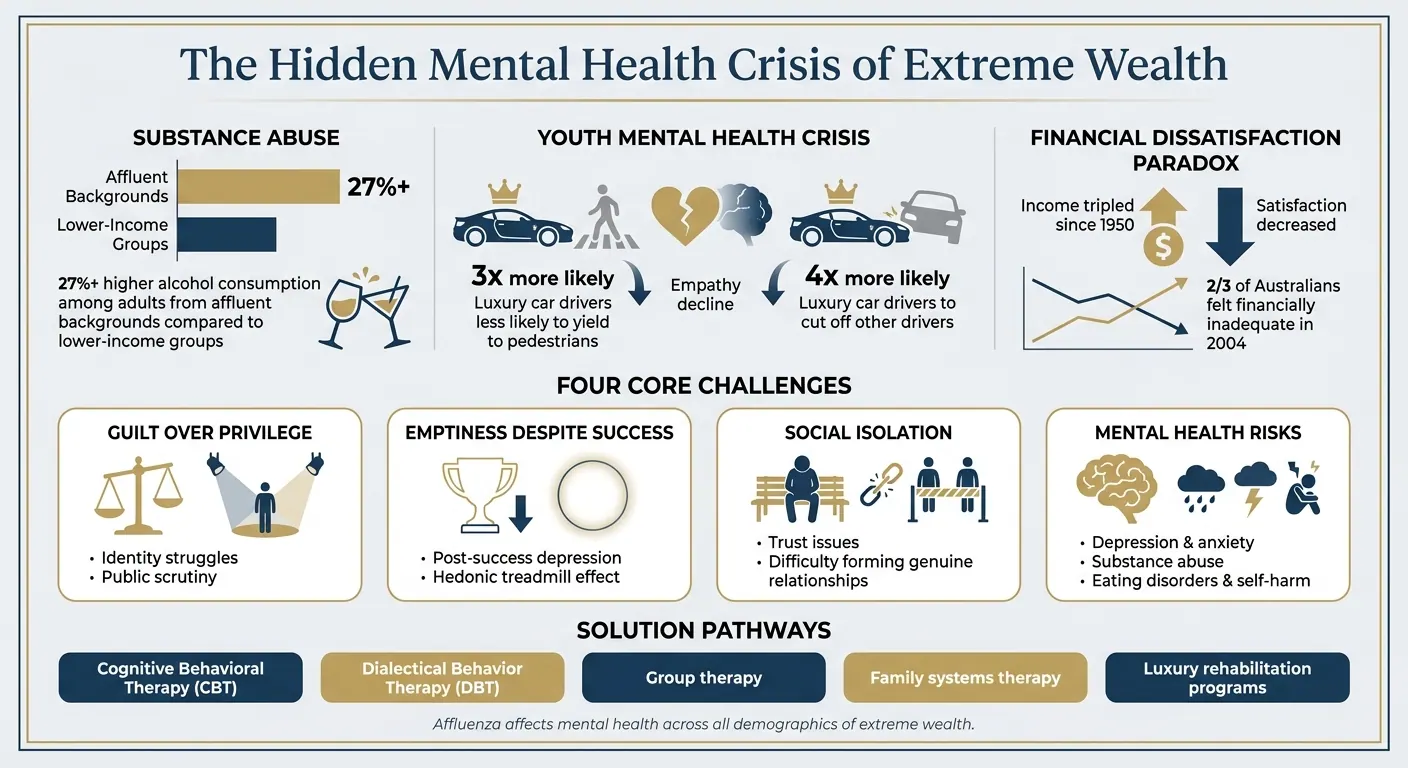
Mental Health Statistics and Challenges of Extreme Wealth
What Is Affluenza? - Earth Science Answers
sbb-itb-4b13a7c
The Emotional Problems of Extreme Wealth
Extreme wealth doesn't just bring luxury - it often comes with emotional challenges that many people fail to recognize.
Guilt Over Privilege
For those who inherit or rapidly gain wealth, the emotional toll can be significant. These individuals frequently grapple with identity issues, questioning their own abilities to sustain their fortune compared to those who built their wealth from scratch.
Beyond personal struggles, the pressure to manage wealth responsibly - whether through spending, investing, or philanthropy - comes under constant public scrutiny. Psychotherapist Amanda Falkson captures this dilemma, stating:
Wealth can be pretty isolating … sometimes all eyes are on you to see what you do with your money.
This unrelenting spotlight often compounds feelings of guilt and isolation, leaving many wealthy individuals with a sense of emptiness that goes far beyond their material riches.
Emptiness Despite Material Success
Achieving financial milestones often doesn't lead to lasting happiness. Instead, many experience "post-success depression", a state where, after reaching significant goals, they feel lost and unsure of what to pursue next. This phenomenon is tied to the "hedonic treadmill", where satisfaction from achievements fades quickly, prompting an endless chase for more. The result? A growing sense of disillusionment with material success, often compared to the crash after a drug high.
As wealth increases, so do expectations, creating a perpetual cycle of dissatisfaction. A 2004 study highlighted this, revealing that nearly two-thirds of Australians felt financially inadequate, even though incomes had tripled since 1950.
For high achievers, the stakes are even higher. Many tie their self-worth entirely to their professional accomplishments. Once those goals are met, they often struggle to find a new sense of purpose. Amanda Falkson sums up this challenge:
When there's no need to work, where do you get your sense of meaning and purpose and structure? Do you become a mere symbol of currency?
The constant pressure to maintain success and perfection only deepens these struggles, increasing the risk of burnout and depression.
Social Isolation and Relationship Problems
Extreme wealth doesn’t just bring luxury - it often creates barriers that isolate people from genuine human connection. For many of the ultra-wealthy, loneliness becomes an inescapable reality, one that money cannot fix.
Difficulty Forming Real Relationships
For those in the top 1%, trust can feel like a rare commodity. Wealthy individuals frequently grapple with the question: Do people value me for who I am, or for what I can offer? According to Hokemeyer, relationships in affluent circles are often measured by their usefulness rather than by authentic bonds.
This distrust can leave the wealthy feeling alienated, as they may be viewed as "walking dollar signs" or as stepping stones for others seeking status. Living in gated communities further amplifies this divide, fostering what’s been called "social sequestration" - a self-imposed isolation that limits exposure to different perspectives. Research even suggests that upper-class environments might diminish empathy. For instance, one social experiment revealed that drivers of luxury cars were three times less likely to yield to pedestrians and four times more likely to cut off other drivers.
This lack of trust doesn’t just affect friendships; it often seeps into family dynamics as well.
Family Relationship Strain
Wealth can also create emotional distance within families. Packed schedules and the demands of high-stakes careers often leave little room for meaningful family time, resulting in feelings of isolation even at home. Children in affluent families may feel valued more for their achievements - like getting into top-tier colleges or excelling in sports - than for their individuality.
Professor Suniya Luthar from Arizona State University highlights a troubling trend:
"The children of the affluent are becoming increasingly troubled, reckless, and self-destructive."
This emphasis on performance can make love seem conditional, tied to success rather than unconditional support. The pressure is only intensifying; where 200 students once vied for a coveted university spot, today’s competition often involves 2,000 applicants. This shift has contributed to rising anxiety and self-harm rates among affluent youth. Parents, particularly mothers in high-pressure communities, often struggle to maintain healthy family dynamics without strong support systems.
Mental Health Risks of Extreme Wealth
Extreme wealth often brings isolation and immense pressure, leading to serious mental health challenges for many ultra-wealthy individuals and their families.
Higher Rates of Anxiety and Depression
Children from affluent families face elevated rates of depression, anxiety, eating disorders, and self-harm compared to their peers from lower-income backgrounds. The constant demand to excel - whether academically, athletically, or in other areas - creates an overwhelming pursuit of perfection. This pressure often leads to burnout and emotional distress. For many, achieving financial milestones brings an unexpected emptiness, commonly referred to as post-success depression. Material wealth alone fails to fill this void, and the psychological strain can push individuals toward unhealthy coping mechanisms like substance abuse.
Substance Abuse and Addiction
The stress and isolation tied to immense wealth frequently lead to substance use as a form of escape. Studies show that adults from affluent backgrounds consume alcohol at rates over 27% higher than those from lower-income groups. Living in an exclusive social world, where few can relate to their experiences, often drives wealthy individuals to self-medicate with drugs or alcohol.
Wealth itself can also fuel a process addiction. Dr. Tian Dayton, a psychologist, explains:
"There is a change in brain chemistry with a process addiction that's similar to the mood-altering effects of alcohol or drugs."
The consequences of these struggles can be severe. High-profile cases highlight the risks, such as incidents involving intoxicated drivers from affluent families. One tragic example is the 2015 case of Ontario billionaire Marco Muzzo, whose drunk driving caused a crash that killed three children and their grandfather.
Author Eloise Casal points to a significant obstacle in addressing these issues:
"Wealthy individuals may hesitate to seek help due to stigma, privacy concerns, or the misconception that money solves all problems."
This hesitation, coupled with a deep distrust of others' intentions, often makes traditional therapy settings feel unwelcoming or unsafe for those in ultra-wealthy circles.
Treatment Options for Affluenza
Addressing the mental health challenges tied to extreme wealth requires approaches that consider the unique pressures and isolation often experienced by ultra-wealthy individuals. Traditional therapy settings may not always feel welcoming, especially for those who struggle with mistrust of others’ intentions. This makes tailored treatment environments particularly important.
Therapy and Mindfulness Methods
Cognitive Behavioral Therapy (CBT) and Dialectical Behavior Therapy (DBT) are widely used to treat issues like wealth-related anxiety, depression, and perfectionism. These therapies help individuals replace harmful thought patterns with healthier coping mechanisms. Wealth counseling also plays a key role, addressing challenges such as post-success depression and feelings of being valued solely for financial status.
Group therapy can be transformative for breaking through the chronic isolation often faced by affluent individuals. It creates a space for connecting with peers who understand their unique pressures. Similarly, family systems therapy can help resolve strained relationships, inheritance conflicts, and trust issues within wealthy families. Many programs also incorporate practices like meditation, yoga, and art therapy to help manage stress and encourage emotional healing.
For those who prefer more privacy or a focused environment, specialized residential programs offer an alternative path.
Luxury Rehabilitation Through Leading Rehabs

Leading Rehabs connects ultra-wealthy individuals with exclusive treatment centers designed to meet their specific needs. These facilities emphasize privacy and discretion, allowing high-profile clients to seek help without fear of public exposure or professional repercussions. The high-end amenities provided ensure clients can focus entirely on their recovery.
As author Eloise Casal notes:
"Luxury rehab centres focus on providing personalised treatment plans tailored to each individual's unique needs."
These programs go beyond privacy by addressing the deep-rooted stresses and feelings of isolation that often accompany extreme wealth. They help clients navigate the "existential void" that can come from defining themselves solely through material success. Treatment plans typically blend traditional therapy with alternative approaches like stress management techniques, time management training, and aftercare planning to support long-term resilience.
Creating Support Networks
Building strong personal connections is a crucial part of recovery. Specialized group therapy helps foster genuine relationships, offering a contrast to the often superficial interactions within exclusive social circles. In these settings, individuals are valued for who they are, not what they own or provide.
Engaging in charitable activities and community service can also help reduce entitlement while fostering empathy and humility. These experiences broaden perspectives by exposing individuals to life beyond their "wealth bubbles." Additionally, therapists can guide clients in redefining success through meaningful goals that are not tied to financial status, creating a sense of purpose that extends beyond material wealth.
For parents, setting clear financial boundaries - such as encouraging children to earn their own money or setting spending limits - can prevent entitlement and the instant gratification mindset that often fuels affluenza.
Conclusion: Treating Affluenza for Better Mental Health
Extreme wealth often brings mental health challenges that are frequently overlooked or misunderstood. This lack of understanding highlights the need to rethink how we define success and fulfillment in modern society.
Tackling affluenza means moving away from the relentless accumulation of wealth and focusing instead on building meaningful connections and pursuing a purpose that goes beyond financial gain. While money can provide comfort, it cannot replace the human need for connection, growth, and a sense of meaning. In many cases, wealth can even magnify these unmet needs. Finding balance requires stepping away from the constant chase for "more" and recognizing that true well-being is rooted in relationships, personal development, and contributing to something greater.
To help individuals on this journey, Leading Rehabs connects affluent people with exclusive treatment centers that prioritize privacy, discretion, and customized care. These programs address a variety of challenges, from feelings of emptiness after achieving success to strained personal relationships. They offer a safe environment for healing and self-discovery.
Recovery becomes possible when individuals redefine what success means to them. This involves setting healthy boundaries with money, nurturing genuine relationships, and finding purpose beyond material wealth. Whether through therapy, volunteering, or learning to value identity over accomplishments, the road to healing requires both courage and professional guidance. By embracing this process, individuals can not only overcome affluenza but also rediscover the importance of living authentically and connecting deeply with others.
FAQs
How do I know if I have affluenza?
Affluenza refers to the emotional and psychological challenges often tied to having extreme wealth. Some common signs include feelings of guilt about one's financial status, a sense of isolation, struggles with depression or anxiety, or a lack of purpose despite having financial security. Additionally, it can manifest as difficulty grasping the consequences of actions due to a life shaped by privilege. If these experiences sound familiar, reaching out to mental health professionals who specialize in working with affluent individuals can provide valuable support and guidance.
Why can wealth make people feel lonely?
Wealth has the potential to create loneliness by introducing emotional and social barriers that separate individuals from others. High financial status can complicate the formation of genuine relationships, as trust often becomes harder to establish. The relentless chase for success may also leave people feeling unfulfilled or lacking a sense of purpose. On top of that, interactions can shift toward being shallow or overly focused on material aspects, amplifying feelings of detachment and even guilt. Even with plenty of material comforts, many wealthy individuals find themselves struggling to achieve emotional satisfaction and build meaningful connections, which can lead to profound loneliness.
What kind of treatment works best for affluenza?
Addressing affluenza requires a focused and compassionate approach, often centered on therapy that targets feelings of guilt, isolation, and emotional health. One of the most effective methods is cognitive-behavioral therapy (CBT), which helps individuals work through guilt and learn how to form meaningful, authentic relationships.
In some cases, luxury rehabilitation programs offer a structured environment for recovery, incorporating tools like mindfulness exercises and emotional regulation techniques. These strategies help individuals discover a sense of purpose and reconnect with others in a more profound way.
By combining personalized therapy with these additional resources, individuals often experience better outcomes and a stronger path to recovery.