
Affluent Neglect: Emotional Isolation in High-Net-Worth Families

In wealthy families, material abundance often hides emotional voids. Despite access to luxury and privilege, children and parents in high-net-worth households frequently face emotional isolation, strained relationships, and identity struggles. Key issues include:
- Children's challenges: Anxiety, identity conflicts, and distrust in relationships.
- Parents' struggles: Feelings of being valued only for wealth, emotional unavailability, and stress from societal pressures.
- Root causes: Long work hours, reliance on caregivers, and pressure to maintain status.
- Long-term effects: Difficulties forming healthy relationships, generational patterns of neglect, and increased substance abuse risks.
Solutions include family therapy, specialized mental health programs, and small daily actions like setting boundaries and prioritizing family time. Addressing these issues early can help rebuild emotional connections and improve overall well-being.
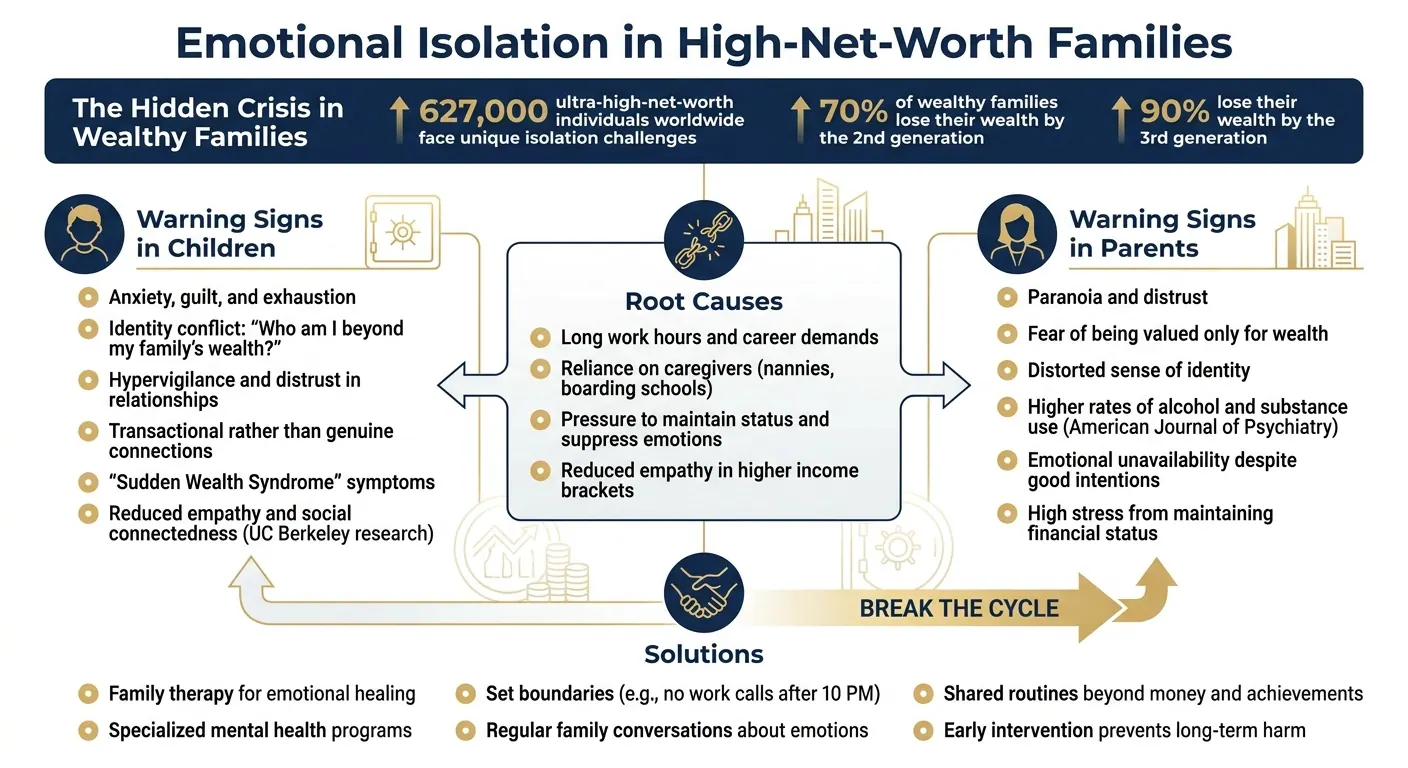
Emotional Isolation in Wealthy Families: Key Statistics and Warning Signs
Signs of Emotional Isolation in Wealthy Families
Warning Signs in Children
Children from high-net-worth families often bear emotional burdens that stem from their privileged circumstances. They may hide behind feelings of anxiety, guilt, or exhaustion. A common struggle they face is identity conflict, where they feel confined to a role shaped by their family’s wealth. This can lead to ongoing self-doubt and an inability to answer the question: "Who am I?" beyond their family identity.
These children may develop hypervigilance and distrust, constantly questioning whether their relationships are genuine or driven by their financial status. This creates a painful dynamic where interactions feel transactional rather than heartfelt. As one expert describes it, they are often "surrounded by people but never truly seen". Research from the University of California, Berkeley, supports this, showing that higher-income individuals frequently experience reduced empathy and social connectedness compared to those with lower incomes.
Another challenge some face is "Sudden Wealth Syndrome" or "Ticker Shock", which manifests as anxiety, disorientation, or obsessive financial behaviors. These symptoms often stem from the pressure to maintain their family’s status or wealth. For example, in March 2026, Bill Gates' daughter expressed relief over his decision to leave her only a modest inheritance. This highlighted how removing the burden of immense wealth can bring psychological relief.
The emotional isolation these children experience often mirrors the struggles faced by their parents.
Emotional Struggles in Parents
Affluent parents frequently encounter similar emotional challenges. They live in a world where few people truly understand their reality, which can lead to feelings of paranoia and distrust. Many fear being seen as mere "objects" or "stepping stones" for others seeking to advance their own financial or social ambitions. Psychotherapist Amanda Falkson captures this sentiment:
"When there's no need to work, where do you get your sense of meaning and purpose and structure? Do you become a walking dollar sign?"
These parents often wrestle with a distorted sense of identity, believing their worth is tied to what they provide rather than who they are as individuals. This can strain relationships, as they may feel "used" for their wealth by partners or associates. Research published in the American Journal of Psychiatry found that high-income individuals are more likely to turn to alcohol and other substances to manage stress. The constant pressure to maintain their wealth fosters a high-stress environment that often prioritizes financial performance over emotional connection. As a result, despite their intentions, many parents become physically or emotionally unavailable to their families.
sbb-itb-4b13a7c
What Causes Emotional Isolation in Wealthy Families
Career Demands and Limited Family Time
The drive to accumulate and maintain wealth often demands long work hours, leaving parents both physically and emotionally unavailable. Balancing business responsibilities, social obligations, and the pressures of safeguarding financial status can strip away opportunities for meaningful family interactions. According to the American Psychological Association, the stress of managing financial stability and social standing can lead to heightened anxiety and depression rates. When these pressures dominate, quality family time becomes a casualty, creating households where members may share space but lack emotional closeness. This issue is further amplified when families rely on external caregivers.
Delegating Parental Responsibilities
To cope with demanding careers, many affluent parents delegate caregiving duties to nannies, boarding schools, or household staff. While this arrangement can be convenient, it often disrupts the natural parent-child dynamic. Clinical psychotherapist Paul Hokemeyer highlights this shift:
"Their relationships become defined for what they can provide to others rather than for who they are of themselves."
When caregivers take over intimate moments - like bedtime rituals, helping with homework, or offering emotional support - parents lose vital chances to bond deeply with their children. This setup often leads children to turn to staff for emotional needs, fostering relationships based on transactional roles rather than genuine emotional connection.
Pressure to Succeed and Emotional Suppression
Wealthy families often face societal pressures that discourage vulnerability, equating emotional struggles with weakness. This can lead to suppressed emotions and diminished empathy. Psychotherapist Amanda Falkson captures this sentiment:
"People tend to see you as lucky and happy - neither may be true."
Research from the University of California, Berkeley further reveals that individuals in higher income brackets may experience reduced empathy and social connectedness. The stigma around vulnerability and the constant push to project an image of success deepen emotional isolation, weakening the bonds that are crucial for emotional health within families.
Long-Term Effects on Mental Health and Relationships
Emotional and Social Development Problems
Growing up without emotional connection can make it hard to build healthy relationships later in life. Psychotherapist Amanda Falkson highlights that individuals from affluent backgrounds often face chronic isolation starting in childhood and continuing into adulthood. Children raised in emotionally distant environments may develop deep feelings of paranoia and distrust, which can lead to a defensive attitude. This mindset makes forming genuine bonds difficult and sets the tone for ongoing relationship struggles as they grow older.
Patterns That Repeat Across Generations
The effects of emotional neglect don’t just stop with one person - they ripple across generations. Parents who grew up in emotionally closed-off households might unintentionally pass on the same behaviors to their children. Without open communication, families can inherit both wealth and the emotional barriers that come with it. This cycle of emotional withdrawal reinforces the isolation often seen in affluent families. It's worth noting that 70% of wealthy families lose their wealth by the second generation, and 90% by the third. These statistics underscore how emotional and relational challenges can intertwine with generational dynamics.
How to Rebuild Emotional Connections
Family Therapy for Emotional Healing
Family therapy offers a structured environment where affluent families can address emotional challenges tied to wealth. It shifts relationships away from being transactional and toward genuine emotional connections. This process creates space for family members to express feelings and needs that go beyond financial support or inheritance discussions.
Therapy also helps dismantle the isolation that comes with constant public scrutiny and tackles identity struggles often faced by those with inherited wealth. Unlike self-made individuals who may develop a stronger internal sense of control, heirs can sometimes feel unmoored.
One of the most impactful aspects of family therapy is how it influences the entire household. When one family member changes their behavior, it often sparks a chain reaction, leading to broader positive shifts within the family dynamic. Building on this foundation, specialized mental health programs can provide even more tailored support for the unique pressures affluent families face.
Customized Mental Health Programs
Standard mental health approaches often fall short for affluent families dealing with chronic isolation and wealth-specific challenges. Specialized programs address issues like navigating transactional relationships, setting financial boundaries with adult children, finding purpose beyond monetary success, and managing traits like increased narcissistic tendencies.
Organizations like Leading Rehabs connect ultra-high-net-worth families with treatment centers that understand these unique dynamics. These customized programs help families confront feelings of guilt, shame, and identity confusion, while also equipping them with tools to foster deeper emotional connections.
It’s crucial to act early. Engaging with tailored mental health programs before problems escalate can prevent long-term emotional harm. Such programs can also address hidden substance abuse issues, which affluent families might otherwise have the resources to conceal, ensuring these problems don’t spiral into more severe crises.
Practical Steps for Parents
In addition to professional help, parents can take simple, daily actions to strengthen emotional bonds within the family. For example, setting boundaries like avoiding work calls after 10:00 PM ensures dedicated family time.
Regular family conversations about emotions and well-being can also normalize discussions around mental health. As Harmony United Psychiatric Care wisely states:
"If the family is a body, then communication is its breath, the essential oxygen that sustains emotional health."
Creating shared routines - like family meals, group exercise, or consistent sleep schedules - can establish meaningful connection points that aren’t centered on money or achievements. Additionally, connecting with other parents in your community can help establish shared standards, especially around technology use. This collective approach can ease the isolation parents often feel when enforcing rules on their own.
Case Studies and Expert Insights
Families Who Overcame Isolation
For some families, emotional isolation only breaks after a significant crisis. Take the case of a manufacturing mogul who faced constant financial pressures and survived a near-fatal heart attack. It was only then that he sought therapy to rebuild connections beyond financial transactions.
Another example involves an elderly father in his 80s, whose adult children had already drained their $40 million inheritance and were demanding more. Overwhelmed by stress and guilt, he turned to therapy to manage these challenges and establish firm financial boundaries.
These stories highlight a crucial reality: isolation doesn’t resolve itself. It takes deliberate effort and a willingness to confront entrenched family dynamics. Recognizing this, mental health professionals now advocate for strategic family interventions.
What Mental Health Professionals Recommend
The lessons from these case studies point to the importance of targeted interventions. Therapists working with high-net-worth families emphasize that healing can begin even if only one family member participates. As Paul Hokemeyer, a licensed marriage and family therapist, explains:
"If one family member changes, then the family unit will be forced to change to accommodate the new order."
This approach often prioritizes addressing the needs of family members most affected by the behaviors of a wealthy individual - such as narcissistic tendencies - rather than focusing solely on the individual, who may resist treatment due to their strong need for control.
Another key recommendation is setting clear, enforceable boundaries. Instead of making sweeping statements like "I'll never speak to you again", therapists suggest smaller, specific limits, such as "I will not take your call after 10:00 PM".
Therapist Clay Cockrell provides additional perspective:
"In some ways, I'm a reality check for my clients, and I think they like that."
This pragmatic approach helps combat the isolation that often accompanies immense wealth. For the approximately 627,000 ultra-high-net-worth individuals worldwide, living in a world where few can relate to their challenges can be profoundly isolating.
How Toxic Billionaire Parents Control Children
Conclusion
Emotional isolation within affluent families presents challenges that material wealth cannot resolve. As discussed throughout this article, many high-net-worth individuals exist in what therapists describe as a "rarified place", where few can truly understand the unique pressures tied to extreme wealth.
The impact of this isolation is far-reaching. Children raised in emotionally distant environments often face heightened risks of substance abuse, struggles with identity, and difficulties in forming meaningful relationships. When family connections are measured by financial contributions rather than authentic emotional bonds, the very essence of family life is diminished. For those inheriting wealth, addressing these emotional gaps becomes essential to overcoming identity struggles and finding a purpose that money cannot fulfill.
Breaking these patterns requires intentional effort and expert guidance. Psychotherapist Amanda Falkson emphasizes this point:
"Wealth doesn't take away our human needs. And having meaning and purpose in life are very important needs".
To tackle emotional isolation, families benefit from mental health programs tailored to the unique challenges of wealth. Professionals specializing in this field understand the pressures tied to high-net-worth status, whether it’s legacy building, philanthropy, or the distrust that can arise when individuals feel valued only for their financial assets.
Leading Rehabs bridges the gap by connecting ultra-high-net-worth families with experts in wealth counseling and specialized treatment centers. These resources help families rebuild emotional connections, uncover purpose beyond financial success, and create the safe, supportive environments necessary for genuine relationships.
As highlighted throughout, emotional well-being is vital - regardless of financial status. Whether dealing with demanding careers, the pressure to maintain a perfect image, or persistent generational patterns, professional support offers a way to break the cycle. Reconnecting on an emotional level isn’t just helpful; it’s essential for creating healthier, more resilient family dynamics and ensuring lasting wellness.
FAQs
Is this neglect even if my child has everything?
Yes, emotional neglect can occur even when a child has access to material wealth, privileges, and possessions. Just because a child appears to have "everything" doesn’t mean their emotional needs are being fulfilled. Emotional neglect often arises from issues like overly hectic schedules, limited communication, or placing too much focus on accomplishments. Tackling this requires conscious effort, such as engaging in family therapy or exploring mental health programs designed to address emotional well-being and foster meaningful connections.
How can I tell if my child is emotionally isolating?
Signs that a child may be experiencing emotional isolation often show up in their behavior. They might withdraw from others, avoid social activities, or spend a lot of time alone. You may also notice changes like a lack of interest in family interactions or relying heavily on technology as a way to escape. Even when surrounded by people, they might express feelings of loneliness, show unexplained sadness, or struggle with anxiety. Spotting these signs early can make a big difference in helping them maintain their emotional health.
What kind of therapy works for wealthy families?
Therapies that work well for affluent families often emphasize key areas such as comfort, competence, confidence, control, and communication. One widely used approach is the DIR® model, which adapts to the unique developmental needs of each individual.
In addition, therapy targeting specific challenges like narcissistic tendencies or intricate emotional dynamics can be highly effective. These types of interventions are especially impactful when guided by professionals who have experience working with high-net-worth clients and understand their unique circumstances.