
Sudden Wealth Syndrome (SWS) is a psychological condition that affects individuals who come into a large financial windfall unexpectedly. While sudden wealth may seem like a dream, it often brings emotional challenges, including anxiety, guilt, strained relationships, and even identity crises. Studies show that many lottery winners, athletes, and inheritors struggle to manage their newfound fortune, with some facing bankruptcy or mental health issues within a few years.
Key takeaways:
- Emotional struggles: Anxiety, guilt, and fear of losing wealth are common.
- Relationship challenges: Jealousy and financial demands can strain personal connections.
- Mental health risks: Depression, insomnia, and even addiction may arise.
- Practical strategies: Delay major financial decisions, set clear goals, and seek professional support.
Building a team of experts, including financial advisors, therapists, and tax specialists, can help navigate these challenges. Mindfulness, financial therapy, and structured routines are also effective tools for maintaining both emotional and financial stability. Sudden wealth requires careful planning – not just for money management but also for mental well-being.
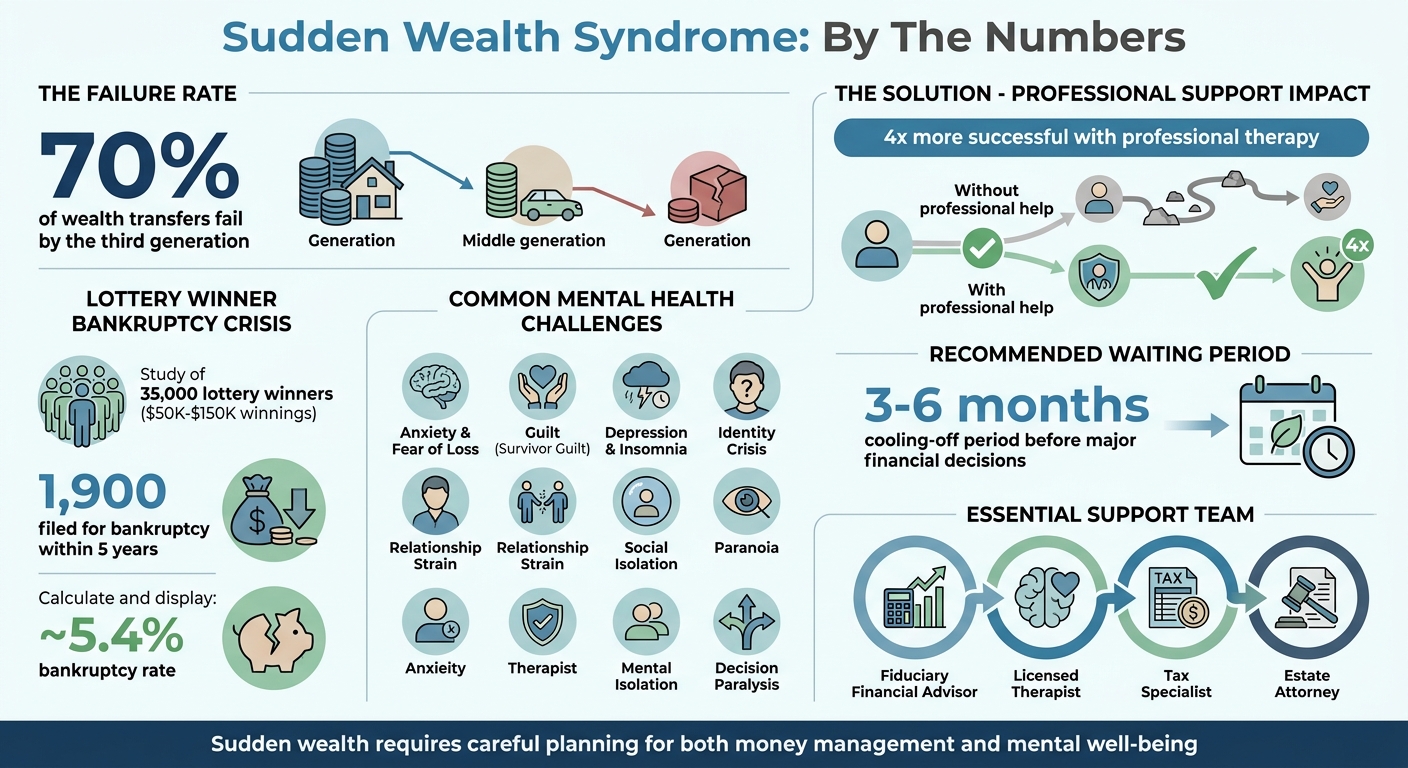
Sudden Wealth Syndrome Statistics and Mental Health Impact
Sudden Wealth Syndrome: Why Inheriting Money Can Ruin Your Finances
sbb-itb-4b13a7c
Common Mental Health Problems After Sudden Wealth
Suddenly coming into a large amount of money can feel like a dream come true, but it often brings unexpected challenges. While it might solve some problems, it can also create new ones, especially when it comes to mental health.
Stress and Anxiety
For many, sudden wealth triggers a fear of losing it all. This fear, sometimes called "ticker shock", can lead to obsessive behaviors like constantly checking financial markets. What starts as cautious money management can spiral into overwhelming anxiety. Even small, everyday decisions – like buying groceries or attending a social event – can feel paralyzing, leaving people stuck in indecision.
"Sudden wealth syndrome is a term given to the psychological condition or identity crisis characterised by symptoms of isolation, paranoia, guilt, uncertainty, and shock."
– James Chen, Financial Author
Feelings of guilt often accompany sudden wealth, especially when it comes unexpectedly or without effort. This "survivor guilt" can lead to self-sabotaging behavior, as individuals struggle to reconcile their new reality with their sense of fairness or worth.
These emotions can become even harder to manage when they start to affect how people see themselves and interact with others.
Identity Loss and Relationship Problems
Beyond stress and anxiety, sudden wealth can shake a person’s sense of identity and disrupt their relationships. For those who once defined themselves by financial struggles or hard work, the sudden shift can leave them questioning their purpose. Without a clear direction, this loss of identity can feel deeply unsettling.
Relationships often take a hit as well. Sudden wealth can create distance between individuals and their social circles, especially when old dynamics no longer fit. Some friends or family members may feel jealous or resentful, while others might make constant requests for financial help. Even when relationships survive, they can feel strained under the weight of these new tensions.
"Humans love consistency and predictability… If a person feels guilt or anxiety about their sudden wealth, they are more likely to undermine achievements or situations that lead to their good fortune."
– Money, Meaning & Choice Institute (MMCI)
Without the right support or strategies to cope with these changes, what seems like a financial blessing can quickly turn into a source of ongoing emotional and mental strain.
Treatment Methods for Sudden Wealth Syndrome
Professional treatment can help navigate the mental and practical challenges that come with sudden wealth.
Financial Therapy and Emotional Support
Specialized treatment options, like financial therapy, address the emotional and behavioral aspects of wealth management. Financial therapy digs into a person’s history with money – such as experiences with bankruptcy, poor boundaries, or compulsive spending – to uncover emotional triggers. A financial therapist can help individuals overcome feelings of unworthiness, survivor guilt, or decision-making anxiety. Clinical interventions also tackle symptoms like obsessive market monitoring, paranoia, and social withdrawal.
The best outcomes often come from a team approach. Licensed therapists, life coaches, tax advisors, and estate planners work together to ease the burden of managing newfound wealth. For younger individuals, therapy can be especially helpful in addressing identity crises or the challenges of early retirement. It provides guidance for finding purpose while staying true to personal values, ensuring both mental well-being and financial security.
Mindfulness and Stress Management
Mindfulness techniques are a valuable addition to therapy, helping individuals manage their emotional responses. These methods reduce impulsivity and anxiety by creating space to process emotions like shock, uncertainty, and fear. Regular mindfulness practice can also curb impulsive behaviors, such as excessive spending or high-risk investments. For those feeling overwhelmed by financial requests from others, combining stress management with clear social boundaries can ease anxiety and protect relationships. This approach builds both emotional resilience and sound financial decision-making.
Delaying Major Financial Decisions
Practical strategies are just as important as emotional support. One effective approach is to delay major financial decisions immediately after acquiring wealth. This "cooling-off" period provides time for emotional adjustment before making significant commitments. Experts suggest placing funds in low-risk accounts during this time and focusing on long-term planning. This isn’t about avoiding action but about creating a space to transition from emotional shock to thoughtful, informed decision-making. Staying engaged in daily routines and community activities during this period can also help individuals stay grounded and connected to their core values.
Building a Professional Support Team
Managing sudden wealth isn’t just about handling money – it’s about balancing financial responsibility with emotional well-being. Research shows that professional therapy can make individuals four times more successful in managing the emotional challenges that come with a financial windfall. Without the right support, people often experience decision paralysis, where the sheer weight of managing newfound wealth causes overwhelming anxiety.
Working with Financial and Mental Health Experts
A well-rounded team of experts is essential. This team should include fiduciary financial advisors, tax specialists, estate attorneys, and licensed therapists. Each brings a unique skill set to the table:
- Financial advisors act as navigators, crafting plans for tax strategies, asset allocation, and formal systems for charitable giving or family support requests. Their guidance not only helps protect wealth but also builds confidence in decision-making, reducing stress and safeguarding relationships.
- Mental health professionals address the emotional side of wealth. They help clients confront issues like survivor guilt, fear of losing wealth, and identity struggles – challenges that spreadsheets can’t solve. Therapists can also dig into past money-related experiences, such as poor boundaries or compulsive spending, to break harmful cycles. As Stephen Goldbart, co-founder of the Money, Meaning and Choices Institute, puts it:
"A financial advisor’s priority is to prevent the client from making missteps in their actions post-influx of wealth".
- Tax advisors ensure compliance with financial laws, while estate planners help secure your legacy for future generations. Together with therapists, they provide a comprehensive approach that reduces stress and aligns financial management with personal values.
By integrating financial and emotional strategies, this team creates a robust framework to help individuals navigate the complexities of sudden wealth.
How Leading Rehabs Connects You to Treatment Centers
For those seeking specialized mental health support, Leading Rehabs connects ultra-high-net-worth individuals to private, luxury treatment centers tailored to address Sudden Wealth Syndrome. The platform offers detailed profiles of top facilities, covering their therapeutic methods, specialized services, and professional staff. This ensures access to centers equipped to handle the unique emotional challenges tied to sudden financial changes.
Leading Rehabs offers three listing plans for treatment centers, each designed to meet different needs:
| Plan | Annual Cost | Key Features | Best For |
|---|---|---|---|
| Basic Light | Free | Media uploads, conditions treated, therapies offered, contact form | Centers seeking basic online presence |
| Basic | $305/year | Photo gallery, verified badge, treatment options, ad campaigns, enhanced profile | Established centers wanting increased visibility |
| Premium | From $5,555/year | On-site review, image video, video podcast, premium support, front and center profile placement | Exclusive centers serving ultra-high-net-worth clients |
Premium listings go above and beyond, offering services like on-site reviews and video content to provide a closer look at facilities. This transparency is crucial when choosing a treatment center for sensitive mental health concerns linked to wealth. Verified badges and detailed profiles help individuals make informed decisions, ensuring they find centers that truly understand the complexities of managing sudden financial windfalls.
This collaboration between expert advisors and specialized treatment centers creates a solid support system, helping individuals achieve both financial security and emotional stability.
Long-Term Strategies for Mental Health and Wealth Management
Balancing financial stability and emotional well-being is key to managing wealth over the long haul. The numbers tell a striking story: about 70% of wealth transfers fail by the third generation, and a 2010 study of 35,000 lottery winners who received between $50,000 and $150,000 found that 1,900 filed for bankruptcy within five years. These outcomes often stem from a lack of direction and inconsistent habits. The strategies below address both immediate challenges and the ongoing effort required to manage wealth and mental health effectively.
Setting Clear Financial and Personal Goals
Turning wealth into a manageable plan starts with setting specific, value-driven goals. This kind of clarity not only simplifies financial decisions but also reduces the stress that often accompanies sudden financial changes. In the first 3–6 months, focus on defining priorities like family security, education, or charitable giving.
Organize your goals into categories such as lifestyle needs, family support, future aspirations, and philanthropy. For instance, instead of vaguely planning to "help family", set clear boundaries and budgets for financial assistance. Regularly meeting with financial advisors to review your net worth, cash flow, and progress keeps your plan focused and adaptable.
Maintaining Daily Routines and Healthy Habits
Sticking to familiar routines can be a lifeline during times of change. According to the Money, Meaning & Choices Institute, "Humans love consistency and predictability". Keeping up with community activities, hobbies, and daily rituals provides emotional stability and a sense of normalcy.
On the practical side, safeguarding your privacy is crucial. If news of your financial situation becomes public, consider updating your contact information and removing personal details from social media to avoid unwanted attention. Staying informed about financial topics like asset allocation, taxes, and banking trends also builds confidence, making it easier to have meaningful discussions with advisors. These steady habits create a strong foundation for managing both wealth and emotional well-being.
Charitable Giving and Finding Purpose
Philanthropy offers a meaningful way to channel the emotions – like guilt – that can sometimes accompany sudden wealth. Donating to causes or supporting loved ones can transform those feelings into a sense of purpose.
Collaborate with your advisors to design a philanthropic framework that reflects your core values. Set clear budgets for donations and establish criteria for evaluating where to give. This approach prevents emotional, spur-of-the-moment contributions and ensures your giving aligns with your broader goals. Thoughtful philanthropy not only brings a sense of fulfillment that material possessions often can’t provide but also helps clarify what you want your wealth to achieve beyond financial success. Structured giving strengthens both emotional well-being and financial management.
Conclusion: Managing New Wealth Successfully
Sudden wealth can be both a gift and a challenge. Without careful planning, it’s easy to see how unprepared individuals may face significant risks, as recent statistics reveal. This underscores the importance of seeking professional advice and crafting a deliberate strategy.
By following the strategies outlined earlier, sudden wealth can evolve into long-term financial security. Start with a solid plan that includes three key steps. First, assemble a team of experts: a fiduciary financial advisor, a tax specialist, an estate attorney, and a mental health professional. Second, consider a 3–6-month "decision-free zone" by placing your funds in low-risk accounts and avoiding major decisions until emotions settle. Third, prioritize your mental well-being by sticking to your daily routines, setting boundaries around charitable giving, and seeking financial therapy if feelings like guilt or anxiety emerge.
"Sudden wealth is as much a psychological adjustment as it is a financial one, and without proper guidance, it can quickly turn from a blessing into a burden." – Suttle Crossland Wealth Advisors
For those grappling with the psychological and emotional challenges of sudden wealth, Leading Rehabs connects individuals with specialized treatment centers. Whether it’s anxiety, shifts in identity, or strained relationships, professional support can help transform this newfound wealth into a lasting asset. As mentioned earlier, having a well-rounded team is essential for protecting both your financial resources and personal well-being. Take action early, stay grounded in your values, and remember – seeking help is a sign of strength.
FAQs
Is Sudden Wealth Syndrome a real mental health condition?
Sudden Wealth Syndrome is a real psychological phenomenon that can arise when someone experiences an unexpected financial windfall. It often brings challenges like heightened stress, emotional overwhelm, and difficulty adapting to the new circumstances. These feelings can sometimes lead to poor financial decisions or even shifts in one’s sense of identity. Seeking professional support and using personalized therapeutic approaches can be essential in helping individuals adjust to these changes while safeguarding their mental health.
What should I do first after receiving a big windfall?
The first thing you should do is take a close look at your new financial situation and resist the urge to make hasty decisions. It’s smart to bring together a team of professionals – like a certified financial planner – who can help you map out a detailed financial and life plan. While working with experts, trust your instincts to avoid careless spending and make sure your wealth is handled responsibly and with long-term stability in mind.
When should I consider therapy or rehab for sudden wealth stress?
Sudden wealth can bring unexpected emotional challenges like guilt, anxiety, isolation, paranoia about losing money, or even an identity crisis. These feelings often surface after events like receiving an inheritance or winning the lottery. If these emotions start to feel overwhelming or lead to problems like impulsive spending or strained relationships, therapy or rehab might be worth considering. Professional support can help you navigate these changes and manage the impact in a healthier way.
