
Succession syndrome is an emotional struggle tied to passing down family businesses or wealth. It impacts both founders and heirs, causing stress, identity crises, and strained relationships. Founders often feel lost without their role, while heirs face "inheritor’s paralysis" or fears of inadequacy. Poor planning and communication make things worse, leading to family conflicts and even mental health issues like anxiety, depression, or substance misuse.
Key Points:
- For Founders: Letting go can trigger identity issues and anxiety about losing control.
- For Heirs: Overwhelmed by expectations, many feel unprepared or paralyzed.
- Family Dynamics: Miscommunication and unresolved rivalries can escalate tensions.
- Mental Health Risks: Stress may lead to depression, anxiety, or substance use.
- Statistics: 70% of wealth transitions fail due to emotional and relational issues.
Solutions:
- Early succession planning (start 7–10 years ahead).
- Clear communication about roles and expectations.
- Specialized therapy for heirs and founders to manage emotional challenges.
- Family retreats to address conflicts and align on goals.
With $85 trillion in assets expected to transfer in the U.S. within 15 years, addressing these emotional challenges is critical to preserving both family relationships and businesses.
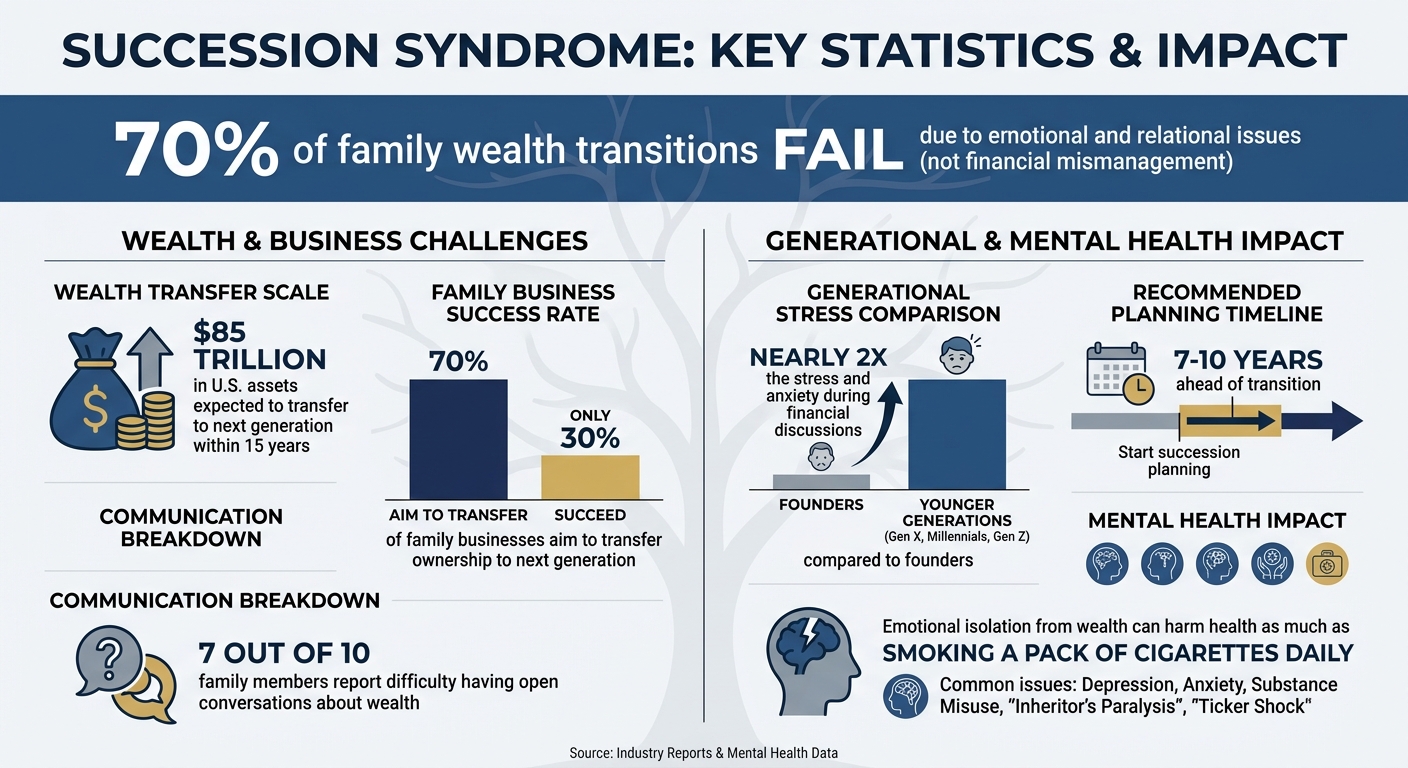
Succession Syndrome Statistics: Mental Health Impact on Family Business Transitions
How Succession Syndrome Affects Mental Health
Stress on Heirs and Founders
The process of succession can weigh heavily on both the older and younger generations. Founders often grapple with an identity crisis, feeling a loss of purpose after dedicating decades to their work. This sense of detachment can heighten anxiety and cloud their decision-making, especially as they face existential worries about their relevance during a pivotal transition.
For heirs, the challenge manifests differently. Many experience "inheritor’s paralysis", where they grasp their responsibilities on a logical level but feel emotionally unready to take them on. Younger generations – whether Gen X, Millennials, or Gen Z – are nearly twice as likely as founders to report stress and anxiety when discussing financial matters. With over $85 trillion in U.S. assets expected to transfer to the next generation in the next 15 years, the emotional stakes surrounding this shift are immense.
"For the parent, it may feel like they are losing their life’s work or that they are no longer needed in their own family." – Gary Wolf, MA, LMHC, CFT, Mental Wealth Counseling
This internal struggle often spills into family dynamics, leading to breakdowns in communication.
Family Conflict and Communication Breakdown
Succession can strain family relationships, especially when business and family roles overlap. For instance, someone might be both a sibling and a subordinate, creating confusion and emotional tension. In these scenarios, unresolved issues – like childhood rivalries, perceived favoritism, or old grievances – can resurface during critical decision-making moments. Poor communication only adds fuel to the fire, turning financial discussions into emotionally charged standoffs. In fact, 7 out of 10 family members report difficulty having open conversations about wealth.
A lack of transparency from parents can further complicate matters. For example, decisions that seem "fair" – like allocating more assets to a child actively involved in the family business – might not feel "equal" to others, leading to hurt feelings and resentment. If these tensions aren’t addressed, they can escalate into deeper emotional and mental health struggles.
Substance Abuse and Mental Health Disorders
The relentless pressure of succession can lead to mental health challenges and even substance misuse. Some heirs develop "Ticker Shock", an obsessive focus on financial markets driven by anxiety about preserving the family legacy. Others face Sudden Wealth Syndrome, characterized by feelings of disorientation, anxiety, and guilt tied to their inherited privilege. This sense of isolation – wondering if relationships are genuine or purely transactional – can worsen mental health. Research shows that emotional isolation can harm physical and mental well-being as much as smoking a pack of cigarettes daily.
For many, the stigma of being seen as a "poor little rich kid" prevents them from opening up about their struggles. Instead, they may internalize their pain or turn to substances for relief. As Liz Winston explains:
"Substance use is morally-neutral; substance mis-use creates challenges. The framework of ‘substance abuse’ overlooks that substance mis-use is a trauma response, most often to having survived abuse and neglect." – Liz Winston
Without proper support, the anxiety and stress tied to succession can spiral into more severe issues, including clinical depression, anxiety disorders, or addiction. The pressure to appear grateful while feeling overwhelmed creates a deep emotional disconnect, making it even harder to cope.
sbb-itb-4b13a7c
The “Soft Issues” That Wreck Family Business Succession
What Causes Succession Syndrome
The emotional strain of succession syndrome often stems from poor planning and deep personal ties to the family business. These factors can make the transition process overwhelming, leading to significant mental health challenges.
Lack of Planning and Communication
The biggest trigger for succession syndrome isn’t the complexity of the process – it’s the silence surrounding it. Families often avoid difficult conversations about money, mortality, and the future of their business. This avoidance transforms what should be a structured transition into an emotional minefield. Without a clear succession plan, families struggle to decide whether leadership roles should be based on birthright or ability, leading to confusion and resentment among siblings.
While 70% of family businesses aim to transfer ownership to the next generation, only 30% succeed – largely due to the absence of a solid plan. When rules about participation, pay, and authority aren’t established, decisions are often driven by emotions rather than logic, putting the business at risk.
"The absence of clear communication can turn a financial matter into an emotional battleground. This can leave lasting damage to family relationships." – Gary Wolf, MA, LMHC, CFT, Mental Wealth Counseling
This lack of communication becomes even more damaging when fairness is questioned. For example, a founder might give more assets to a child actively involved in the business, believing it’s the right thing to do. But without open discussions, other siblings may see this as favoritism, potentially leading to legal disputes or even the sale of the business to competitors. Miscommunication like this not only fuels conflict but also increases stress for everyone involved. On top of that, founders’ emotional attachments to their businesses further complicate these transitions.
Founders Who Can’t Let Go
For many founders, their identity is tied to their business. Stepping aside isn’t just about retiring – it’s about facing the question: "Who am I without this role?" This fear of losing their sense of purpose often pushes founders to delay succession, leaving leadership gaps and creating dysfunction within the organization.
"Stepping back isn’t just a career transition – it’s a fundamental question of who you are when you’re no longer the decision-maker. This triggers existential anxiety and fear of irrelevance." – Emily Carter, PhD, Licensed Clinical Psychologist
This anxiety can lead to "over-managing", where founders refuse to delegate authority even when a succession plan exists on paper. The situation becomes even harder when cognitive decline, such as Alzheimer’s, enters the picture. Families are then forced to manage the delicate balance of shifting control while also coping with the founder’s deteriorating mental health. Studies reveal that 70% of family wealth transitions fail because of psychological and relational issues, not financial mismanagement. These unresolved emotional challenges only heighten the strain during transitions.
Inheriting Wealth Without Preparation
Another key factor in succession syndrome is the lack of preparation for heirs. Without proper guidance, heirs often feel overwhelmed by self-doubt and imposter syndrome. The pressure to live up to a high-achieving founder’s legacy without a clear roadmap can be paralyzing.
Younger generations – Gen X, Millennials, and Gen Z – experience nearly double the levels of stress and anxiety during financial discussions compared to their predecessors. With over $85 trillion in assets expected to transfer to the next generation in the U.S. over the next 15 years, millions of heirs are stepping into these transitions unprepared.
The weight of preserving a founder’s vision often adds another layer of stress. Heirs feel torn between honoring the family legacy and staying true to their own goals, leading to guilt and fear of letting the family down. Without structured preparation, even routine decisions can feel like high-stakes gambles, with every choice carrying the fear of ruining the family business. Left unchecked, this stress can spiral into serious mental health issues, including depression, substance abuse, burnout, and chronic anxiety.
Treatment Options for Succession-Related Mental Health Issues
When succession syndrome leads to significant mental health challenges, standard therapy methods often fall short. Wealthy families face unique stressors tied to legacy, responsibilities, and intricate family dynamics. Tailored treatment approaches can address these issues, helping to manage identity struggles, imposter syndrome, substance use, and family disputes – all while maintaining strict confidentiality.
Personalized Therapy Programs
Therapy tailored to succession-related stress goes well beyond the scope of traditional counseling. For example, financial therapy focuses on the psychological and relational aspects of wealth during leadership changes, helping families preserve their bonds. Family systems therapy provides support for individuals to maintain their personal identities while strengthening emotional ties across generations. For heirs dealing with identity confusion, psychodynamic therapy can help them build a sense of self and overcome what clinicians call "inheritor’s paralysis".
Young heirs, especially those aged 18 to 35, often benefit from individual therapy that addresses the pressures of being the "golden child" or feelings of imposter syndrome. This helps them form identities independent of their family’s wealth. Group therapy for emerging leaders offers a safe and private environment where peers can openly discuss issues like trust fund stress, isolation, and the challenge of balancing privilege with responsibility. Many affluent families choose concierge private-pay therapy models to ensure total confidentiality and avoid leaving any insurance records.
In addition to individual therapy, addressing broader family dynamics often calls for collective interventions.
Family Retreats for Resolving Conflict
Family retreats offer structured environments to tackle the complex intersections of family roles, ownership, and business interests. These retreats provide a platform for difficult conversations, helping families resolve minor tensions before they escalate into major disputes. Facilitators guide families in creating governance rules and accountability charts, assigning roles based on skills rather than birthright. Differentiation work during these retreats helps family members maintain their individual identities while staying emotionally connected to the family unit.
Specialized facilitators also address sensitive topics like perceived favoritism, childhood rivalries, and the "Legacy Expectation Trap" that often surfaces during wealth transfers. These programs frequently include transition planning, enabling founders to gradually step back while mentoring the next generation. Highlighting the importance of socioemotional wealth – the deep emotional connection families have to their enterprises – has been shown to improve succession outcomes.
These retreats serve as a bridge between personal therapy and family-wide support, laying the groundwork for further specialized care.
How Leading Rehabs Connects Families to Treatment
In addition to personalized and retreat-based therapies, Leading Rehabs provides families with access to clinicians experienced in navigating the psychological challenges of wealth transitions. The platform connects clients to professionals skilled in addressing issues like "Sudden Wealth Syndrome", isolation tied to inheritance, and stress related to succession. It also offers concierge telehealth services tailored for next-generation family office leaders and founders facing succession-related challenges.
This approach ensures that families receive care from experts who understand that anxiety during succession is a natural response to high-stakes situations – and one that demands specialized, rather than conventional, treatment.
How to Prevent and Manage Succession Syndrome
Addressing emotional challenges early is key to avoiding succession syndrome. Research shows that most failures in wealth transitions stem from psychological factors rather than financial or operational issues. Families that proactively tackle emotional aspects – like identity, legacy, control, fairness, and continuity – are far more likely to succeed in passing down wealth or leadership. Incorporating these steps into legacy planning helps maintain both family relationships and business stability.
Creating a Shared Family Vision
A unified family vision doesn’t just happen – it requires deliberate collaboration. When founders and the next generation work together to design transition plans, they build mutual trust and empowerment. This approach is far more effective than imposing a top-down directive. Formalizing this process through tools like a family council or charter can establish clear values and decision-making guidelines for ownership and leadership.
"The founder does not trust the next generation to take on the responsibilities of the business, and the next generation does not sense the empowerment to do so. So, they find themselves at an expensive impasse." – Amy Castoro and Fred Krawchuk, The Williams Group
To avoid confusion, it’s important to set explicit criteria for involving family members in the business and to outline specific goals heirs must meet before stepping into leadership roles. Distinguishing emotional family dynamics from professional business responsibilities is equally critical. This separation helps heirs align their inherited roles with their personal identities, reducing the risk of "Inheritor’s Paralysis" – a term used to describe the fear of failing under the weight of expectations. A well-defined family vision provides the foundation for smoother succession planning.
Planning Succession Early
Delaying succession planning often leads to indecision and missed opportunities. Starting discussions 7 to 10 years ahead of the transition gives families the time to identify and prepare multiple potential leaders, ensuring a strong and diverse leadership pipeline. This early start also allows heirs to gain confidence by taking on smaller, less risky roles while founders gradually ease into a new phase of their lives.
"Leadership transitions are complex, demanding processes that require years, not months, to execute properly. Starting early isn’t just about being prepared; it’s about creating options." – Russell Reynolds Associates
To prepare future leaders, assign them to "critical pass-through roles" where they’ll be responsible for profit-and-loss outcomes and gain hands-on experience in core operations. These roles, typically limited to two to five positions within a company, need to be held for at least a year to provide meaningful training. Developing a "Success Profile" that outlines the skills and traits required for the company’s future – not just its current state – can also reduce conflicts like sibling rivalry or entitlement. Combining this structured approach with mental health support can significantly reduce the stress of transitions.
Working with Mental Health Professionals
Traditional therapy often falls short when it comes to the unique pressures of family businesses. Therapists specializing in succession planning understand the emotional and psychological complexities of wealth and leadership transitions. They help heirs reconcile the gap between their intellectual readiness and emotional preparedness, transforming inherited roles into authentic leadership.
"When treating family office succession stress, the goal isn’t to eliminate the pressure – these responsibilities matter. We focus on building a coherent identity that integrates your inherited role with your authentic self." – Emily Carter, PhD, Licensed Clinical Psychologist, Cerevity
These specialized therapists provide safe spaces to discuss sensitive topics like perceived favoritism, fairness versus equality in dividing assets, and the grief tied to losing a familiar identity. Sessions can range from standard 50-minute appointments to intensive 3-hour discussions, tailored to support major milestones. Private-pay models ensure confidentiality, keeping these conversations off corporate benefits reports and out of legal discovery. For families spread across different locations, concierge telehealth services – like those offered by Leading Rehabs – allow everyone to participate while maintaining privacy.
Conclusion: Managing the Mental Health Impact of Family Business Transitions
Succession syndrome presents a complex mental health challenge that can disrupt personal well-being and jeopardize generational wealth. The stakes are high, as critical transitions often expose deep emotional and relational struggles within families.
Addressing this issue requires proactive steps, including early intervention, specialized mental health support, and open communication. Founders often face the emotional toll of stepping away from a role that defines their identity, while heirs may struggle to reconcile inherited responsibilities with their personal aspirations. Ignoring these dynamics can lead to stalled decision-making, fractured family relationships, and instability within the business.
"Succession planning isn’t solely about dividing assets or signing legal documents. Its purpose is also to ensure that families can move forward with clarity, respect, and emotional resilience." – Gary Wolf, MA, LMHC, CFT, Mental Wealth Counseling
Generic therapy may not fully address the unique challenges tied to socioemotional wealth. Instead, specialized therapists who understand issues like "Inheritor’s Paralysis" and "Legitimacy Anxiety" provide more effective support. These private-pay sessions, priced at $175 for 50 minutes, ensure confidentiality and focus on the specific needs of ultra-high-net-worth families.
Leading Rehabs offers access to these tailored services, connecting families to expert clinicians who emphasize the human side of succession. Through personalized mental health care, family therapy programs, and differentiation work, families can turn the challenges of legacy transitions into opportunities for growth and stronger bonds across generations.
FAQs
How do I know if I have succession syndrome?
Succession syndrome refers to the emotional and psychological hurdles that come with inheriting or passing down a family business. Common signs include stress, anxiety, and feeling weighed down by the responsibilities involved. It can also bring about identity conflicts, strained family relationships, or even guilt tied to maintaining the family legacy. If any of this feels familiar, reaching out to mental health professionals who specialize in working with high-net-worth families can provide guidance and tools to navigate these challenges effectively.
What should I do if my family can’t talk about money without fighting?
If your family finds it difficult to talk about money without arguments, seeking professional help might be a good idea. Therapists who specialize in working with high-net-worth families can assist in navigating the emotional and relational complexities tied to wealth. These professionals can help improve communication, ease tensions, and encourage understanding. With their expertise in family dynamics and wealth transfer, they can guide your family through these delicate conversations, paving the way for stronger relationships and smoother discussions.
When is the right time to start a succession plan?
The ideal moment to start a succession plan is long before any transition takes place. The best time is when the business is running smoothly, and family members are prepared to step into leadership roles. Planning early not only minimizes emotional stress but also helps tackle potential family disagreements, making the entire process much easier for everyone.
