
Managing extreme wealth comes with unexpected mental health challenges. Ultra-high-net-worth individuals (UHNWIs) often face stress, anxiety, and isolation due to financial responsibilities, social dynamics, and public scrutiny. This lifestyle can lead to chronic mental strain, physical health issues, and even reduced life expectancy. Key challenges include:
- Financial Pressure: High-stakes decisions, market volatility, and fear of loss create constant stress.
- Social Isolation: Trust issues and altered relationships often leave UHNWIs feeling disconnected.
- Health Impacts: Insomnia, burnout, and physical symptoms are common due to prolonged stress.
Solutions include discreet luxury mental health programs offering privacy and personalized care, mindfulness practices, and building trusted support networks. Specialized therapies like CBT, DBT, and EMDR help address unique challenges. Long-term strategies, such as integrating mental health into family governance and redefining personal purpose beyond wealth, can also improve well-being.
The key takeaway: Mental health is as critical as financial health. Proactively addressing these challenges ensures a more balanced and fulfilling life.
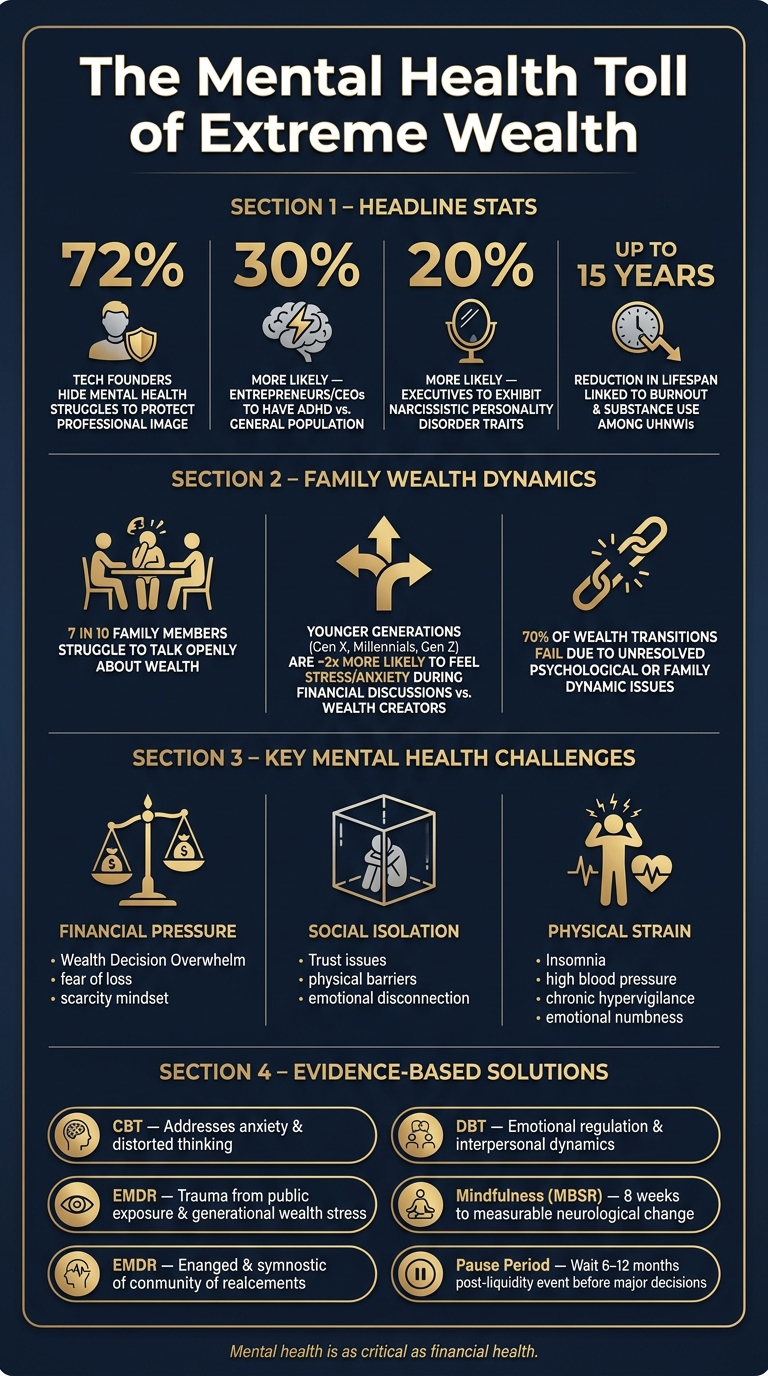
Mental Health Toll of Extreme Wealth: Key Statistics & Impacts
Mental Health Pressures Specific to Ultra-High-Net-Worth Individuals
Ultra-high-net-worth individuals (UHNWIs) encounter psychological challenges that are deeply tied to the responsibilities and complexities of managing immense wealth.
Chronic Anxiety and the Burden of Financial Oversight
Overseeing significant wealth means every financial decision carries immense pressure. Complexities like estate planning, irrevocable trusts, tax regulations, and running family offices can lead to what some call "Wealth Decision Overwhelm." This is when the sheer volume and stakes of decisions push mental capacities to their limits.
"I was making million-dollar decisions from the floor of panic, and everyone in the room thought I was fine because I know how to look fine." – Nadia, Post-Exit Founder
Even after achieving financial success, the anxiety doesn’t disappear – it simply shifts. The question becomes less about "How do I earn it?" and more about "How do I preserve it?" This constant vigilance over market changes, tax laws, and the fear of losing control creates an unrelenting cycle of stress. Research on the hedonic treadmill highlights that material gains provide only short-lived satisfaction before the mind resets, making lasting peace of mind elusive. These financial pressures often bleed into personal relationships, further compounding feelings of isolation.
Social Isolation and Trust Issues
Wealth inevitably alters relationships. UHNWIs often find themselves questioning the motives of those around them – a logical response given the financial stakes involved. This mistrust is reinforced by physical barriers such as gated communities, private transportation, and heightened security measures. While these steps ensure safety, they also widen the emotional gap between UHNWIs and genuine human connection.
Physical and Emotional Strain from Wealth Management
The mental toll of managing wealth often manifests physically. Symptoms like insomnia, high blood pressure, chronic hypervigilance, and emotional numbness are common, driven by sustained stress and elevated cortisol levels. Additionally, studies show that entrepreneurs and CEOs are nearly 30% more likely to have ADHD and about 20% more likely to exhibit traits of narcissistic personality disorder, both of which can be exacerbated by the demands of wealth management.
If left unaddressed, these challenges can lead to severe long-term effects. Conditions like burnout and substance use, which are prevalent among UHNWIs, have been linked to a reduction in lifespan by as much as 15 years. Paradoxically, the very traits that fuel their success – relentlessness, a need for control, and high performance – can also make it difficult for them to take the necessary steps to recover and prioritize their well-being.
sbb-itb-4b13a7c
How Wealth Intensifies Stress and Anxiety
Managing significant wealth doesn’t just introduce new challenges – it often magnifies existing ones. The mental, emotional, and situational pressures tied to vast financial responsibility can quietly chip away at mental well-being, often in ways that are difficult to recognize from within.
Perfectionism and Decision Fatigue
When every financial choice carries the weight of multi-generational impact, the pressure to make flawless decisions can become overwhelming. Over time, this constant mental load can impair the brain’s ability to process decisions confidently, leaving individuals second-guessing themselves. This hesitation becomes a quiet, ongoing struggle, as the mind rarely gets a break from the demands of high-stakes decision-making.
"Waking up every morning at the top of the mountain, but feeling like I still have to climb." – Dr. Ronit Lami, Wealth Psychologist
This relentless pressure is sometimes called the "Cage of Accomplishment." Here, past success sets a new standard, and the drive to outperform one’s own legacy becomes unrelenting. Without strategies to manage this pressure, it can quickly spiral into a persistent fear of failure or loss.
Fear of Loss and a Scarcity Mindset
For many self-made individuals, financial anxiety doesn’t disappear with wealth. Even with an eight-figure net worth, a scarcity mindset – rooted in earlier experiences of financial instability – can linger.
This phenomenon, often described as the "Immigrant to Wealth" experience, reflects how first-generation wealth creators may feel out of place in a financial world they weren’t raised to navigate. They may lack the institutional knowledge or social familiarity that typically accompanies inherited wealth. This unfamiliarity can create feelings of shame and a deep fear that one mistake could undo everything.
"The quiet fear that even one misstep could unravel everything." – Dr. Ronit Lami, Wealth Psychologist
For those with a history of financial insecurity, hyper-controlling their finances can feel like a way to guard against past hardships. However, this obsessive micromanagement often leads to exhaustion and difficulty trusting others to share the burden.
Constant Market Monitoring and Public Exposure
The external pressures of wealth management add another layer of stress. With real-time access to financial data, UHNWIs (ultra-high-net-worth individuals) often find themselves glued to market updates, portfolio dashboards, and breaking news. The 24/7 availability of information leaves little room to mentally disconnect, as stepping away may feel like risking a missed opportunity or critical development.
Public scrutiny only heightens the tension. Many wealthy individuals experience "performative vigilance" – a constant awareness of being observed by investors, board members, the media, or even their own families. The stakes are high, as a single public misstep or visible sign of vulnerability can amplify tensions. In fact, 72% of tech founders report hiding mental health struggles to protect their professional image.
"The stakes of being perceived as vulnerable are simply too high." – Hugh Grant, Technology and Small Business Researcher
This need to maintain a polished public persona often creates a disconnect between how UHNWIs are perceived and how they feel internally. Over time, this gap deepens a sense of isolation, making the psychological toll of wealth even more pronounced.
Luxury Mental Health Treatment Options for Wealth-Related Stress
Dealing with wealth-related mental stress requires more than just standard therapy. It calls for a setting that prioritizes privacy and discretion, especially for ultra-high-net-worth individuals (UHNWIs). These individuals often face mental health challenges that go beyond what conventional care can handle. For them, the treatment environment isn’t just important – it’s essential.
What Luxury Mental Health Treatment Looks Like
Luxury mental health programs for UHNWIs stand out because they focus on complete privacy and individualized care. These aren’t your typical therapy programs – they’re designed with exclusivity and discretion in mind.
Facilities catering to this clientele often operate on a one-client-at-a-time model, ensuring absolute privacy. Shared spaces are eliminated, and every member of the staff, from therapists to housekeeping, adheres to strict non-disclosure agreements. Clients can even check in under pseudonyms for added anonymity. These programs are typically located in secluded, high-security areas that shield clients from media or professional exposure. For executives who can’t step away entirely, some facilities offer encrypted private offices and designated business hours to handle essential tasks without interrupting treatment.
"What I needed wasn’t a 12-step meeting. I needed a private clinician, a private suite, and absolute certainty no one would ever know." – R.M., Former CEO, UK Healthcare
This level of exclusivity creates a safe space where clients can focus on their mental health while maintaining their professional and personal privacy.
Evidence-Based Therapies for UHNWIs
The therapeutic approaches in these programs are as specialized as the settings, combining clinical rigor with an understanding of the unique pressures faced by UHNWIs.
- Cognitive Behavioral Therapy (CBT): This method addresses anxiety and distorted thinking patterns, common under the constant pressure of high-stakes decision-making.
- Dialectical Behavior Therapy (DBT): Ideal for managing emotional regulation, DBT helps clients navigate the complex interpersonal dynamics often tied to family wealth or executive roles.
- Eye Movement Desensitization and Reprocessing (EMDR): EMDR is particularly effective for those dealing with trauma stemming from public exposure, security concerns, or the immense responsibilities of generational wealth.
Some programs also include somatic therapy and nervous system regulation techniques, such as breathwork and neurofeedback, to help clients move out of a constant fight-or-flight state. Advanced facilities like Privé-Swiss even use tools like NeuroQuant® Brain MRI Analysis, which can detect subtle brain changes before symptoms fully develop. With up to 65 individual therapy sessions offered monthly, these programs provide an intensity of care that’s unmatched in traditional settings.
"Recovery, in this sense, is not a detour from professional life. It is an investment in it." – Hugh Grant, Technology and Business Researcher
These therapies are delivered in environments that prioritize discretion, ensuring clients can access care without compromising their privacy.
How Leading Rehabs Supports Discreet Access to Treatment
For high-profile individuals, finding the right treatment facility without drawing attention can be a daunting task. Leading Rehabs simplifies this process by offering detailed, verified profiles of top-tier centers worldwide. These profiles highlight privacy measures and specialized therapies, allowing prospective clients to explore their options discreetly and at their own pace. There’s no need for public inquiries or direct phone calls, making it easier to connect with facilities that align with their mental wellness goals.
For treatment centers, Premium listings include on-site reviews, video tours, and prominent placements, giving potential clients a clear and comprehensive view of what to expect before reaching out. This approach ensures both clients and facilities can connect in a way that prioritizes privacy and transparency.
Mindfulness and Lifestyle Strategies for Long-Term Mental Health
Mindfulness Techniques for Managing Stress and Anxiety
Incorporating mindfulness into your daily routine can significantly reduce stress and anxiety. Practices like Mindfulness-Based Stress Reduction (MBSR) and structured breathwork help lower cortisol levels and calm the mental chaos often triggered by high-pressure situations. Even short, consistent exercises can make a difference. For example, taking two minutes for focused breathing between meetings or grounding yourself before a big presentation can shift your nervous system out of a reactive state.
"Tuning into the present moment is one of the best tools we have for changing that ‘I want more’ into an ‘I am enough’ mindset." – Paracelsus Recovery
Mindful activities, such as walking in nature, can reduce the lingering mental load that sticks around even when you’re technically off duty. Research shows that practicing mindfulness regularly – over as little as eight weeks – can lead to noticeable neurological changes. The key isn’t making it a lifelong commitment but rather ensuring it becomes a regular habit.
These mindfulness techniques create a foundation for daily routines that promote long-term mental well-being.
Redesigning Daily Life to Support Mental Health
Small changes to your daily habits can have a big impact on mental clarity and overall health. One effective strategy is reserving your cognitive prime time – usually the morning hours – for tasks that require deep thinking and creativity. Save reactive tasks, like answering emails, for later in the day.
"High performers tend to carry a lot around internally (also known as mental load). Offloading thoughts can reduce ‘brain fog’ and increase clarity." – Clegg Hubbell, Chief of Staff, Wealth Architects
Adding recovery blocks to your week, such as two 20-minute walks or even a half-day hike, can help prevent burnout. Pairing this with a simple five-minute journaling habit can also reduce mental clutter and improve focus. Here’s a quick summary of strategies and how to incorporate them:
| Routine Strategy | Primary Benefit | Implementation Example |
|---|---|---|
| Cognitive Prime Time | Protects decision-making bandwidth | Reserve 8–11 AM for strategic work only |
| Recovery Blocks | Prevents burnout and emotional fatigue | Two 20-minute walks or a half-day hike weekly |
| Externalizing Thoughts | Reduces mental noise and "brain fog" | A daily 5-minute journaling or voice note session |
| Circadian Repair | Stabilizes mood and resilience | Consistent wake times, reduced evening stimulation |
| Somatic Work | Lowers stress response | Regular massage, Qi Gong, or Tai Chi |
These adjustments can help you create a rhythm that supports mental health, but a strong support network is equally important.
Building a Private, Trusted Support Network
While traditional networks often focus on professional performance, a personal support system is essential for addressing well-being. Experts recommend forming a "Shadow Board of Self" – a small group of trusted individuals like a psychologist, executive coach, and peer – to provide guidance beyond surface-level conversations.
"The clinician becomes not only a therapist, but a trusted confidant – a role requiring sophistication, integrity, and discretion." – Dr. Janis Brakowski, MD
Concierge mental health services can offer added privacy and security by safeguarding sensitive records from outside access. Scheduling quarterly emotional check-ins – similar to financial audits – can help identify early signs of stress before they escalate. When clinical teams collaborate with family offices and wealth advisors, therapeutic goals can align with broader life planning, creating a more cohesive and supportive system.
Aligning Wealth, Identity, and Mental Wellbeing Over Time
Finding Purpose Beyond Financial Success
Once routines are established, it’s worth asking: Who am I beyond my wealth? For many ultra-high-net-worth individuals, the focus often shifts from simply "being" to "having", placing emphasis on material possessions and status rather than genuine presence.
"When success becomes the new baseline, that adrenaline fades and is replaced by something heavier: pressure." – Dr. Ronit Lami, Wealth Psychologist
Shifting from achievement to contribution can be a powerful way to reclaim a sense of purpose. Activities like philanthropy, impact investing, or pursuing values-driven goals aren’t just financial decisions – they’re deeply psychological. Service, in particular, provides a grounding effect, counteracting the ego, which can grow unchecked in the bubble of extreme wealth. As health psychology researcher Ekaterina J. Yarley notes:
"The antidote to ego is service." – Ekaterina J. Yarley, PhD Candidate in Health Psychology
To reflect on this, try asking yourself: "Who would I be without my success, fame, or family name?" or "When was the last time I felt quietly proud of myself?". This personal growth naturally extends into family relationships, where wealth often plays a pivotal role.
Family Governance and Mental Health
The quest for individual meaning is closely tied to family dynamics, and wealth can amplify these challenges. Financial stress is rarely contained – it often spreads through families, especially during discussions about succession, inheritance, or financial roles. Studies reveal that 7 in 10 family members find it difficult to talk openly about wealth. Younger generations – Gen X, Millennials, and Gen Z – are almost twice as likely to feel stress and anxiety during financial discussions compared to wealth creators.
Moreover, 70% of wealth transitions fail due to unresolved psychological or family dynamic issues. No investment strategy can fully protect against these risks. Addressing mental health within family governance can make a significant difference. This might include:
- Making wellness a standard agenda item in family meetings.
- Establishing confidentiality rules to allow family members to seek help without fear of financial repercussions.
- Incorporating behavioral health into trust provisions.
When mental health is treated as a shared family responsibility rather than an individual burden, families are better equipped to handle the pressures that come with wealth. This approach also strengthens their ability to manage major life changes.
Preparing for Major Life Transitions with Mental Health Support
Big transitions – like selling a business, stepping away from leadership, or receiving a large inheritance – can carry a psychological weight that’s easy to underestimate. The nervous system needs time to adapt, and rushing into decisions during this period can lead to mistakes.
A helpful strategy is to implement a "Pause Period", waiting 6 to 12 months after a significant liquidity event before making any irreversible financial commitments or large investments. This allows time for emotional and mental adjustment. For those stepping back from leadership roles, role portfolio re-authorization can be equally important. This involves defining new identities – mentor, philanthropist, family leader – and setting clear goals for these roles over the next 5 to 10 years.
"When treating family office succession stress, the goal isn’t to eliminate the pressure… We focus on building a coherent identity that integrates your inherited role with your authentic self." – Emily Carter, PhD, Licensed Clinical Psychologist, Cerevity
Generic advice like "just set boundaries" often falls flat when the responsibilities are inherited and deeply ingrained. Instead, meaningful progress comes from identity integration, supported by a clinical team that understands the unique challenges of wealth.
Conclusion: Balancing Wealth Management and Mental Wellbeing
Managing significant wealth isn’t just about numbers – it’s deeply intertwined with personal challenges. The stress, anxiety, and identity shifts that often accompany substantial wealth require as much attention as financial strategies. These issues are real and deserve thoughtful care, just like managing a financial portfolio.
A key takeaway from this discussion is that mental health should be seen as a critical asset. Dr. Trevor Grossman, PhD, Licensed Clinical Psychologist at Cerevity, emphasizes:
"Optimizing mental health isn’t self-indulgence – it’s strategic investment. Your clarity, relationships, and capacity for meaning are the foundation everything else is built on."
Fortunately, there are effective and discreet solutions available. From immersive therapy programs to family governance systems that promote unity across generations, today’s resources are more advanced than ever. Ignoring mental health concerns can have serious consequences, including reduced life expectancy, a price no amount of wealth can compensate for.
Taking proactive steps can make a difference. This might mean scheduling regular mental health check-ins, pausing to reflect before major decisions, or seeking guidance from a clinician who understands the unique challenges of wealth. As Dr. Ronit Lami, Wealth Psychologist, explains:
"Wealth maintenance doesn’t have to feel like emotional maintenance. The shift happens when success stops being a finish line and becomes a platform, one that supports a richer, more aligned life."
Ultimately, intentional action is key. Leading Rehabs connects ultra-high-net-worth individuals with world-class treatment centers that offer the privacy, depth, and personalized care needed to address these complex challenges. Whether you’re facing burnout, family dynamics, or a major life change, seeking tailored support is essential to preserving both your wealth and your well-being.
FAQs
How can I tell if wealth stress is becoming a serious mental health concern?
Wealth-related stress can sometimes point to deeper mental health challenges, especially if it brings about ongoing issues like decision fatigue, sleepless nights, or heightened irritability. Other red flags might include an overwhelming drive for perfection, trouble trusting others to take on tasks, or a sense of being stuck in your own success. Emotional burnout, confusion about your identity, and feelings of isolation are also frequent struggles. If you find it increasingly difficult to think clearly or these feelings don’t ease, reaching out to a professional can be an important step toward finding balance and peace of mind.
What should I look for in a truly private luxury mental health program?
Choose a program that prioritizes privacy in every aspect – not just where it’s located. Opt for options that offer one-on-one care, enforce strict confidentiality measures like non-disclosure agreements and encrypted communication, and provide discreet billing practices. If you’re a professional, focus on programs offering secure technology access, private workspaces, and flexible scheduling to accommodate your responsibilities. Look for treatment that is entirely personalized, led by experienced doctors, and tailored specifically to your needs – steering clear of cookie-cutter solutions.
How can my family talk about wealth without triggering conflict or anxiety?
To talk about wealth without sparking conflict, it’s essential to create an atmosphere of emotional safety and use structured communication methods. Start by calming yourself with simple techniques like box breathing – breathe in for 4 counts, hold for 4, and exhale for 4. This can help settle any nerves before diving into potentially sensitive topics.
Go beyond the numbers. Share your personal money stories, values, and experiences to foster understanding. Consider using structured settings, such as family meetings or facilitated discussions, to keep the conversation productive. Building trust through regular, open communication is key. Tackling unspoken tensions early can stop them from escalating into bigger issues later on.
